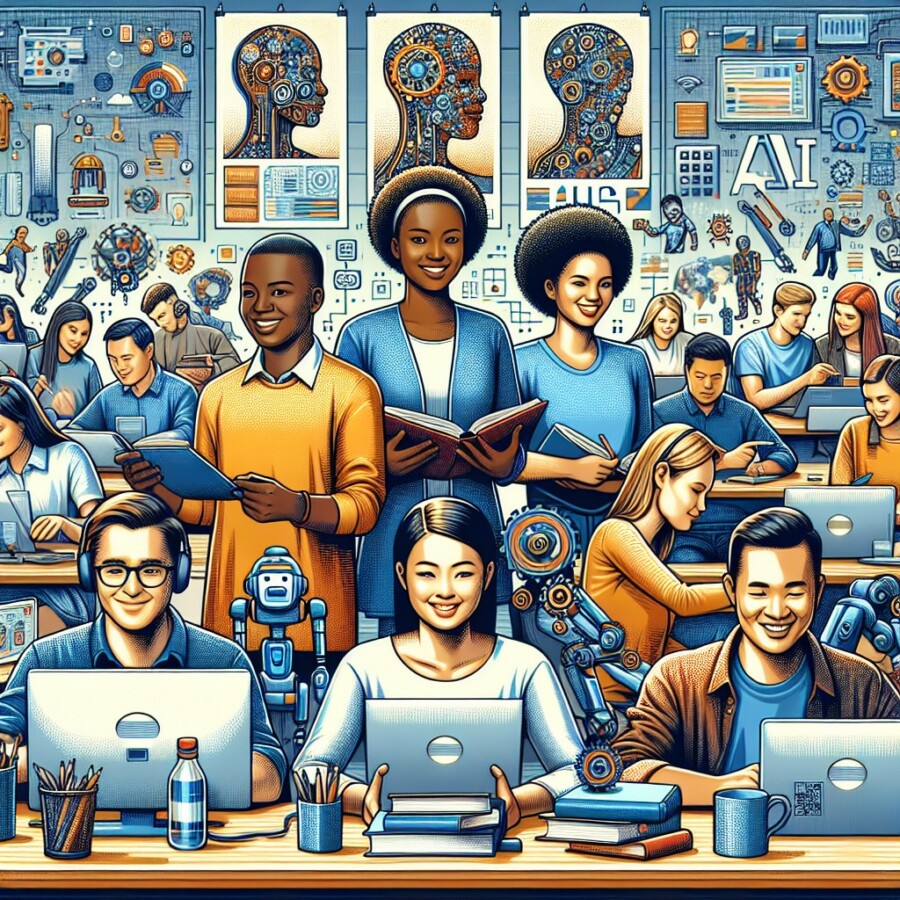
A recent analysis by the International Monetary Fund (IMF) found that artificial intelligence (AI) could affect almost 40% of all jobs. The head of the IMF, Kristalina Georgieva, said that AI might make inequality worse in most cases. She stressed the importance of policymakers taking action to prevent this technology from making social tensions worse. The IMF report showed that AI will have a bigger impact on jobs in advanced countries, with about 60% of jobs being affected. Some workers might benefit from AI and become more productive, but others might lose their jobs or get paid less. In poorer countries, AI is predicted to affect only 26% of jobs. However, these countries might struggle because they don't have the right infrastructure or skilled workers.
The IMF analysis also showed that AI could affect different groups of workers in different ways. People who earn more money and are younger might see their wages go up a lot when they start using AI. On the other hand, people who earn less money and are older might fall behind. To deal with this, the IMF suggests that countries should create safety nets and offer training programs for workers who might be at risk. This way, the transition to AI can be fairer and protect people's jobs.
The discussion about AI has been getting more attention, with important business and political leaders meeting at the World Economic Forum in Switzerland. Many countries are also starting to make rules about AI. The European Union recently made a deal to have laws that control how AI is used. China has already made its own rules about AI, and the United States has a new rule that says developers have to share information about how safe their AI is with the government. These efforts are meant to make sure that AI is developed and used in a safe and responsible way.
In conclusion, the IMF's analysis shows that AI will have a big impact on jobs and could make inequality worse. Policymakers need to take action to protect workers and make sure everyone is included. Countries around the world are also starting to make rules about AI to make sure it is used safely.
Original news source: AI to hit 40% of jobs and worsen inequality, IMF says (BBC)
🎧 Listen:
📖 Vocabulary:
Group or Classroom Activities
Warm-up Activities:
– News Summary
Instructions: Divide the students into pairs or small groups. Have each group read the article and then summarize the main points in a news-style summary. They should focus on key information and important details. After they have finished, have each group present their summary to the class.
– Opinion Poll
Instructions: Create a list of statements related to the article, such as "AI will create more job opportunities" or "AI will increase income inequality." Have the students walk around the room and ask their classmates for their opinions on each statement. They should record the responses and then analyze the data to see the overall trends and opinions of the class.
– Word Association
Instructions: Provide the students with a list of words related to the article, such as "artificial intelligence," "jobs," "inequality," "technology," etc. Have the students take turns saying a word from the list and then quickly saying the first word that comes to their mind. Encourage them to make connections between the words and discuss the reasons behind their associations.
– Sketch It
Instructions: Divide the students into pairs. One student will describe a scene or concept related to the article, while the other student tries to sketch it based on the description. After a set amount of time, have the pairs switch roles. Once both students have had a chance to describe and sketch, have them compare their drawings and discuss any differences or challenges they faced.
– Pros and Cons
Instructions: Divide the students into two groups. One group will brainstorm the pros of AI and its impact on jobs, while the other group will brainstorm the cons. Give the groups a set amount of time to come up with as many points as possible. Then, have each group present their points to the class. Encourage a class discussion about the different perspectives and the overall implications of AI on jobs and inequality.
🤔 Comprehension Questions:
🎧✍️ Listen and Fill in the Gaps:
A recent analysis by the International Monetary Fund (IMF) found that artificial intelligence (AI) could affect almost 40% of all jobs. The head of the IMF, Kristalina Georgieva, said that AI might make inequality worse in most cases. She stressed the of policymakers taking to prevent this technology from making social tensions worse. The IMF report that AI will have a bigger impact on jobs in advanced , with about 60% of jobs being affected. Some workers might benefit from AI and become more productive, but s might lose their jobs or get paid less. In poorer countries, AI is predicted to affect only 26% of jobs. However, these countries might struggle because they don't have the infrastructure or skilled workers. The IMF analysis also showed that AI could affect groups of workers in different ways. People who earn more money and are younger might see their wages go up a lot when they using AI. On the other hand, people who earn less money and are older might fall behind. To deal with this, the IMF suggests that countries should create nets and offer programs for workers who might be at risk. This way, the transition to AI can be fairer and protect people's jobs. The discussion about AI has been getting more attention, with business and political leaders meeting at the Economic Forum in Switzerland. Many countries are also starting to make rules about AI. The European Union recently made a deal to have laws that control how AI is used. China has already made its own rules about AI, and the United States has a new rule that says have to share information about how safe their AI is with the government. These are meant to make sure that AI is developed and used in a safe and responsible way. In conclusion, the IMF's shows that AI will have a big impact on jobs and could make worse. Policymakers need to take action to protect workers and make sure everyone is included. Countries around the world are also starting to make rules about AI to make sure it is used safely.
💬 Discussion Questions:
1. What is artificial intelligence (AI) and how do you think it will affect our lives in the future?
2. How would you feel if you lost your job because of AI? Why?
3. Do you think AI will make social inequality worse? Why or why not?
4. What do you think policymakers can do to prevent AI from making social tensions worse?
5. How do you think AI will impact jobs in advanced countries compared to poorer countries? Why?
6. Do you think AI will make some workers more productive and others less productive? Why or why not?
7. How do you think AI will affect wages for people who earn more money and those who earn less money? Why?
8. How can countries create safety nets and training programs to protect workers who might be at risk because of AI?
9. Why do you think the discussion about AI has been getting more attention recently?
10. Do you think it is important for countries to have laws that control how AI is used? Why or why not?
11. How do you think AI can be developed and used in a safe and responsible way?
12. What are some potential benefits of AI in our daily lives?
13. Do you think AI will replace human workers completely in the future? Why or why not?
14. How do you think AI will impact the economy of different countries? Why?
15. What do you think the future of AI looks like?
Individual Activities
📖💭 Vocabulary Meanings:
Click a dot next to a word, then click the dot next to its meaning to draw a line connecting them.
Words
Meanings
🔡 Multiple Choice Questions:
🕵️ True or False Questions:
📝 Write a Summary:
Write a summary of this news article in two sentences.
Check your writing now with the best free AI for English writing!