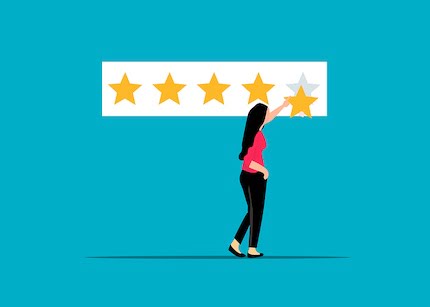
Big online companies like Amazon, Expedia, and Trustpilot are teaming up to fight against fake reviews. They formed a group called the Coalition for Trusted Reviews. Their goal is to share information and strategies to stop people from writing fake reviews. Fake reviews can hurt a company's reputation and trick people into buying bad products or services. A recent report said that fake reviews in the UK could cost consumers £312 million every year. The government wants to fix this problem with a new law, and the US Federal Trade Commission is thinking about doing the same. People are worried that as AI technology gets better, it will be easier for fraudsters to make fake reviews that look real. The Coalition for Trusted Reviews will fight against this by setting rules for everyone in the industry, sharing the best ways to stop fake reviews, and telling each other about companies that sell or use fake reviews. Dharmesh Mehta, who works for Amazon, said that everyone needs to work together to stop fake reviews and protect consumers. Tripadvisor, a website where people can book trips, found 1.3 million fake reviews on their site in 2022. They also said that it's important for everyone to work together to solve this problem.
Original news source: Amazon, Expedia and Trustpilot unite to fight fake reviews (BBC)
🎧 Listen:
📖 Vocabulary:
Group or Classroom Activities
Warm-up Activities:
– Discussion Circle
Instructions: Divide the class into small groups. Give each group a few discussion questions related to the article, such as "What are the potential consequences of fake reviews for consumers?" or "How can AI technology be used to combat fake reviews?" Each group should discuss the questions and then share their thoughts with the whole class.
– Vocabulary Pictionary
Instructions: Write 10 vocabulary words from the article on the board. Divide the class into teams. Each team takes turns choosing a word and drawing it on the board without using any letters or numbers. The other teams must guess the word based on the drawing. The team that guesses correctly gets a point.
– News Summary
Instructions: In pairs, students take turns summarizing the main points of the article to their partner. Encourage them to use their own words and only include the most important information. After both partners have shared their summaries, they can compare and discuss any differences or similarities.
– Pros and Cons
Instructions: Divide the class into two groups. One group will discuss the pros of fake reviews, while the other group will discuss the cons. Give students a few minutes to brainstorm their ideas and then have a class debate, with each group presenting their arguments. Encourage students to support their opinions with evidence from the article or their own experiences.
– Future Predictions
Instructions: In small groups, students discuss and make predictions about the future of online reviews and fake reviews. They can consider questions like "Will fake reviews become more or less common in the future?" or "How might technology advancements impact the authenticity of online reviews?" After the discussion, each group presents their predictions to the whole class.
🤔 Comprehension Questions:
Big online companies like Amazon, Expedia, and Trustpilot.
To stop people from writing fake reviews that can hurt a company's reputation and trick people into buying bad products or services.
A recent report said that fake reviews in the UK could cost consumers £312 million every year.
As AI technology gets better, it may become easier for fraudsters to create fake reviews that look real.
The Coalition for Trusted Reviews will set rules for everyone in the industry, share the best ways to stop fake reviews, and inform each other about companies that sell or use fake reviews.
Tripadvisor found 1.3 million fake reviews on their site in 2022.
It is important for everyone to work together because fake reviews can harm consumers and damage the reputation of companies.
Dharmesh Mehta believes that everyone needs to work together to stop fake reviews and protect consumers.
🎧✍️ Listen and Fill in the Gaps:
Big online companies like , , and Trustpilot are teaming up to fight against fake reviews. They formed a called the Coalition for Trusted Reviews. Their goal is to share information and strategies to stop from writing fake reviews. Fake reviews can hurt a company's reputation and trick people into buying bad products or services. A report said that fake reviews in the UK could cost consumers £312 million every year. The government to fix this with a new law, and the US Federal Commission is thinking about doing the same. People are worried that as AI technology gets better, it will be easier for fraudsters to make fake reviews that look real. The Coalition for Trusted will fight against this by setting rules for everyone in the industry, the best ways to stop fake reviews, and each about companies that sell or use fake reviews. Dharmesh Mehta, who for Amazon, said that everyone needs to work together to stop fake reviews and consumers. Tripadvisor, a where people can book trips, found 1.3 million fake reviews on their site in 2022. They also said that it's for everyone to work together to solve this problem.
💬 Discussion Questions:
1. What are fake reviews and why are they a problem?
2. Have you ever read a fake review? How did it make you feel?
3. Do you think fake reviews are a big issue in your country? Why or why not?
4. How would you feel if you bought a product based on a fake review and it turned out to be bad?
5. Do you think it's fair for companies to team up to fight against fake reviews? Why or why not?
6. Have you ever written a review for a product or service? Why or why not?
7. What do you think is the best way to stop fake reviews from being written?
8. Do you trust online reviews when making purchasing decisions? Why or why not?
9. How do you think AI technology can be used to create fake reviews?
10. Do you think the government should make laws to prevent fake reviews? Why or why not?
11. Have you ever been tricked into buying something because of a fake review? How did it make you feel?
12. What can consumers do to protect themselves from fake reviews?
13. How important do you think online reviews are for businesses? Why or why not?
14. Have you ever used Trustpilot or a similar website to read reviews? Did you find them helpful?
15. What do you think will happen in the future with fake reviews as technology continues to advance? Why?
Individual Activities
📖💭 Vocabulary Meanings:
Click a dot next to a word, then click the dot next to its meaning to draw a line connecting them.
Words
Meanings
🔡 Multiple Choice Questions:
🕵️ True or False Questions:
📝 Write a Summary:
Write a summary of this news article in two sentences.
Check your writing now with the best free AI for English writing!