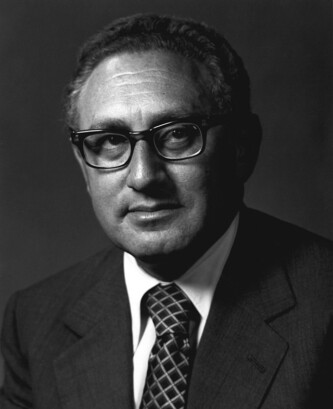
Kissinger was born in Germany into a Jewish family. They had to leave Germany because of the Nazis, and they moved to the United States in 1938. Kissinger faced challenges as a teenager, but he did well in school and eventually got involved in military intelligence during World War II. After the war, he went to college and became a professor.
Kissinger became really important when he wrote a book about nuclear war and foreign policy. This book got him noticed, and he was chosen to be the national security advisor for President Richard Nixon. He helped improve relationships with the Soviet Union and China, and he was a big part of Nixon's visit to China in 1972. But Kissinger also got criticized for his involvement in the Vietnam War and his actions in Cambodia.
Even with all the controversy, Kissinger stayed influential in politics. He advised other presidents and had a say in foreign policy. World leaders wanted to hear what he thought about things like the Middle East and Russia's takeover of Crimea. Kissinger believed in doing what was best for the United States, even if it wasn't perfect. He once said, "A country that demands moral perfection in its foreign policy will achieve neither perfection nor security."
Original news source: Henry Kissinger: Divisive diplomat who towered over world affairs (BBC)
📖 Vocabulary:
Group or Classroom Activities
Warm-up Activities:
– News Summary
Instructions: Divide the class into pairs or small groups. Give each group a few minutes to read the article. Then, ask them to summarize the main points of the article in their own words. Afterward, have each group share their summaries with the rest of the class.
– Opinion Poll
Instructions: Write different statements related to the article on the board, such as "Henry Kissinger was a successful diplomat" or "Kissinger's actions were morally questionable." Have the students individually rate their level of agreement or disagreement with each statement on a scale from 1 to 5. Once they have rated each statement, ask them to share and discuss their opinions in pairs or small groups.
– Sketch It
Instructions: Divide the class into pairs or small groups. Assign each group a specific event or concept from the article, such as "Kissinger's involvement in the Vietnam War" or "Kissinger's visit to China." Give the groups a few minutes to brainstorm and sketch a visual representation of their assigned topic. Afterward, have each group present their sketches to the rest of the class and explain their interpretation.
– Vocabulary Pictionary
Instructions: Write a list of vocabulary words from the article on separate slips of paper. Divide the class into two teams. Take turns having a member from each team come to the front of the class and choose a slip of paper. Without speaking, the student must draw a visual representation of the word while their team tries to guess what it is. The team that guesses correctly earns a point. Repeat with different students and words until all the vocabulary words have been used.
– Future Predictions
Instructions: In pairs or small groups, have the students discuss and make predictions about the future of diplomacy and foreign relations. Encourage them to consider the impact of technology, globalization, and current geopolitical events. Afterward, ask a few groups to share their predictions with the rest of the class and facilitate a class discussion on the topic.
🤔 Comprehension Questions:
Henry Kissinger was a famous diplomat and political figure. He was known for his approach to foreign relations and making tough decisions in the best interest of the United States.
Kissinger played a big role in improving relationships with the Soviet Union and China. He helped negotiate important agreements and meetings between these countries, such as President Nixon's visit to China in 1972.
Kissinger helped end conflicts like the Arab-Israeli conflict and the Vietnam War. His diplomatic efforts and negotiations played a significant role in finding peaceful resolutions for these conflicts.
Some people criticized Kissinger for supporting actions they believed were wrong, such as the coup in Chile and the "dirty war" in Argentina. They felt that his decisions were morally questionable.
Kissinger and his family had to leave Germany because of the Nazis. They were Jewish, and the Nazis were persecuting and discriminating against Jewish people.
During World War II, Kissinger got involved in military intelligence. He used his knowledge and skills to help gather and analyze information for the military.
Kissinger became influential in politics after writing a book about nuclear war and foreign policy. This caught the attention of President Richard Nixon, who appointed Kissinger as his national security advisor. From there, Kissinger advised other presidents and had a say in foreign policy.
Kissinger believed that a country demanding moral perfection in its foreign policy would achieve neither perfection nor security. He understood that making tough decisions in the best interest of the United States might not always align with moral perfection.
🎧✍️ Listen and Fill in the Gaps:
Henry , a famous diplomat and political figure, passed away at the age of 100 at his home in Connecticut. He was known for his approach to relations, which some people and others didn't. Kissinger believed in doing what was best for the United States, even if it meant tough decisions. He played a big role in improving relationships with the Soviet Union and China, and he helped end conflicts like the Arab-Israeli conflict and the Vietnam War. But some people criticized him for supporting actions that they thought were wrong, like the coup in Chile and the "dirty war" in Argentina. Kissinger was born in into a Jewish . They had to leave Germany because of the , and they moved to the United in 1938. Kissinger faced challenges as a teenager, but he did well in school and eventually got involved in military intelligence during World War II. After the war, he went to college and became a professor. Kissinger became really when he wrote a book about nuclear war and foreign policy. This book got him noticed, and he was chosen to be the security advisor for President Richard Nixon. He helped improve relationships with the Soviet Union and China, and he was a big part of Nixon's visit to China in 1972. But Kissinger also got criticized for his involvement in the War and his in Cambodia. Even with all the controversy, Kissinger stayed in politics. He advised presidents and had a say in foreign policy. World leaders wanted to hear what he thought about things like the Middle East and Russia's takeover of Crimea. Kissinger in doing what was best for the States, even if it wasn't perfect. He once said, "A country that demands moral perfection in its foreign policy will achieve neither perfection nor security."
💬 Discussion Questions:
1. Who was Henry Kissinger and what was he known for?
2. How do you think Henry Kissinger's experiences as a teenager shaped his life?
3. What do you think it means to do what is best for your country, even if it means making tough decisions?
4. How would you feel if you had to leave your home country because of a dangerous situation?
5. Do you think it's important for countries to improve relationships with other nations? Why or why not?
6. What do you think are some challenges that diplomats and political figures like Henry Kissinger face?
7. How do you think Henry Kissinger's book about nuclear war and foreign policy helped him become influential in politics?
8. Do you think it's important for leaders to listen to the advice of experienced diplomats like Kissinger? Why or why not?
9. How do you think Kissinger's involvement in the Vietnam War affected his reputation?
10. What do you think are some qualities that make a good national security advisor?
11. How do you think Kissinger's background as a professor influenced his approach to foreign policy?
12. Do you agree with Kissinger's statement about moral perfection in foreign policy? Why or why not?
13. How do you think Kissinger's actions in Chile and Argentina affected his legacy?
14. Do you think it's possible for a country to achieve both moral perfection and security in its foreign policy? Why or why not?
15. How do you think Kissinger's contributions to improving relationships between countries have shaped the world today?
Individual Activities
📖💭 Vocabulary Meanings:
Click a dot next to a word, then click the dot next to its meaning to draw a line connecting them.
Words
Meanings
🔡 Multiple Choice Questions:
🕵️ True or False Questions:
📝 Write a Summary:
Write a summary of this news article in two sentences.
Check your writing now with the best free AI for English writing!