
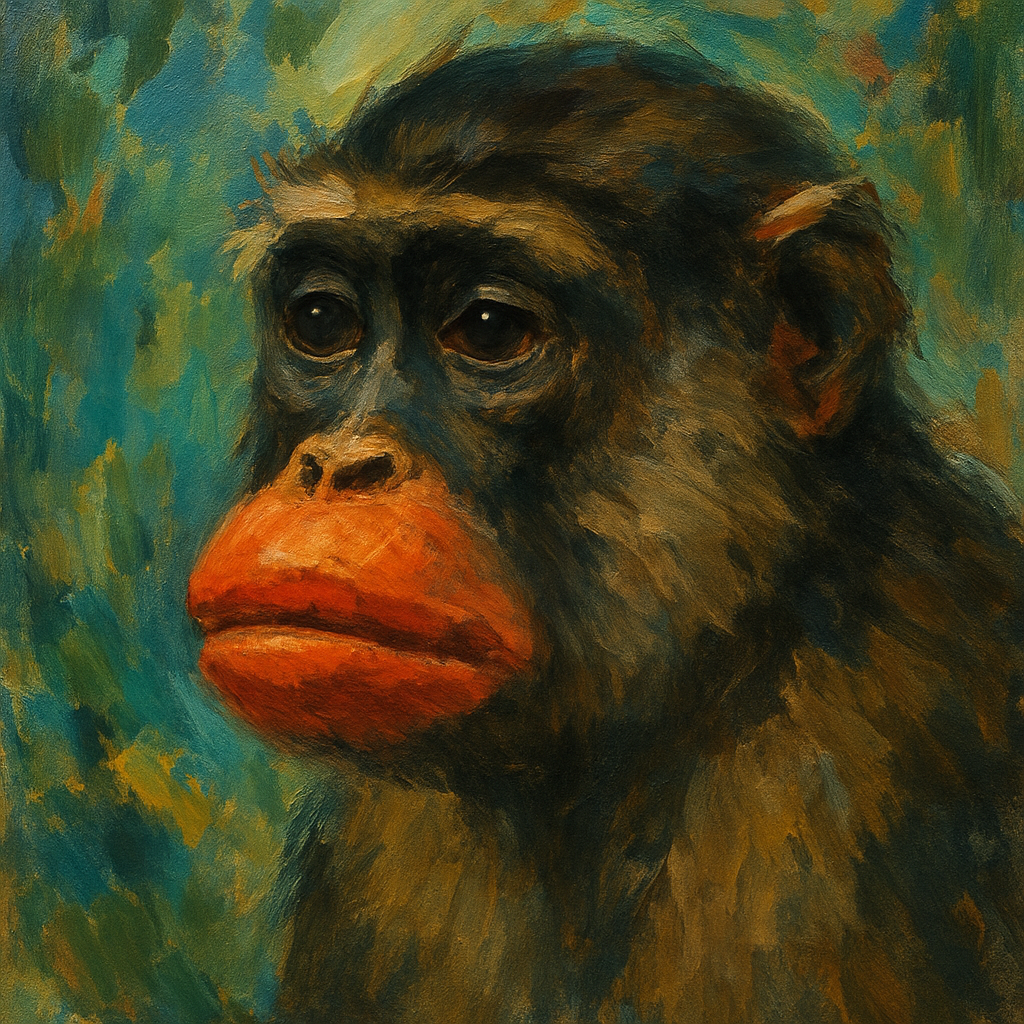
A newly identified species of monkey with orange lips has been uncovered in the tropical forests of the Democratic Republic of Congo. This black-faced primate, known locally as 'Likweli', was formally named 'Colobus congoensis' by researchers who first spotted it high in the treetops of Lomami National Park back in 2008.
The team of scientists from the Democratic Republic of Congo, the U.S., and Germany has been working on this discovery for many years. Initially, they only had a blurry photograph, but a decade late, comprehensive genetic studies confirmed the monkey as a distinct species. This is a significant finding as it is only the fifth new monkey species discovered in Africa in 75 years.
Junior Amboko, a PhD student at Florida Atlantic University, was pivotal in the team's work. He described seeing the monkey as an "amazing feeling". The team also noted the monkey's unusual roaring call, which can be heard but makes the animal difficult to see.
Further studies are needed to learn more about this secretive species, including its role in seed dispersal in the forest ecosystem and its striking orange lips, believed to be a visual signal. Conservationists are focused on ensuring that this rare species remains protected from hunting.
Original news source: New monkey species with orange lips found 'hiding' in DRC forest (BBC)
🎧 Listen:
📖 Vocabulary:
Group or Classroom Activities
Warm-up Activities:
1. Have you ever learned something surprising about animals?
2. What animals are unique to your country?
3. Why do you think discovering new species is important?
4. How does discovering a new species impact science?
5. Have you visited a national park? Share your experience.
🤔 Comprehension Questions:
The new species was discovered in the tropical forests of the Democratic Republic of Congo.
Locally, the monkey is known as 'Likweli'.
The research team included scientists from the Democratic Republic of Congo, the U.S., and Germany.
It took over a decade to confirm the monkey as a new species.
The monkey has striking orange lips.
The monkey makes an unusual roaring call.
It is important to protect this species to ensure it remains safe from hunting.
🎧✍️ Listen and Fill in the Gaps:
A newly identified of monkey with orange lips has been uncovered in the tropical of the Democratic Republic of Congo. This primate, known as 'Likweli', was formally named 'Colobus congoensis' by researchers who first spotted it high in the treetops of Lomami National Park back in 2008. The team of scientists from the Republic of , the U.S., and Germany has been working on this discovery for many years. Initially, they only had a blurry photograph, but a decade late, comprehensive studies the monkey as a distinct species. This is a significant finding as it is only the fifth new species discovered in Africa in 75 years. Junior , a PhD at Florida Atlantic University, was pivotal in the team's work. He described seeing the monkey as an "amazing feeling". The team also noted the monkey's roaring call, which can be heard but makes the animal difficult to see. Further studies are needed to learn more about this species, including its role in seed dispersal in the forest and its striking orange lips, believed to be a visual signal. are focused on that this rare species remains protected from hunting.
💬 Discussion Questions:
1. Why is protecting new species important?
2. How do scientists discover new species?
3. What challenges do scientists face in exploring forests?
4. How can people help in conserving endangered species?
5. What role do national parks play in conservation?
6. Why might animals have unique features like orange lips?
7. What is your favorite animal and why?
8. How do you think technology aids in species discovery?
9. What are the consequences of not protecting rare species?
10. What makes a species 'significant' in scientific terms?
11. How do you feel about hunting restrictions?
12. Do you think more species remain undiscovered? Why?
Individual Activities
📖💭 Vocabulary Meanings:
Click a dot next to a word, then click the dot next to its meaning to draw a line connecting them.