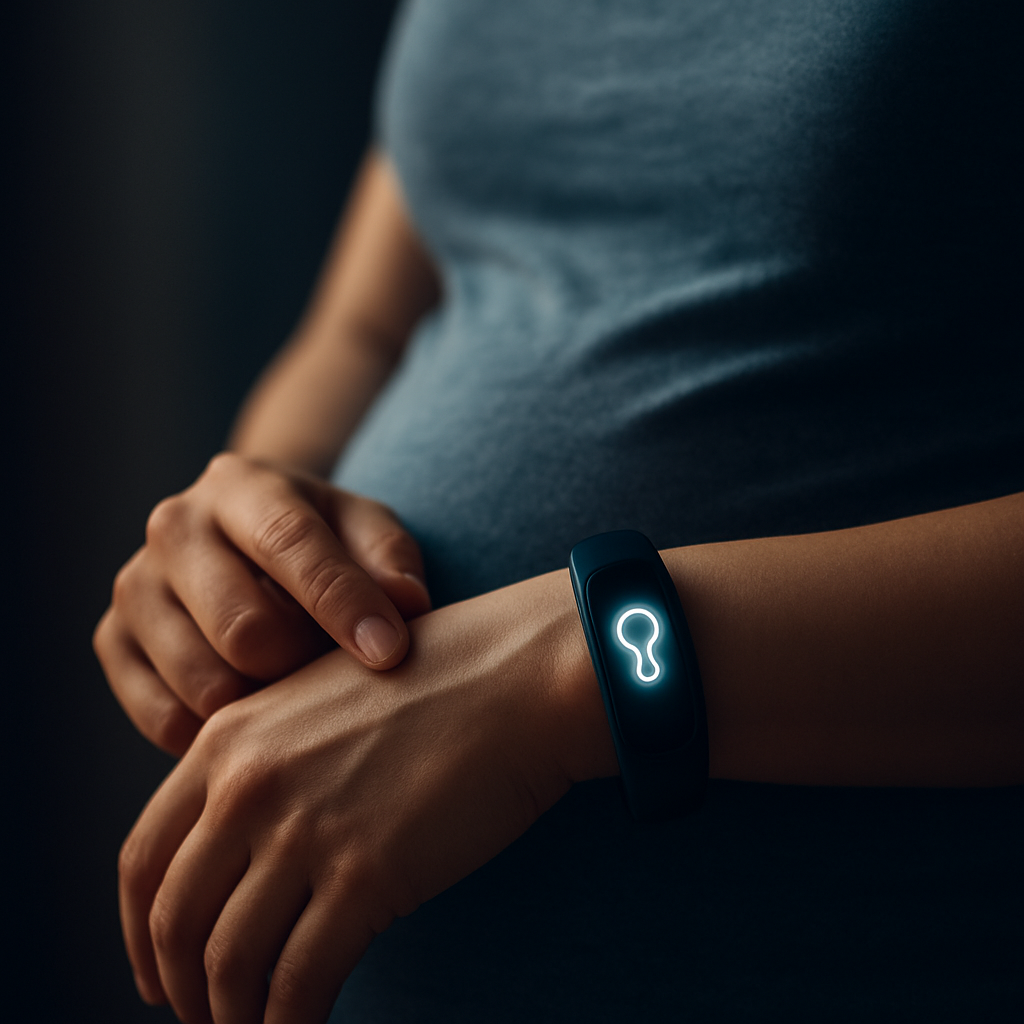
On her birthday holiday, Ravika's fitness tracker, an Oura ring, indicated a poor health score despite feeling well-rested and healthy. Curious, she discovered an online community of women whose fitness data suggested early pregnancy signs like increased heart rate and higher body temperature. Just a week later, her suspicion was confirmed with a positive pregnancy test.
Throughout the following weeks, Ravika's anxiety grew as she frequently checked her stats, comparing her results with information she found online. She discovered that fitness trackers, especially those measuring body temperature, are increasingly used by women trying to conceive to detect early pregnancy signs. Ravika's experience highlighted how technology could both reassure and stress expectant mothers.
Doctors like Dr. Stuart Lavery acknowledge the potential benefits of these devices but caution against over-reliance. While they provide insight into potential early signs, more research is needed to validate their accuracy in detecting pregnancies or miscarriages. The balance between using such devices for health insights and avoiding increased anxiety is essential.
Though fitness trackers like Ravika’s Oura ring offer valuable health data, they should complement professional medical advice. Experts encourage users to see them as aids rather than absolute indicators of health conditions.
1. trackera device or application for keeping track of something
2. indicatedpointed out or showed
3. scorea measure or rating
4. discoveredfound out or uncovered
5. communitya group of people with a common interest
6. datafacts or information
7. increasedbecame larger or greater
8. temperaturehow hot or cold something is
9. anxietya feeling of worry or nervousness
10. highlightedmade something more noticeable
11. reassuredmade to feel better or less worried
12. cautionadvise or warn against something
13. insightdeep understanding of a person or thing
14. validateconfirm or prove something is correct
15. complementadd to something in a way that enhances it
Group or Classroom Activities
Warm-up Activities:
1. Have you ever used a fitness tracker? What was your experience? 2. Discuss your thoughts on technology and health monitoring. 3. Why might people become anxious about health data? 4. In what ways can technology support health and fitness goals? 5. Share a time when technology helped you in a surprising way.
🤔 Comprehension Questions:
1. What information did Ravika obtain from her fitness tracker?
She obtained a poor health score despite feeling well.
2. How did the online community influence Ravika's understanding of her health data?
It suggested that her fitness data might indicate early pregnancy signs.
3. What confirmed Ravika's suspicion about her health?
A positive pregnancy test confirmed her suspicion.
4. How did Ravika's behavior change after discovering the online community?
She frequently checked her stats and compared them with online information.
5. What do fitness trackers measure that can indicate early pregnancy signs?
They measure increased heart rate and higher body temperature.
6. What is Dr. Stuart Lavery's view on the use of fitness trackers?
He sees potential benefits but warns against over-reliance without further research.
7. How should users treat fitness data according to experts?
As aids rather than absolute indicators of health conditions.
🎧✍️ Listen and Fill in the Gaps:
On her birthday holiday, Ravika's fitness tracker, an Oura ring, a poor health score despite feeling well-rested and healthy. , she discovered an online community of women whose fitness data suggested early pregnancy signs like increased rate and body temperature. Just a week later, her was confirmed with a positive pregnancy test. Throughout the following weeks, Ravika's anxiety grew as she checked her stats, comparing her results with information she found online. She discovered that fitness trackers, especially those measuring body temperature, are increasingly used by trying to to detect early pregnancy signs. experience highlighted how technology could both and stress expectant mothers. Doctors like Dr. Stuart Lavery acknowledge the benefits of these devices but caution against over-reliance. While they provide insight into potential early signs, more research is needed to validate their in detecting pregnancies or miscarriages. The between using such devices for health insights and anxiety is essential. Though fitness like Ravika’s Oura ring offer valuable health data, they should complement professional medical advice. Experts encourage users to see them as aids rather than absolute indicators of health conditions.
💬 Discussion Questions:
1. How reliable do you think fitness trackers are for monitoring health? 2. What are some positive aspects of using technology for health purposes? 3. Can fitness trackers lead to unnecessary anxiety? Why or why not? 4. Do you believe health technology should complement or replace doctor visits? 5. How do you feel about the privacy of data collected by fitness devices? 6. What precautions would you take when using a fitness tracker? 7. Would you recommend a fitness tracker to someone else? Why or why not? 8. How do fitness trends influence the way people approach health and wellness? 9. What potential drawbacks do you see in relying too much on technology for health? 10. Share any experiences you have of technology enhancing or hindering your well-being. 11. How does access to health data change people's health habits, if at all? 12. What measures could be taken to ensure the accuracy of data from fitness devices?
Individual Activities
📖💭 Vocabulary Meanings:
Click a dot next to a word, then click the dot next to its meaning to draw a line connecting them.
Words
1. tracker
2. indicated
3. score
4. discovered
5. community
6. data
7. increased
8. temperature
9. anxiety
10. highlighted
11. reassured
12. caution
13. insight
14. validate
15. complement
Meanings
(A) made something more noticeable
(B) a feeling of worry or nervousness
(C) made to feel better or less worried
(D) became larger or greater
(E) advise or warn against something
(F) confirm or prove something is correct
(G) a group of people with a common interest
(H) a measure or rating
(I) add to something in a way that enhances it
(J) facts or information
(K) a device or application for keeping track of something
(L) how hot or cold something is
(M) pointed out or showed
(N) deep understanding of a person or thing
(O) found out or uncovered
🔡 Multiple Choice Questions:
1. What did Ravika's fitness tracker indicate on her birthday?
(a) A high health score
(b) No changes
(c) A great fitness level
(d) A poor health score
2. What did the online community's fitness data suggest?
(a) Early pregnancy signs
(b) Fitness improvements
(c) Sleep issues
(d) Dietary concerns
3. What happened a week after Ravika's suspicion?
(a) A doctor's appointment
(b) A positive pregnancy test
(c) She felt healthier
(d) She ignored the data
4. How did Ravika's anxiety change in the following weeks?
(a) It decreased as she understood more
(b) It grew as she checked her stats
(c) It disappeared completely
(d) It stayed the same
5. What did Ravika learn about fitness trackers?
(a) They are perfect health indicators
(b) They are only for athletes
(c) They cannot measure temperature
(d) They can be used to detect early pregnancy signs
6. What do doctors like Dr. Stuart Lavery think about these devices?
(a) They have potential benefits but should not be overly relied upon
(b) They are not useful at all
(c) They can replace doctors
(d) They are only a trend
7. What is necessary for validating the fitness trackers' accuracy?
(a) More marketing
(b) Fewer users
(c) More research
(d) Less data collection
8. How should fitness trackers be viewed according to the article?
(a) As the sole judge of health
(b) As ineffective tools
(c) As aids, not absolute indicators of health conditions
(d) As luxury items
🕵️ True or False Questions:
1. Experts encourage users to treat trackers as aids, not definitive health indicators.
2. More research is unnecessary to invalidate fitness tracker accuracy in pregnancy detection.
3. Dr. Stuart Lavery dismisses potential drawbacks and encourages total reliance.
4. An offline community ignored insights into late pregnancy signs.
5. Ravika's suspicion was confirmed a week later with a test.
6. Fitness trackers are used to detect early pregnancy signs.
7. Ravika's fitness tracker showed a poor health score on her birthday.
8. Her calmness diminished due to infrequent checking of her stats.
Writing Questions:
1. Describe how technology has impacted the way people monitor their health.
2. Discuss the potential pros and cons of using fitness trackers.
3. Explain how health apps and devices could evolve in the future.
4. Argue whether fitness technology should be trusted for serious health monitoring.
5. Reflect on how you would feel if a device predicted a major health change.
The world is approaching ‘peak’ fossil fuels, with global demand expected to decline, but the transition to clean energy needs to happen faster to address the urgency of the climate crisis.
Great white sharks have returned to Cape Town’s beaches after four years, prompting the deployment of a team of professional shark spotters to ensure safety for both sharks and people.