


Free Materials For ESL Teachers and Learners

English Newsroom

Learn English through news articles - complete lesson plans, including articles, listening, classroom activities, quiz questions and more!

Rising Phone Addiction Leads to Increased Therapy

Therapy sessions tackle rising concerns over phone dependency.
Try this article at a different level?

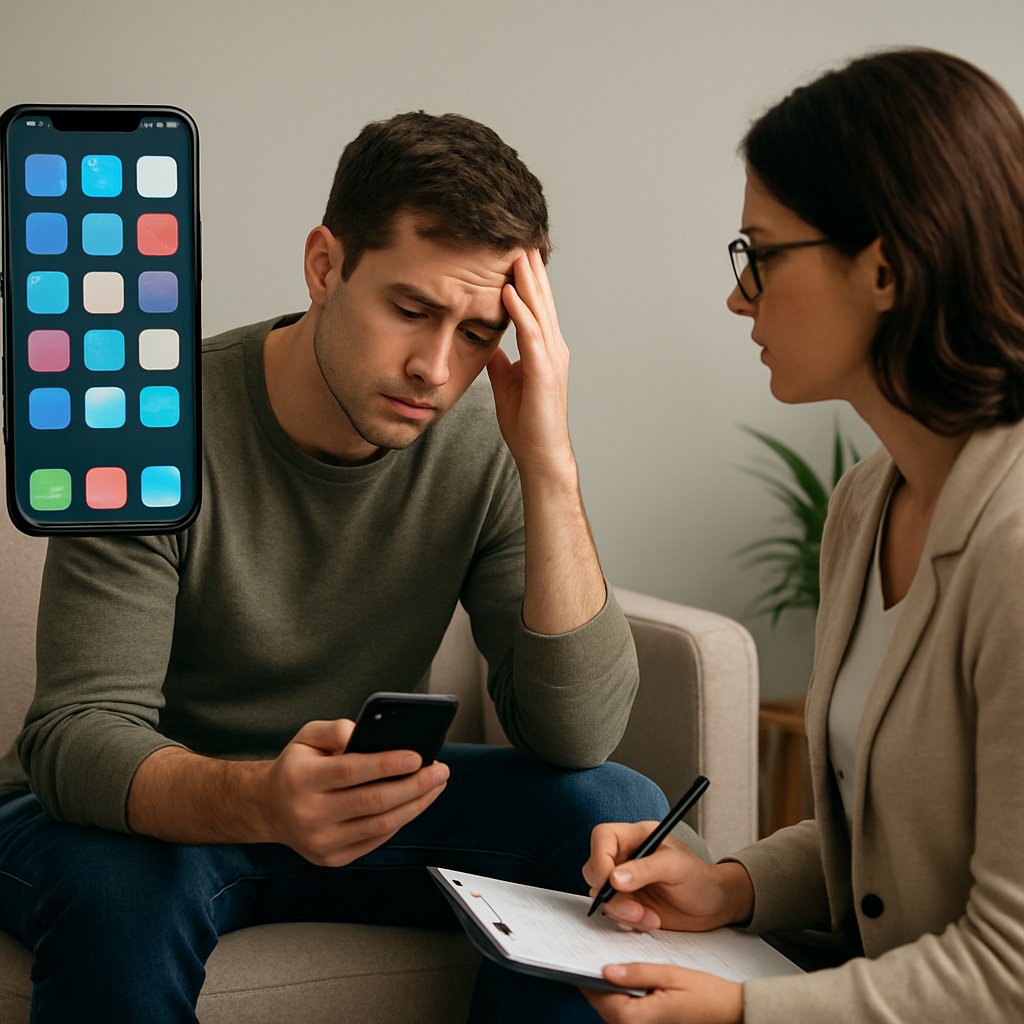
Marios from north London faces a 14-hour-per-day phone habit. He describes his phone as a pocket-sized distraction and longs to break free from its grip. Marios is enrolled in a therapy program hoping to find relief from this dependency.

Despite not being formally recognized, phone addiction mirrors the characteristics of other dependencies. Increasing numbers seek therapy for screen-related issues, often driven by underlying loneliness. Specialists at rehabilitation centers address these psychological drives with focused therapy. This approach aims to help clients reduce screen time and engage with their surroundings.

Surveys indicate a widespread desire to cut down on phone usage. People frequently express guilt over time spent scrolling versus engaging in real life. Experts advise on alternative activities and suggest self-reflection on the triggers for excessive phone use. Techniques like support groups and peer interaction, as seen in Internet and Technology Addicts Anonymous (ITAA), provide crucial support.

Marios continues therapy while pursuing his interest in learning Spanish, balancing beneficial app use with screen restraint. His journey highlights the challenges and possibilities for change. With dedicated effort and professional support, users like Marios can reclaim time for personal growth and real-life experience.

Original news source: How addicted are we to our phones? Some of us are going to rehab (BBC)

🎧 Listen:

πŸ“– Vocabulary:

1. dependency
2. mirrors
3. phenomena
4. underlying
5. rehabilitation
6. triggers
7. interaction
8. anonymous
9. crucial
10. beneficial
11. reclaim
12. survey
13. reflection
14. pursuing
15. restraint

Group or Classroom Activities

Warm-up Activities:

1. Share your daily phone usage.
2. How do you feel about screen time?
3. Why do people get addicted to phones?
4. Discuss the benefits of limiting phone use.
5. Have you ever tried to reduce your phone time?

πŸ€” Comprehension Questions:

1. What problem does Marios face with his phone?

2. How does Marios describe his phone?

3. What type of program is Marios enrolled in to help with his dependency?

4. Why do some people seek therapy for screen-related issues?

5. What strategies are suggested to help reduce phone usage?

6. What activity is Marios interested in as he continues therapy?

7. What can users like Marios achieve with effort and support?

🎧✍️ Listen and Fill in the Gaps:

Marios from London a 14-hour-per-day phone habit. He describes his phone as a pocket-sized distraction and longs to break free from its grip. Marios is in a therapy program hoping to find relief from this dependency. Despite not being recognized, phone addiction mirrors the characteristics of dependencies. Increasing numbers seek therapy for screen-related , often driven by loneliness. at rehabilitation centers address these psychological drives with focused therapy. This approach aims to help clients reduce screen time and engage with their surroundings. Surveys indicate a widespread desire to cut down on phone usage. People express guilt over time spent scrolling versus engaging in real life. advise on alternative activities and suggest self-reflection on the triggers for excessive phone use. Techniques like and peer interaction, as seen in Internet and Technology Addicts Anonymous (ITAA), provide support. Marios continues therapy while pursuing his interest in , beneficial app use with screen restraint. His journey highlights the challenges and possibilities for change. With dedicated effort and professional support, users like Marios can reclaim time for personal growth and real-life experience.

πŸ’¬ Discussion Questions:

1. What are the main reasons people become addicted to their phones?
2. How can someone balance phone usage with real-life activities?
3. Do you think therapy is essential for overcoming phone addiction? Why or why not?
4. What support systems do you think are most effective for reducing phone dependency?
5. How has phone addiction affected personal relationships in your experience?
6. What role do apps play in both beneficial and harmful phone usage?
7. Can school or work environments contribute to phone addiction? How?
8. What strategies have you used to cut down on screen time?
9. How important is it to achieve a digital detox regularly?
10. In what ways can learning a new language help distract from phone dependency?
11. What impact do you think social media has on phone addiction?
12. How can one measure progress when trying to reduce phone usage?

Individual Activities

πŸ“–πŸ’­ Vocabulary Meanings:

Click a dot next to a word, then click the dot next to its meaning to draw a line connecting them.


Words

1. dependency
2. mirrors
3. phenomena
4. underlying
5. rehabilitation
6. triggers
7. interaction
8. anonymous
9. crucial
10. beneficial
11. reclaim
12. survey
13. reflection
14. pursuing
15. restraint

Meanings

(A) without any name acknowledged
(B) to take back
(C) extremely important
(D) fundamental or basic
(E) causes something to happen
(F) an investigation or study
(G) the state of relying on or being controlled by something
(H) the process of restoring someone to health
(I) resembles or reflects
(J) serious thought or consideration
(K) observable events
(L) producing good effects
(M) self-control
(N) communication or action between people
(O) trying to achieve something

πŸ”‘ Multiple Choice Questions:

1. What problem does Marios face with his phone?
(a) He lost his phone
(b) A 14-hour-per-day habit
(c) His phone is broken
(d) He has no signal at home
2. What is Marios enrolling in to solve his dependency?
(a) Therapy program
(b) Cooking class
(c) Gym membership
(d) Art school
3. How is phone addiction described in terms of its characteristics?
(a) Completely different from other habits
(b) Less severe than other dependencies
(c) Similar to a hobby
(d) Mirrors other dependencies
4. What is often a reason people seek therapy for screen-related issues?
(a) Loneliness
(b) Boredom
(c) Peer pressure
(d) Fashion trends
5. What technique is suggested for reducing phone use?
(a) Buying a new phone
(b) Installing games
(c) Support groups
(d) Watching TV
6. What alternative activity is Marios pursuing?
(a) Cooking
(b) Learning Spanish
(c) Painting
(d) Cycling
7. What does Marios hope to achieve with therapy and language learning?
(a) More phone apps
(b) New gaming skills
(c) More real-life experience
(d) Better phone screen
8. What has Marios's story highlighted?
(a) New mobile apps
(b) Fashion trends
(c) Famous technology reviews
(d) Challenges and possibilities for change

πŸ•΅οΈ True or False Questions:

1. Surveys indicate people want to cut down phone use.
2. Techniques like support groups provide minimal support.
3. Marios describes his phone as a pocket-sized necessity.
4. Dedicated effort can help reclaim time for personal growth.
5. Rehabilitation centers address psychological drives.
6. Phone addiction is formally recognized as a healthy habit.
7. Marios is learning Spanish as part of his therapy.
8. Marios is from south London.

Writing Questions:

1. Describe your own relationship with your phone and how it affects your daily life.
2. Write about a time you felt overwhelmed by technology and how you managed it.
3. Discuss the impact of social media on your social life.
4. Compare and contrast the effects of phone dependency with those of other addictions.
5. Propose a plan for someone trying to reduce their screen time effectively.

How about these other Level 3 articles?

Online
Class
Writing
Coach
β˜• 컀피 3μž” &
무료 ν”Όλ“œλ°±! πŸŽ“
β˜• 컀피 3μž” & 무료 ν”Όλ“œλ°±! πŸŽ“

X

[100% 온라인] λž­μ»€μŠ€ν„° λŒ€ν•™κ΅ μ˜μ–΄ 연ꡬ μ°Έμ—¬μž λͺ¨μ§‘
λ³„λ„μ˜ μ°Έκ°€λΉ„ 없이 영ꡭ λŒ€ν•™ 연ꡬ에 도움도 μ£Όμ‹œκ³ , 무료 μ˜μ–΄ μ‹€μ „ μ—°μŠ΅κ³Ό ν”Όλ“œλ°±λ„ λ°›μ•„λ³΄μ„Έμš”!

영ꡭ λž­μ»€μŠ€ν„° λŒ€ν•™κ΅(Lancaster University)μ—μ„œ ν•œκ΅­μΈ μ˜μ–΄ ν•™μŠ΅μžλΆ„λ“€μ„ λŒ€μƒμœΌλ‘œ μƒˆλ‘œμš΄ 연ꡬ ν”„λ‘œμ νŠΈλ₯Ό μ§„ν–‰ν•©λ‹ˆλ‹€. μ „ κ³Όμ • 온라인으둜 μ§„ν–‰λ˜μ–΄ μ–΄λ””μ„œλ“  νŽΈν•˜κ²Œ μ°Έμ—¬ν•˜μ‹€ 수 μžˆμŠ΅λ‹ˆλ‹€. μ—¬λŸ¬λΆ„μ˜ μ†Œμ€‘ν•œ μ°Έμ—¬λ‘œ ν•œκ΅­μΈμ˜ μ˜μ–΄ μ‚¬μš© 방식을 μ•Œμ•„λ³΄λŠ” ν₯미둜운 연ꡬ가 μ™„μ„±λ©λ‹ˆλ‹€.

🎁 μ°Έμ—¬ ν˜œνƒ:
– 원어민 μ—°κ΅¬μ›κ³Όμ˜ 1:1 νšŒν™” μ—°μŠ΅
– μ‹€μ „ μ˜μž‘ μ—°μŠ΅ & λ§žμΆ€ν˜• μ˜μ–΄ ν”Όλ“œλ°± 리포트
– 컀피 κΈ°ν”„ν‹°μ½˜ 총 3μž” μ„ λ¬Ό! (첫 μ„Έμ…˜ ν›„ 1μž”, λ§ˆμ§€λ§‰ μ„Έμ…˜ μ™„λ£Œ ν›„ 2μž” 더 λ“œλ €μš”! β˜•β˜•)

πŸ“… μ°Έμ—¬ 방식: 총 2회의 온라인 μ„Έμ…˜ (Zoom 등을 이용, 각 μ„Έμ…˜λ‹Ή μ•½ 60~80λΆ„ μ†Œμš”) λ§ν•˜κΈ°μ™€ μ“°κΈ° ν™œλ™μ΄ μ„žμ—¬ μžˆμ–΄ λΆ€λ‹΄ 없이 즐겁게 μ°Έμ—¬ν•˜μ‹€ 수 μžˆμŠ΅λ‹ˆλ‹€.

βœ… λŒ€μƒ: μ˜μ–΄ μ‹€λ ₯에 상관없이 μ°Έμ—¬λ₯Ό ν¬λ§ν•˜λŠ” 18μ„Έ 이상 ν•œκ΅­μΈ λˆ„κ΅¬λ‚˜

Feedback