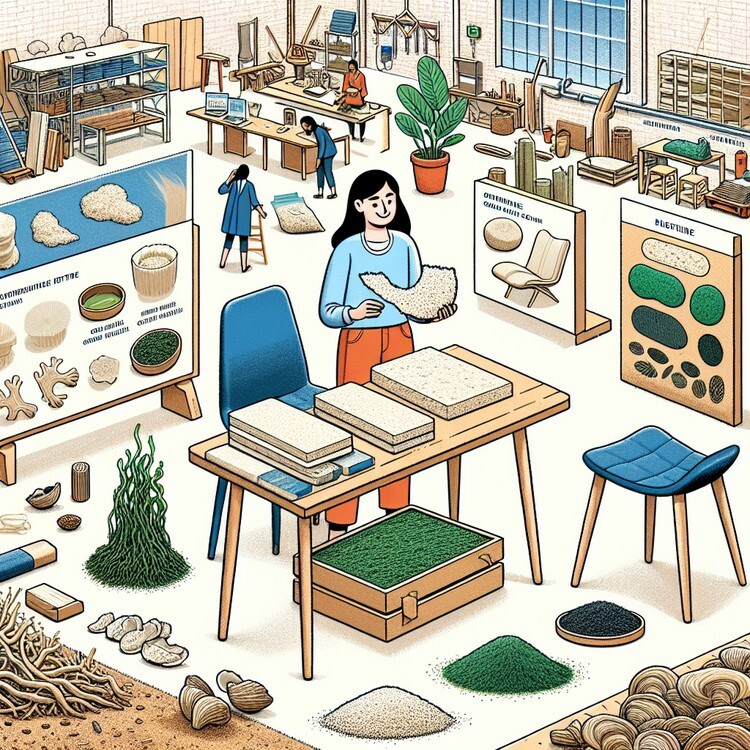
Celine Sandberg, the founder of a company called Agoprene in Oslo, is trying out different materials to make eco-friendly furniture. She wants to reduce the use of plastic in making things like pillows and cushions. Sandberg and her team have tested materials like crushed oyster shells, leftover plant stuff, and wood fibers. They found that seaweed can be turned into a soft foam that's good for seat cushions and chairs. This seaweed foam is 100% biodegradable and will break down in the soil within eight months.
Plastic is commonly used in making furniture because it's cheap and can be shaped in many ways. But there are big problems with using plastic. In the US alone, 12 million tonnes of furniture were thrown away in 2018, and most of it ended up in landfills. Plastic takes hundreds of years to break down there. Making just one type of plastic foam releases a lot of CO2, a harmful gas that contributes to climate change.
To solve these problems, many companies are looking for different materials to make furniture. One company called Mater uses coffee bean shells and sawdust to make seats and backrests for chairs. They also use waste from the ocean to make outdoor furniture. Another idea being explored is using fungus. Scientists have made a fabric called BioKnit from the roots of fungi. This fabric breaks down naturally and doesn't need glue or other things that stay in landfills.
Big furniture brands like Williams Sonoma and IKEA are also using more sustainable materials. Williams Sonoma now uses cotton and polyester that are made responsibly or recycled. IKEA plans to only use materials that can be made again or are already recycled by 2030. Sandberg is happy that the furniture industry is trying new things and making changes. She thinks this will help reduce waste and make things better for the environment.
Original news source: The weird materials behind sustainable furniture (BBC)
🎧 Listen:
📖 Vocabulary:
Group or Classroom Activities
Warm-up Activities:
– News Summary
Instructions: Divide the class into small groups. Assign each group a different aspect of the article (e.g. Celine Sandberg and Agoprene, materials like seaweed foam, problems with plastic, other companies using sustainable materials, future plans of Williams Sonoma and IKEA). In their groups, students should discuss and summarize their assigned aspect in a news article format, including the most important information. After a few minutes, each group can share their summary with the class.
– Word Association
Instructions: Write the word "furniture" on the board. Have students take turns saying a word or phrase that is related to furniture. Once a word is given, the next student has to come up with a word that is related to the previous word. For example: furniture – chair – cushion – pillow – foam, etc. This activity helps students practice vocabulary and generate ideas related to the topic.
– Opinion Poll
Instructions: Prepare a list of statements related to the article, such as "Using sustainable materials in furniture production is important for the environment" or "Plastic furniture should be banned". Divide the class into pairs or small groups. Have students discuss each statement and express their opinions. They can then conduct a poll within their group to see how many people agree or disagree with each statement. Afterward, groups can share their findings and discuss the reasons behind their opinions.
– Synonym Challenge
Instructions: Write a list of words from the article on the board, such as "reduce, materials, plastic, cushions, biodegradable, furniture, landfills, sustainable". Divide the class into pairs or small groups. Give each group a few minutes to come up with as many synonyms as possible for each word. The group with the most synonyms at the end wins. This activity helps students expand their vocabulary and learn different ways to express the same idea.
– Future Predictions
Instructions: In pairs or small groups, have students discuss and make predictions about the future of furniture production and sustainability. Encourage them to think creatively and consider possible advancements, challenges, and changes that may occur. Afterward, groups can share their predictions with the class and discuss the feasibility and potential impact of each prediction.
🤔 Comprehension Questions:
She wants to make eco-friendly furniture.
They have tested crushed oyster shells, leftover plant stuff, and wood fibers.
Plastic is used because it is cheap and versatile.
Plastic takes a long time to break down and releases harmful CO2 emissions.
Companies are using coffee bean shells, sawdust, ocean waste, and fungus.
Mater uses coffee bean shells and sawdust for chairs.
BioKnit is a fabric made from fungi roots that breaks down naturally without leaving waste.
Williams Sonoma and IKEA use responsibly made or recycled cotton and polyester.
🎧✍️ Listen and Fill in the Gaps:
Celine Sandberg, the er of a company Agoprene in Oslo, is trying out different materials to make eco-friendly furniture. She to the use of plastic in making things like pillows and cushions. Sandberg and her team have tested materials like crushed oyster shells, leftover plant stuff, and wood fibers. They found that seaweed can be turned into a soft foam that's good for seat cushions and chairs. This seaweed foam is 100% biodegradable and will down in the soil within eight . is commonly used in making furniture because it's cheap and can be shaped in many ways. But there are big problems with using plastic. In the US alone, 12 million tonnes of furniture were thrown away in 2018, and most of it ended up in . Plastic takes hundreds of years to break down there. Making just one type of plastic foam releases a lot of CO2, a harmful gas that contributes to climate change. To solve these problems, many companies are for materials to make furniture. One company called Mater uses coffee bean shells and sawdust to make seats and backrests for chairs. They also use waste from the ocean to make outdoor furniture. Another idea being explored is using . have made a fabric called BioKnit from the roots of fungi. This fabric breaks down naturally and doesn't need glue or other things that stay in landfills. Big furniture brands like Williams and IKEA are also using more . Williams Sonoma now uses cotton and polyester that are made responsibly or recycled. IKEA plans to only use materials that can be made again or are already recycled by 2030. Sandberg is happy that the furniture industry is trying new things and making changes. She thinks this will help reduce and make things better for the environment.
💬 Discussion Questions:
1. What is Agoprene and what are they trying to do?
2. How do you think using eco-friendly materials can help the environment?
3. Do you think it's important to reduce the use of plastic in making furniture? Why or why not?
4. How would you feel if all furniture was made from sustainable materials?
5. Do you think it's a good idea to use seaweed foam for seat cushions and chairs? Why or why not?
6. What are some problems with using plastic in furniture production?
7. How do you think using coffee bean shells and sawdust to make furniture can help the environment?
8. Do you think using fungus to make fabric is a good idea? Why or why not?
9. Why do you think big furniture brands like Williams Sonoma and IKEA are using more sustainable materials?
10. Do you think it's important for companies to make changes to reduce waste? Why or why not?
11. How do you think using sustainable materials in furniture production can benefit society?
12. Do you like the idea of using materials that can be made again or are already recycled? Why or why not?
13. How would you feel if all furniture was made from biodegradable materials?
14. Do you think the furniture industry should continue to explore new materials and make changes? Why or why not?
15. What do you think the future of furniture production will look like?
Individual Activities
📖💭 Vocabulary Meanings:
Click a dot next to a word, then click the dot next to its meaning to draw a line connecting them.
Words
Meanings
🔡 Multiple Choice Questions:
🕵️ True or False Questions:
📝 Write a Summary:
Write a summary of this news article in two sentences.
Check your writing now with the best free AI for English writing!