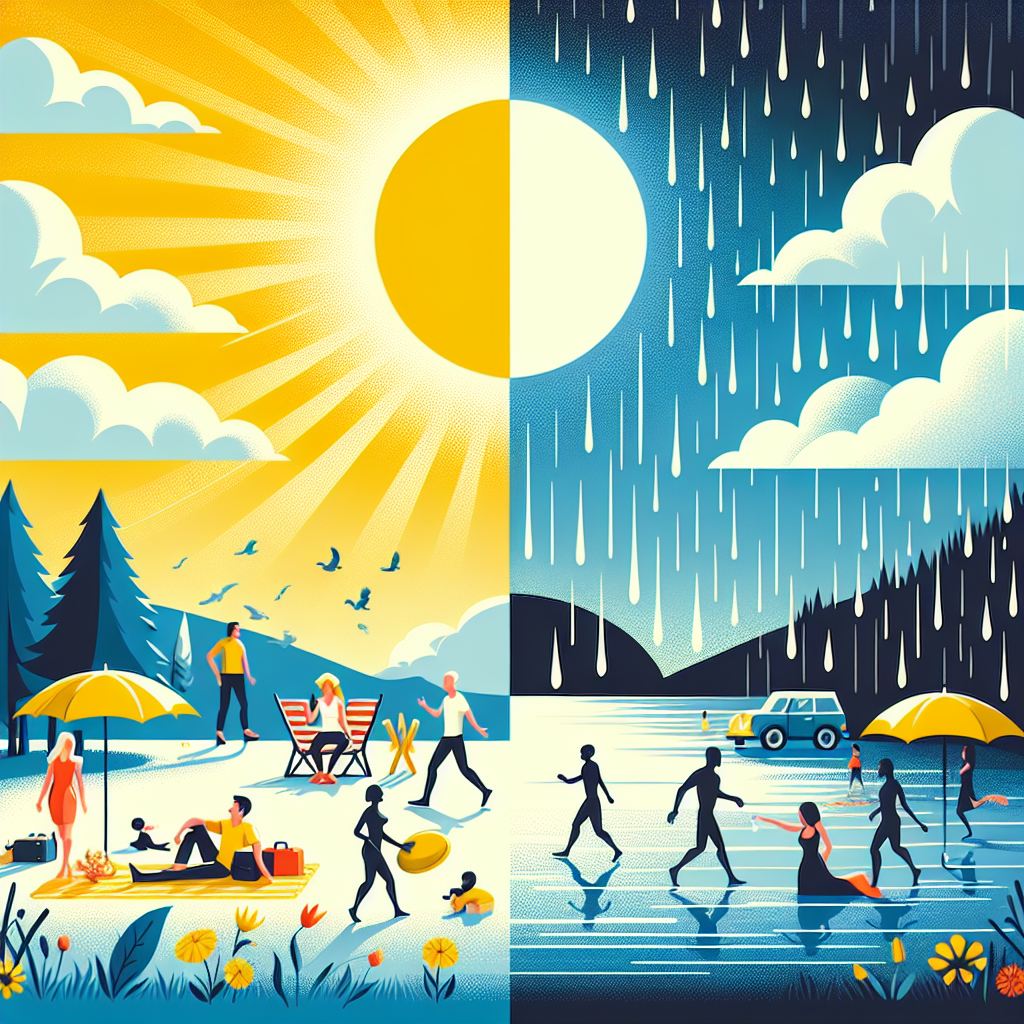
A recent report from the UK Met Office shows that extreme weather is becoming more common in the UK, especially with hotter temperatures and heavy rain. The annual State of the Climate report reveals that 2023 has had a noticeable increase in extremely hot days. This is worrying because it means the UK is not only facing more hot days but also more heavy rainfall, like what happened during Storm Babet in October last year.
The report also points out that the number of "nice" days, which are days with temperatures of 20 degrees Celsius or higher, has gone up by 40% over the last few decades. The UK has also become 9% sunnier during this time. While this might sound good, it can actually harm nature and buildings. For example, between 1961 and 1990, only London and Hampshire had six or more days a year with temperatures over 28 degrees Celsius. Now, almost all of England and Wales have this many hot days, with the South East averaging more than 12 hot days each year.
Rainfall patterns are changing too, but they are less predictable than temperature changes. The Met Office reports a 20% increase in the number of the wettest days, which are defined as the top 5% of rainfall days from 1961 to 1990. This is concerning because more extreme rainfall can lead to flooding and other problems. Mike Kendon, the lead author of the report, stresses that these numbers show a clear fact: the climate is already changing, not just in the future.
The year 2023 has been especially important, as it is the second warmest year ever recorded in the UK, with June being the hottest month on record. Several months, including February, May, June, and September, were among the top ten warmest months in the UK's history. The Met Office says these temperature extremes are due to human-caused climate change, and there haven’t been many new records for cool weather lately. This situation highlights the urgent need to tackle climate change, as record-breaking warm temperatures are happening more often.
Original news source: UK getting more hot and more wet days – Met Office (BBC)
🎧 Listen:
📖 Vocabulary:
Group or Classroom Activities
Warm-up Activities:
– CHARADES
Instructions: Divide the class into small groups. Each group will take turns acting out different weather-related phrases or terms from the article (e.g., "heavy rain," "extreme weather," "climate change") without speaking. The other groups will guess what they are acting out.
– OPINION POLL
Instructions: Create a few statements based on the article (e.g., "Climate change is the biggest threat to our planet.") and ask students to move to different sides of the room to indicate their level of agreement (strongly agree, agree, disagree, strongly disagree). Afterward, facilitate a discussion on their viewpoints.
– MIND MAP
Instructions: On a large piece of paper or a whiteboard, write "Climate Change in the UK" in the center. In groups, students will brainstorm and add related concepts, terms, or ideas from the article. They should connect their ideas visually to create a mind map.
– HEADLINE CREATION
Instructions: Ask students to work in pairs to create a catchy headline for the article. They should think about the most important aspects of the content and try to summarize it in a few compelling words. Afterward, each pair will present their headline to the class.
– SPEED SUMMARIZING
Instructions: Organize students in pairs and give them two minutes to read a section of the article. After reading, one student summarizes the section to their partner in one minute. Then they switch roles and repeat with a different section of the article.
🤔 Comprehension Questions:
The report reveals that extreme weather is becoming more common in the UK, with an increase in hotter temperatures and heavy rainfall.
The number of "nice" days, which are days with temperatures of 20 degrees Celsius or higher, has increased by 40% over the last few decades.
The increase in sunny days and hot temperatures can harm nature and buildings because it can lead to issues like stress on ecosystems and damage to infrastructure.
The article mentions a 20% increase in the number of the wettest days, which is concerning because more extreme rainfall can lead to flooding and other problems.
Mike Kendon is the lead author of the report, and he emphasizes that the data shows a clear fact: the climate is already changing, not just in the future.
The year 2023 is described as particularly important because it is the second warmest year ever recorded in the UK, with several months being among the top ten warmest in history.
The Met Office attributes the temperature extremes in the UK to human-caused climate change.
The overall message is that climate change is having significant effects in the UK, leading to more extreme weather events like hot days and heavy rainfall, highlighting the urgent need to address climate change.
🎧✍️ Listen and Fill in the Gaps:
A recent from the UK Met Office shows that extreme weather is becoming more common in the UK, especially with temperatures and heavy rain. The annual of the Climate report reveals that 2023 has had a noticeable increase in extremely hot days. This is worrying because it means the UK is not only facing more hot days but also more heavy rainfall, like what happened during Storm Babet in October last year. The report also out that the number of "nice" days, which are days with of 20 degrees Celsius or , has gone up by 40% over the last few . The UK has also 9% sunnier during this time. While this might sound good, it can actually harm nature and buildings. For example, between 1961 and 1990, only London and Hampshire had six or more days a year with temperatures over 28 degrees Celsius. Now, almost all of England and Wales have this many hot days, with the South East averaging more than 12 hot days each year. Rainfall patterns are changing too, but they are less predictable than changes. The Met Office reports a 20% increase in the number of the days, which are defined as the top 5% of rainfall days from 1961 to 1990. This is concerning because more extreme rainfall can lead to flooding and other problems. Mike Kendon, the lead author of the report, stresses that these numbers show a clear fact: the is already changing, not just in the future. The year 2023 has been especially , as it is the second warmest year ever ed in the UK, with June being the hottest month on record. months, including February, May, June, and September, were among the top ten warmest months in the UK's history. The Met says these temperature extremes are due to human-caused climate change, and there haven’t been many new records for cool weather lately. This highlights the urgent need to tackle climate change, as record-breaking warm temperatures are happening more often.
💬 Discussion Questions:
1. What is your opinion on climate change? Do you think it is a serious issue? Why or why not?
2. How would you feel if your hometown experienced extreme weather like heavy rain or extreme heat?
3. Do you like hot weather or do you prefer cooler temperatures? Why?
4. What do you think are the biggest effects of climate change on our daily lives?
5. How do you think people can help reduce the impact of climate change?
6. Have you ever experienced a natural disaster, like floods or storms? How did it affect you?
7. Do you think governments are doing enough to tackle climate change? Why or why not?
8. What is a "nice" day for you? How important is good weather to your mood?
9. How would you feel if you had to change your lifestyle because of climate change?
10. Do you think young people today are more aware of climate issues than previous generations? Why?
11. What is your favorite season, and how do you think climate change is affecting it?
12. How would you react if you found out that your favorite outdoor activities were threatened by extreme weather?
13. Do you think it's possible to reverse some of the effects of climate change? Why or why not?
14. How important is it for schools to teach students about climate change?
15. What do you think the weather will be like in your area in 10 years? Why do you think that?
Individual Activities
📖💭 Vocabulary Meanings:
Click a dot next to a word, then click the dot next to its meaning to draw a line connecting them.
Words
Meanings
🔡 Multiple Choice Questions:
🕵️ True or False Questions:
📝 Write a Summary:
Write a summary of this news article in two sentences.
Check your writing now with the best free AI for English writing!