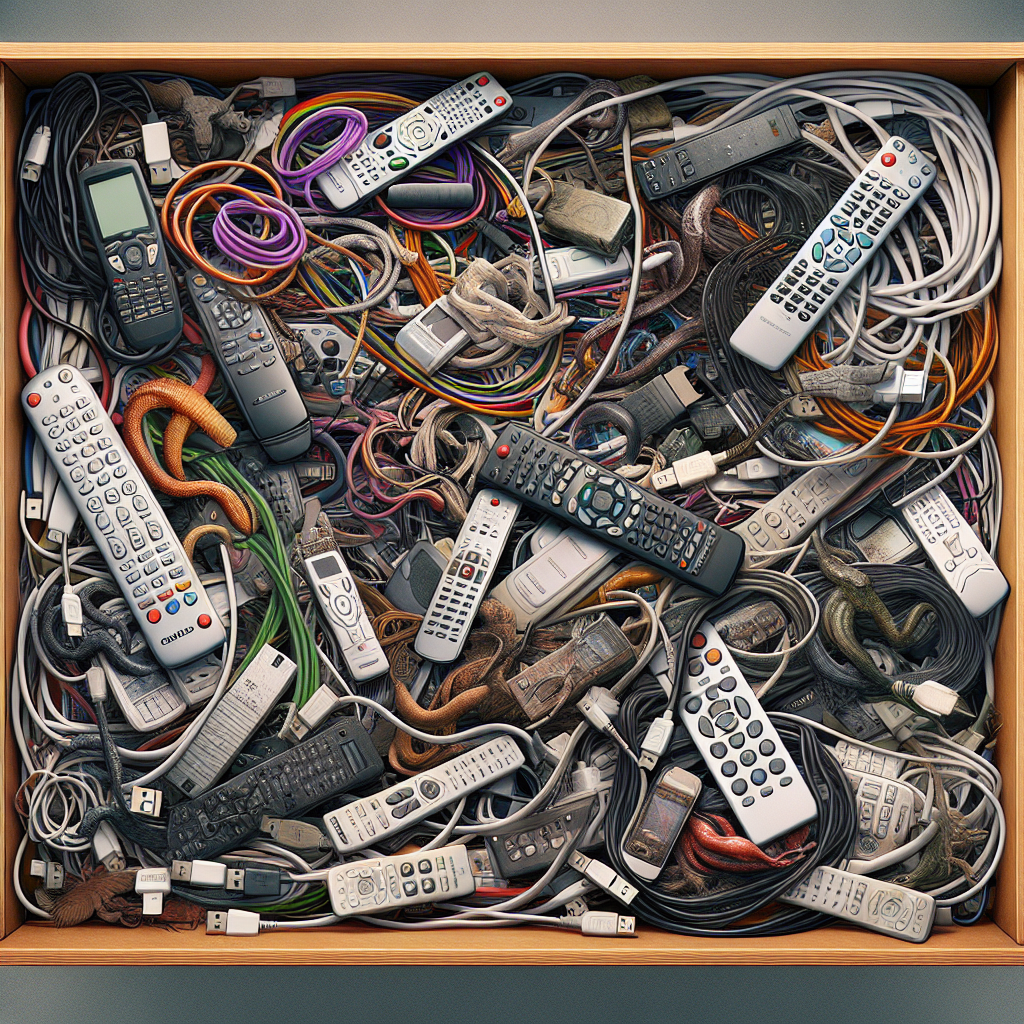
A recycling campaign group called Material Focus has issued a warning about the growing problem of unused electricals and broken technology in households. According to their estimates, the average number of items being stockpiled has increased from 20 to 30 within the past four years. The top ten products being hoarded include remote controls, mobile phones, and hairdryers. The United Nations has reported that electronic waste is increasing at a rate five times faster than documented recycling. As a result, people are being urged to clean out their "drawers of doom" and dispose of these items properly.
One self-proclaimed hoarder of electricals, Paul Bowtell, admits to having over 40 electrical items in just a couple of storage boxes, with even more in his attic, drawers, footstool, and other boxes. He explains that some of these items belong to his grown-up sons, while others were once expensive but now hold no value. Scott Butler, the executive director of Material Focus, believes that everyone probably has a "drawer of doom" filled with cables and remote controls for devices that are no longer in use.
Material Focus estimates that over 880 million unused electrical items are currently being held in UK homes. The group emphasizes that trashed electronics should never be thrown in the general waste, as they contain valuable materials that can be recycled. These materials include steel, aluminum, copper, lithium batteries, and even gold. Mining these precious materials in the first place leads to pollution, harms wildlife, and contributes to climate change. Therefore, it is crucial to recycle and extract the value from these items.
Sarah Burns, the sustainability and engagement manager from Bristol Waste, highlights the importance of reducing the number of electrical items in the first place. One way to extend the value of unused electrical items is by sharing them. For example, at Share Bristol – A Library of Things, people can borrow items like sanders, hedge trimmers, and popcorn makers that they are unlikely to use every day. Additionally, if individuals have spare laptops or smart devices, they can donate them to those in need by searching for "recycle your electricals" to find reuse and drop-off points.
Data from Material Focus reveals that households in the UK are throwing away 103,000 tonnes of electricals instead of recycling them. The organization also estimates that 343,000 tonnes of electrical waste are being stolen or illegally exported from the waste system. To calculate these estimates, Material Focus used data from recent market research involving 2,000 adults across the UK.
Original news source: E-waste drawers of doom growing, say campaigners (BBC)
🎧 Listen:
📖 Vocabulary:
Group or Classroom Activities
Warm-up Activities:
– News Summary
Instructions:
1. Divide the class into pairs or small groups.
2. Give each group a few minutes to read the article.
3. Instruct the groups to summarize the main points of the article in their own words.
4. After a set amount of time, have each group share their summary with the class.
5. Encourage discussion and ask follow-up questions to check comprehension.
– Opinion Poll
Instructions:
1. Divide the class into pairs or small groups.
2. Assign each group a specific question related to the article (e.g. "Do you have a 'drawer of doom' at home?").
3. Instruct the groups to discuss the question and come up with their own opinions.
4. Have each group present their opinions to the class.
5. Encourage respectful debate and discussion among the students.
– Vocabulary Pictionary
Instructions:
1. Write down key vocabulary words from the article on separate slips of paper.
2. Divide the class into two teams.
3. One student from each team comes to the front of the class.
4. Show the first student a vocabulary word without saying it, and they must draw a picture to represent the word.
5. The student's team must guess the word based on the drawing within a set time limit.
6. Repeat the process with the second student and continue until all the words have been drawn and guessed.
7. Keep score and declare a winning team at the end.
– Headline Creation
Instructions:
1. Divide the class into small groups.
2. Instruct each group to create a catchy headline related to the article.
3. Give the groups a few minutes to come up with their headlines.
4. Have each group share their headline with the class.
5. Encourage creativity and discussion about the different headlines.
– Two Truths and a Lie
Instructions:
1. Have each student come up with two true statements and one false statement related to the article.
2. Divide the class into pairs or small groups.
3. Instruct each student to share their statements with their partner or group.
4. The other students must guess which statement is the lie.
5. After each student has shared, discuss the true statements and any interesting facts from the article.
🤔 Comprehension Questions:
🎧✍️ Listen and Fill in the Gaps:
A recycling campaign group called Material Focus has issued a about the growing problem of electricals and broken technology in households. According to their estimates, the average number of items being stockpiled has increased from 20 to 30 within the past four years. The top ten products being hoarded include remote controls, mobile phones, and hairdryers. The United has reported that waste is increasing at a rate five times faster than documented recycling. As a result, people are being urged to clean out their "drawers of doom" and dispose of these items properly. One self-proclaimed hoarder of electricals, Paul Bowtell, admits to having over 40 electrical items in just a couple of storage , with even more in his attic, drawers, footstool, and other boxes. He explains that some of these items belong to his grown-up sons, while others were once but now hold no value. Scott Butler, the executive of Focus, believes that everyone probably has a "drawer of doom" filled with cables and remote controls for devices that are no longer in use. Material Focus estimates that over 880 million unused electrical items are currently being held in UK homes. The group emphasizes that trashed electronics should never be thrown in the general waste, as they contain valuable that can be recycled. These materials include steel, aluminum, copper, lithium , and even gold. Mining these precious materials in the first leads to pollution, harms wildlife, and contributes to climate change. Therefore, it is crucial to recycle and extract the value from these items. Sarah Burns, the sustainability and engagement manager from Bristol Waste, highlights the importance of reducing the number of electrical items in the first place. One way to extend the value of unused electrical items is by them. For example, at Share Bristol – A Library of Things, people can borrow items like sanders, hedge , and popcorn makers that they are unlikely to use every day. Additionally, if individuals have spare or smart devices, they can donate them to those in need by searching for "recycle your electricals" to find reuse and drop-off points. Data from Material reveals that households in the UK are throwing away 103,000 tonnes of electricals instead of recycling them. The organization also estimates that 343,000 tonnes of electrical waste are being stolen or illegally from the waste system. To calculate these estimates, Material Focus used data from recent market research involving 2,000 adults across the UK.
💬 Discussion Questions:
1. What is a "drawer of doom" and do you have one in your home?
2. How would you feel if you found out that your country was throwing away 103,000 tonnes of electricals instead of recycling them?
3. Do you like the idea of sharing unused electrical items with others? Why or why not?
4. How would you feel if you discovered that 343,000 tonnes of electrical waste were being stolen or illegally exported from the waste system?
5. What do you think about the idea of donating spare laptops or smart devices to those in need?
6. Why do you think electronic waste is increasing at a rate five times faster than documented recycling?
7. Do you think people should be more mindful of the environmental impact of hoarding unused electricals? Why or why not?
8. How do you think the hoarding of unused electricals contributes to climate change?
9. Why do you think some people hold onto electrical items that no longer hold value?
10. How would you feel if you discovered that your country had over 880 million unused electrical items being held in homes?
11. What do you think are some ways to encourage people to properly dispose of their unused electricals?
12. Why do you think it is important to recycle and extract the value from electronic waste?
13. How do you think sharing unused electrical items can help reduce the number of items being stockpiled?
14. What is your opinion on the idea of a "Library of Things" where people can borrow items they are unlikely to use every day?
15. How do you think the mining of precious materials for electronic devices contributes to pollution and harms wildlife?
Individual Activities
📖💭 Vocabulary Meanings:
Click a dot next to a word, then click the dot next to its meaning to draw a line connecting them.
Words
Meanings
🔡 Multiple Choice Questions:
🕵️ True or False Questions:
📝 Write a Summary:
Write a summary of this news article in two sentences.
Check your writing now with the best free AI for English writing!