
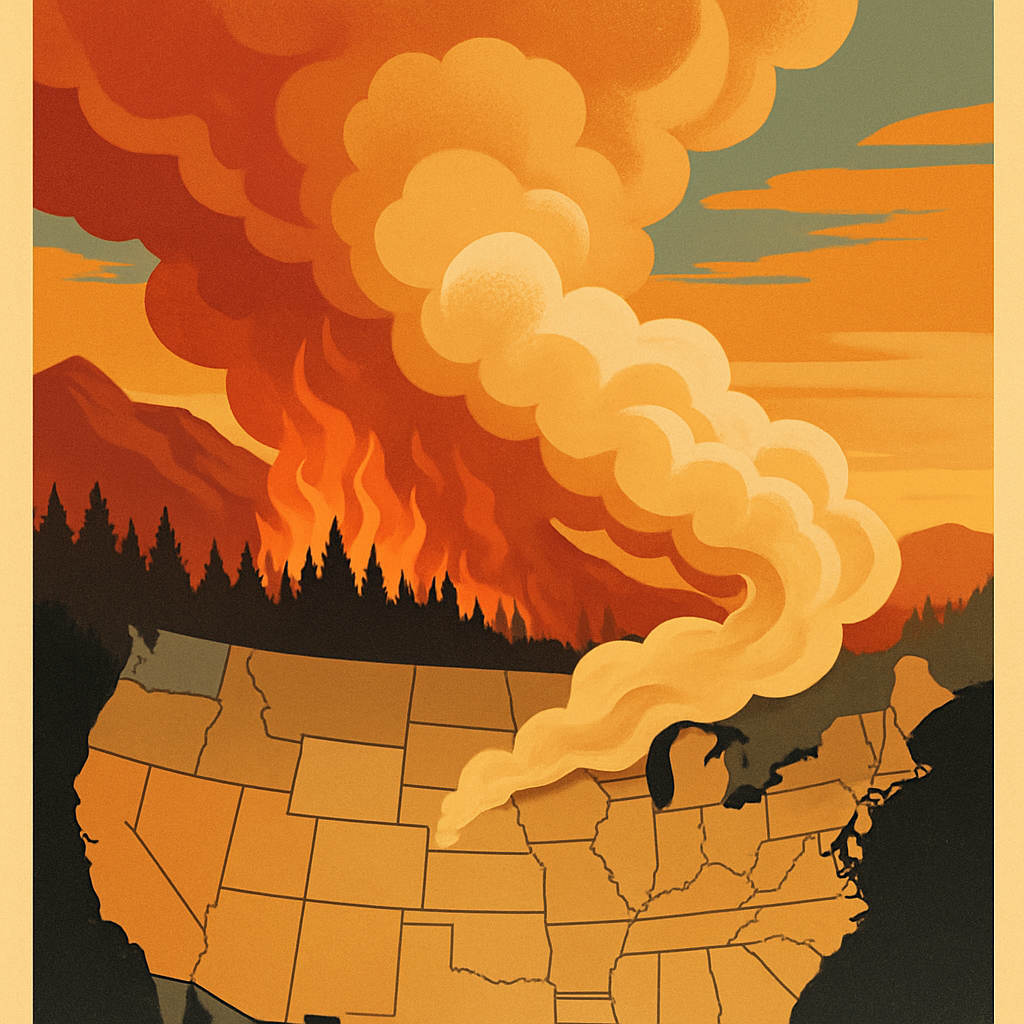
Canada is battling a staggering number of over 800 wildfires, intensifying air pollution issues in North America. The massive plumes of smoke are drifting southward, blanketing cities like New York, Detroit, and Toronto. As a precaution, numerous outdoor events have been canceled, and authorities are urging residents to stay indoors due to the hazardous air quality levels.
In affected areas, including Chicago and Pittsburgh, residents are donning masks to shield themselves from the adverse effects of inhaling smoke-filled air. The atmospheric conditions have shrouded iconic structures such as the Statue of Liberty in a dense haze. These circumstances have led New York's governor to classify the situation as a significant health risk for its residents.
The wildfires have brought both Canada and the US together in tackling this environmental crisis, prioritizing efforts to manage these fires. While thunderstorms are expected in Ontario in the coming days, they might not significantly alleviate the situation. The Canadian government has emphasized the role of climate change in the increased frequency of such wildfires.
The situation remains fluid as winds are forecasted to change direction soon, potentially improving air quality in some US regions. However, this will also shift the smoke's path, impacting new areas. The persistence of these wildfires poses ongoing challenges for fire crews and residents.
Original news source: Canada fires prompt US air quality alerts as smoke blankets major cities – BBC News (BBC)
🎧 Listen:
📖 Vocabulary:
Group or Classroom Activities
Warm-up Activities:
1. Have you seen any smoky skies recently? What did you think caused them?
2. Why do you think wildfires happen more often nowadays?
3. What would you do if there was a wildfire near your home?
4. How do changing weather patterns affect our daily life?
5. Have you ever had to cancel activities due to weather conditions?
🤔 Comprehension Questions:
The air pollution is caused by over 800 wildfires in Canada.
New York, Detroit, and Toronto are mentioned as being affected.
Authorities urge people to stay indoors because of hazardous air quality levels.
Residents are wearing masks to protect themselves from smoke.
The wildfires have shrouded iconic structures like the Statue of Liberty in haze.
Thunderstorms are expected in Ontario, but they might not significantly help.
Forecasts suggest wind direction might change, potentially improving air quality in some regions but impacting new areas.
🎧✍️ Listen and Fill in the Gaps:
Canada is battling a number of over 800 wildfires, intensifying air pollution issues in North America. The massive plumes of smoke are drifting southward, blanketing cities like New York, Detroit, and . As a precaution, numerous outdoor have been canceled, and authorities are urging to stay indoors due to the hazardous air quality levels. In affected areas, including Chicago and Pittsburgh, residents are donning to shield from the adverse effects of inhaling smoke-filled air. The atmospheric conditions have iconic structures such as the Statue of Liberty in a dense haze. These circumstances have led New York's governor to the situation as a health risk for its residents. The wildfires have both Canada and the US together in tackling this environmental crisis, prioritizing efforts to these fires. While thunderstorms are expected in in the coming days, they might not significantly alleviate the situation. The Canadian government has emphasized the role of climate change in the increased of such . The situation remains as winds are forecasted to change direction soon, potentially improving air in some US regions. However, this will also shift the smoke's path, impacting new areas. The persistence of these wildfires poses ongoing challenges for fire crews and residents.
💬 Discussion Questions:
1. Do you think air pollution affects people differently based on where they live?
2. How can communities prepare better for natural disasters?
3. What role does technology play in predicting and managing wildfires?
4. How important is international cooperation in solving environmental problems?
5. Have you ever experienced a situation where you had to stay indoors due to weather conditions?
6. What measures can be taken to reduce the frequency of wildfires?
7. How effective are masks in protecting against air pollution?
8. Should governments invest more in clean air initiatives? Why or why not?
9. How does climate change contribute to the intensity of natural disasters?
10. What steps can individuals take to minimize their carbon footprint?
11. What are the long-term impacts of poor air quality on health?
12. Have you or anyone you know been affected by a wildfire or similar disaster? How did it impact you?
Individual Activities
📖💭 Vocabulary Meanings:
Click a dot next to a word, then click the dot next to its meaning to draw a line connecting them.