Free Materials For ESL Teachers and Learners

English Newsroom

Learn English through news articles - complete lesson plans, including articles, listening, classroom activities, quiz questions and more!

How Tacos Became Norway’s Favorite Meal

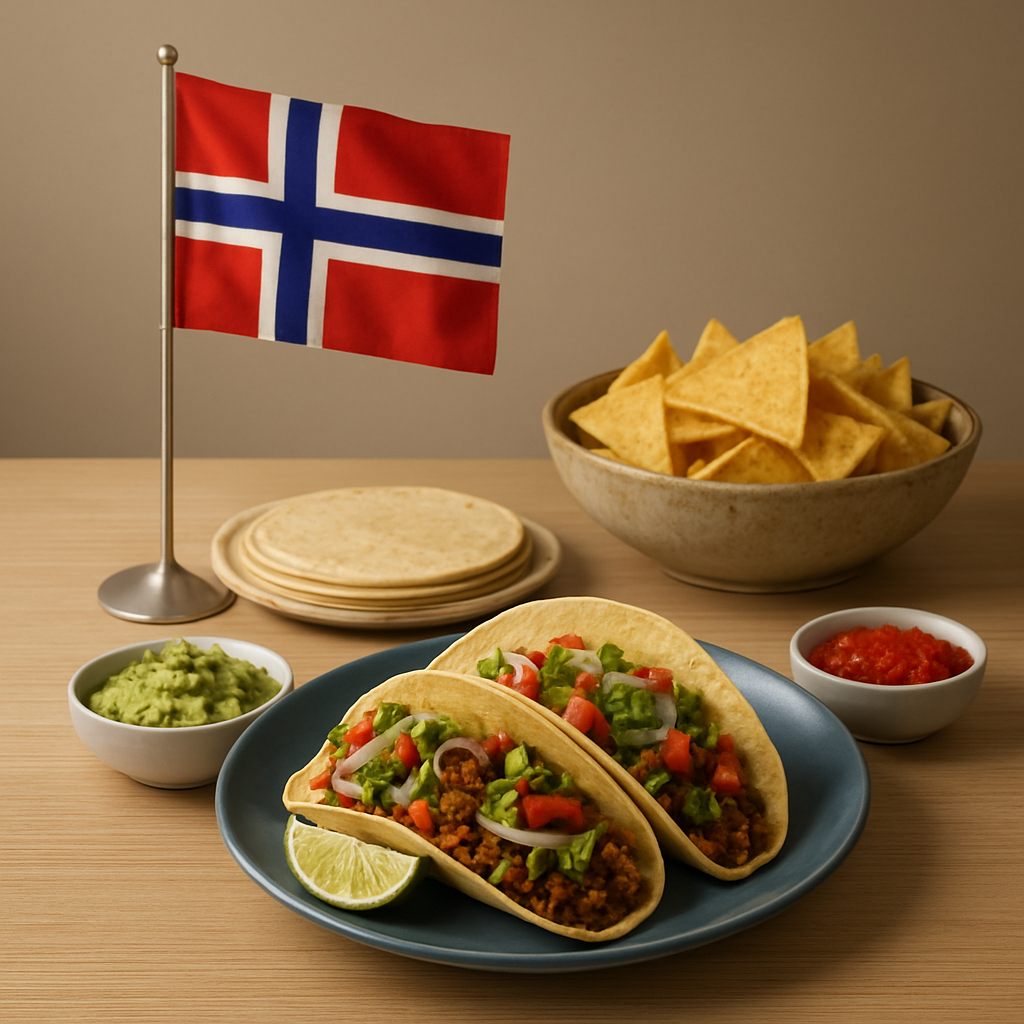
Taco Friday is a widespread tradition in Norway.
Try this article at a different level?

In Norway, a popular weekly event called Taco Friday unites families for a simple but enjoyable meal. This tradition dates back to the late 1960s when Norway's oil industry brought Texan workers who introduced tacos to the country. Norwegian supermarkets soon embraced this food trend by selling Tex-Mex kits.

Norwegian tacos differ from authentic Mexican tacos by usually containing hard taco shells filled with minced beef, cheese, lettuce, and sour cream. The convenience of these supermarket kits and the customizable nature of the meal have solidified tacos' place in Norwegian culture.

Food writer Helle Valebrokk refers to the tacos as a "Norwegian Happy Meal" because everyone can craft their own perfect bite. Over time, locals have added their twist to the dish, sometimes using local ingredients like reindeer or fish.

Despite debates regarding their authenticity, Norwegian tacos have become a unique cultural staple. They provide a sense of comfort and community, signifying the end of a busy week with a shared family tradition.

Original news source: How tacos became Norway's national comfort food (BBC)

🎧 Listen:

πŸ“– Vocabulary:

1. event
2. unites
3. tradition
4. embraced
5. authentic
6. solidified
7. refers
8. craft
9. debates
10. authenticity
11. staple
12. comfort
13. customizable
14. cemented
15. ritual

Group or Classroom Activities

Warm-up Activities:

1. Share your favorite family meal tradition. Why do you enjoy it?
2. Do you enjoy cooking with your family? What do you usually make?
3. Have you ever tried making a meal from another culture? How did it go?
4. Discuss the importance of weekly family activities. Why are they beneficial?
5. What foreign food has become popular in your country? Why do you think so?

πŸ€” Comprehension Questions:

1. What is Taco Friday in Norway?

2. When did Taco Friday begin in Norway?

3. Who introduced tacos to Norway?

4. What do Norwegian tacos typically include?

5. How does Helle Valebrokk describe Norwegian tacos?

6. What local ingredients might Norwegians use in their tacos?

7. What does Taco Friday signify in Norway?

🎧✍️ Listen and Fill in the Gaps:

In , a popular weekly event called Taco unites for a simple but enjoyable meal. This tradition dates back to the late 1960s when Norway's oil industry brought Texan workers who tacos to the country. Norwegian supermarkets soon embraced this food trend by selling Tex-Mex kits. Norwegian tacos differ from authentic tacos by usually containing hard taco shells filled with minced beef, cheese, lettuce, and sour cream. The of these kits and the nature of the meal have tacos' place in Norwegian culture. Food writer Helle Valebrokk refers to the tacos as a "Norwegian Happy Meal" because everyone can craft their own perfect bite. Over time, locals have their to the dish, sometimes local ingredients like or fish. regarding their authenticity, Norwegian tacos have become a unique cultural staple. They provide a sense of comfort and community, signifying the end of a busy week with a shared family tradition.

πŸ’¬ Discussion Questions:

1. What is your opinion on the spread of cultural food traditions?
2. Have you ever tried Mexican or Tex-Mex food? What do you think?
3. How important is it to preserve traditional foods in modern society?
4. Do you think food can bring people from different backgrounds together?
5. What foods do you associate with your culture, and why?
6. How do you feel about adding local twists to foreign dishes?
7. What meal would you consider a "happy meal" in your country?
8. Do you think food trends can incorrectly represent a culture?
9. How do global food trends influence what you eat?
10. Would you like to participate in a cultural food event like Taco Friday?
11. What other country’s food traditions are you interested in learning about?
12. How does the way we eat define us as individuals or communities?

Individual Activities

πŸ“–πŸ’­ Vocabulary Meanings:

Click a dot next to a word, then click the dot next to its meaning to draw a line connecting them.


Words

1. event
2. unites
3. tradition
4. embraced
5. authentic
6. solidified
7. refers
8. craft
9. debates
10. authenticity
11. staple
12. comfort
13. customizable
14. cemented
15. ritual

Meanings

(A) a notable occurrence
(B) a state of ease or well-being
(C) primary or necessary part
(D) repeated action with special significance
(E) a long-standing practice
(F) create skillfully
(G) made stronger or more certain
(H) brings together
(I) made firm or stable
(J) able to be changed or modified
(K) genuineness
(L) fully accepted
(M) mentions or describes
(N) discussions with differing views
(O) genuine or real

πŸ”‘ Multiple Choice Questions:

1. What is Taco Friday?
(a) A weekly event in Norway
(b) A new trend in America
(c) A dish in Mexico
(d) A Norwegian holiday
2. Who introduced tacos to Norway?
(a) Mexican chefs
(b) Norwegian locals
(c) Texan workers
(d) British tourists
3. What do Norwegian tacos typically include?
(a) Beans and rice
(b) Shrimp and avocado
(c) Minced beef and sour cream
(d) Chicken and salsa
4. How does Helle Valebrokk describe Norwegian tacos?
(a) A traditional dish
(b) A "Norwegian Happy Meal"
(c) A global sensation
(d) A gourmet meal
5. What unique ingredients might be found in Norwegian tacos?
(a) Pineapple or mango
(b) Olive or capers
(c) Duck or goose
(d) Reindeer or fish
6. What does the customizable nature of the meal suggest?
(a) People can personalize their tacos
(b) Everyone must have the same ingredients
(c) It's difficult to prepare
(d) Ingredients are limited
7. What has become a cultural staple in Norway?
(a) Sushi
(b) Tacos
(c) Pizza
(d) Burgers
8. What does a shared family ritual mark for Norwegians?
(a) The start of a day
(b) A festive holiday
(c) The middle of the year
(d) The end of a busy week

πŸ•΅οΈ True or False Questions:

1. Norwegian tacos are made with Tex-Mex kits from supermarkets.
2. Norwegian tacos typically use soft shells and diced chicken.
3. Taco Friday marks the end of a busy week.
4. Texan workers brought burgers to Norway in the late 1960s.
5. Taco Friday is a popular event in Norway.
6. Helle Valebrokk calls Norwegian tacos a "Norwegian Happy Meal."
7. Locals rarely use reindeer or fish in their tacos.
8. Tacos have become a cultural novelty in Norway.

Writing Questions:

1. Describe a food tradition in your country that brings people together.
2. Compare and contrast Norwegian tacos with another type of taco you know.
3. Discuss the effects of globalization on local food traditions.
4. Write about a time when you tried a new food that was important to someone else's culture.
5. Explain why food can be an important way to connect with family and friends.

How about these other Level 3 articles?

Retrograde cricopharyngeus dysfunction (R-CPD), or "no burp syndrome," negatively impacts the quality of life of sufferers, causing embarrassment, anxiety, and depression, yet it is often misunderstood and underdiagnosed by doctors, highlighting the need for more awareness and research into the condition.

R-CPD: No Burp Syndrome Negatively Impacts Quality of Life

Retrograde cricopharyngeus dysfunction (R-CPD), or “no burp syndrome,” negatively impacts the quality of life of sufferers, causing embarrassment, anxiety, and depression, yet it is often misunderstood and underdiagnosed by doctors, highlighting the need for more awareness and research into the condition.

Online
Class
Writing
Coach
β˜• 컀피 3μž” &
무료 ν”Όλ“œλ°±! πŸŽ“
β˜• 컀피 3μž” & 무료 ν”Όλ“œλ°±! πŸŽ“

X

[100% 온라인] λž­μ»€μŠ€ν„° λŒ€ν•™κ΅ μ˜μ–΄ 연ꡬ μ°Έμ—¬μž λͺ¨μ§‘
λ³„λ„μ˜ μ°Έκ°€λΉ„ 없이 영ꡭ λŒ€ν•™ 연ꡬ에 도움도 μ£Όμ‹œκ³ , 무료 μ˜μ–΄ μ‹€μ „ μ—°μŠ΅κ³Ό ν”Όλ“œλ°±λ„ λ°›μ•„λ³΄μ„Έμš”!

영ꡭ λž­μ»€μŠ€ν„° λŒ€ν•™κ΅(Lancaster University)μ—μ„œ ν•œκ΅­μΈ μ˜μ–΄ ν•™μŠ΅μžλΆ„λ“€μ„ λŒ€μƒμœΌλ‘œ μƒˆλ‘œμš΄ 연ꡬ ν”„λ‘œμ νŠΈλ₯Ό μ§„ν–‰ν•©λ‹ˆλ‹€. μ „ κ³Όμ • 온라인으둜 μ§„ν–‰λ˜μ–΄ μ–΄λ””μ„œλ“  νŽΈν•˜κ²Œ μ°Έμ—¬ν•˜μ‹€ 수 μžˆμŠ΅λ‹ˆλ‹€. μ—¬λŸ¬λΆ„μ˜ μ†Œμ€‘ν•œ μ°Έμ—¬λ‘œ ν•œκ΅­μΈμ˜ μ˜μ–΄ μ‚¬μš© 방식을 μ•Œμ•„λ³΄λŠ” ν₯미둜운 연ꡬ가 μ™„μ„±λ©λ‹ˆλ‹€.

🎁 μ°Έμ—¬ ν˜œνƒ:
– 원어민 μ—°κ΅¬μ›κ³Όμ˜ 1:1 νšŒν™” μ—°μŠ΅
– μ‹€μ „ μ˜μž‘ μ—°μŠ΅ & λ§žμΆ€ν˜• μ˜μ–΄ ν”Όλ“œλ°± 리포트
– 컀피 κΈ°ν”„ν‹°μ½˜ 총 3μž” μ„ λ¬Ό! (첫 μ„Έμ…˜ ν›„ 1μž”, λ§ˆμ§€λ§‰ μ„Έμ…˜ μ™„λ£Œ ν›„ 2μž” 더 λ“œλ €μš”! β˜•β˜•)

πŸ“… μ°Έμ—¬ 방식: 총 2회의 온라인 μ„Έμ…˜ (Zoom 등을 이용, 각 μ„Έμ…˜λ‹Ή μ•½ 60~80λΆ„ μ†Œμš”) λ§ν•˜κΈ°μ™€ μ“°κΈ° ν™œλ™μ΄ μ„žμ—¬ μžˆμ–΄ λΆ€λ‹΄ 없이 즐겁게 μ°Έμ—¬ν•˜μ‹€ 수 μžˆμŠ΅λ‹ˆλ‹€.

βœ… λŒ€μƒ: μ˜μ–΄ μ‹€λ ₯에 상관없이 μ°Έμ—¬λ₯Ό ν¬λ§ν•˜λŠ” 18μ„Έ 이상 ν•œκ΅­μΈ λˆ„κ΅¬λ‚˜

Feedback