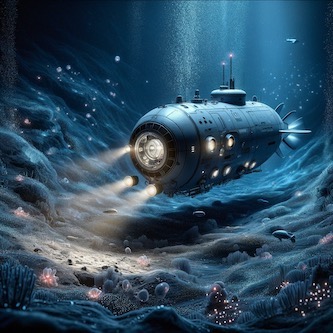
At first, Walsh was surprised when he was asked to join the mission because he had only been 100 meters deep in a submarine before. But he thought the special submarine they were using, called the bathyscaphe Trieste, could handle the huge pressure in the Mariana Trench. On January 23, 1960, Walsh and a guy named Jacques Piccard started their descent. It was really cold and the pressure kept getting higher as they went down into the dark.
After many hours, they finally reached the bottom of the Mariana Trench. But because of all the stuff in the water, they couldn't take a picture of the deepest part of the ocean. Even so, Walsh and Piccard made history and got recognized for what they did. Walsh then worked to promote exploring the ocean and making it safer.
In 2012, a filmmaker named James Cameron did the same dive and Walsh was there to congratulate him. Then in 2019, Walsh's son, Kelly Walsh, went even deeper than his dad. Walsh's focus on the ocean, even though people were more interested in space, turned out to be really important. New technology has shown us that the deep sea is crucial for understanding how Earth works, like the carbon cycle and climate change. Walsh's dive opened the door for more research and exploration of the ocean's depths.
Original news source: Don Walsh: The man who made the deepest ever dive (BBC)
📖 Vocabulary:
Group or Classroom Activities
Warm-up Activities:
– News Reporter Role-play
Instructions: Students will work in pairs to role-play a news broadcast about the passing of Captain Don Walsh. One student will act as the anchor, introducing the news, while the other will be a correspondent who had an 'exclusive interview' with Walsh before he passed. Encourage the use of past tenses and relevant vocabulary from the article.
– Sketch It
Instructions: Divide the class into small groups. Each group will receive a portion of the article to read. After discussing the meaning among themselves, they will have to create a quick sketch or storyboard that illustrates the events or concepts from their section. Each group will then present their sketch to the class, explaining the significance of Captain Walsh's achievements.
– Vocabulary Pictionary
Instructions: Write down key vocabulary from the article on small pieces of paper (e.g., explorer, submarine, descent, trench, pressure, carbon cycle). Students will take turns drawing the words for their team to guess. The aim is to revise vocabulary in a fun and interactive way.
– Opinion Poll
Instructions: Conduct a class opinion poll on the following statement: "Ocean exploration is just as important as space exploration." Students will walk to one side of the room if they agree, the other side if they disagree, or stay in the middle if they are undecided. Then, select representatives from each group to explain their position, encouraging the use of persuasive language and expressions from the article.
– Future Predictions
Instructions: Invite students to make predictions about the future of ocean exploration based on the article about Captain Walsh's legacy. They should consider technology, environmental concerns, and human curiosity. Have them share their predictions with the class and discuss the potential impacts on our understanding of the Earth and its processes. This activity will stimulate the use of modal verbs of speculation (e.g., might, could, will).
🤔 Comprehension Questions:
Captain Don Walsh was famous for going to the deepest part of the ocean, the Mariana Trench, over 60 years ago.
The Mariana Trench that Walsh explored is almost 11 kilometers (7 miles) deep.
Walsh chose to explore the ocean during an era when most people were really into space exploration.
The special submarine used by Walsh for his historic dive was called the bathyscaphe Trieste.
Jacques Piccard accompanied Walsh on his descent to the bottom of the Mariana Trench.
All the stuff in the water, like sediment and particles, prevented Walsh and Piccard from taking a picture at the bottom of the trench.
After his historic dive, Walsh worked to promote exploring the ocean and making it safer.
According to the article, the deep sea is considered crucial for understanding Earth's functions because it helps us understand things like the carbon cycle and climate change.
🎧✍️ Listen and Fill in the Gaps:
Captain Don Walsh, a famous r of the ocean, has died at the age of 92. He really famous over 60 years ago when he went to the deepest part of the ocean, the Trench. It's almost 11 kilometers (7 miles) deep! People were really into space exploration at that time, but Walsh wanted to explore the ocean instead. He joined a mission with the US Navy and went deeper into the ocean than anyone had ever gone before. At first, was surprised when he was asked to join the mission because he had only been 100 deep in a submarine before. But he thought the special submarine they were using, called the bathyscaphe Trieste, could handle the huge in the Mariana Trench. On January 23, 1960, Walsh and a guy Jacques Piccard started their descent. It was really cold and the pressure kept getting higher as they went down into the dark. After many hours, they finally the bottom of the Mariana Trench. But because of all the stuff in the , they couldn't take a picture of the deepest part of the ocean. Even so, Walsh and Piccard made history and got recognized for what they did. Walsh then worked to promote exploring the ocean and making it safer. In 2012, a named Cameron did the same dive and Walsh was there to him. Then in 2019, Walsh's son, Kelly Walsh, went even than his dad. Walsh's focus on the ocean, even though people were more interested in space, turned out to be really . New technology has shown us that the deep sea is crucial for understanding how works, like the carbon cycle and climate change. Walsh's dive opened the door for more research and exploration of the ocean's depths.
💬 Discussion Questions:
1. What is an explorer, and would you like to be one? Why or why not?
2. How would you feel if you had the chance to explore a place no one else has ever been?
3. Do you think it's more exciting to explore space or the ocean? Why?
4. What's the deepest you've ever been underwater, and what was it like?
5. Why do you think people are fascinated with exploring unknown places?
6. If you could join any kind of mission, like going to space or the deep sea, which would you choose? Why?
7. What is a submarine, and would you like to travel in one?
8. How do you think the pressure and darkness might affect someone deep in the ocean?
9. Do you think it's important to explore the ocean? Why or why not?
10. What kind of new technology do you think could help us learn more about the ocean?
11. Do you think it's important for children to follow in their parents' footsteps, like Walsh's son did?
12. How do you think the discovery of the Mariana Trench has helped us understand Earth better?
13. Do you think we should invest more money in ocean exploration or in other areas? Why?
14. What are some ways that exploring the ocean can make it safer for people?
15. Do you think there are still many places on Earth that are unexplored? Would you want to find them? Why or why not?
Individual Activities
📖💭 Vocabulary Meanings:
Click a dot next to a word, then click the dot next to its meaning to draw a line connecting them.
Words
Meanings
🔡 Multiple Choice Questions:
🕵️ True or False Questions:
📝 Write a Summary:
Write a summary of this news article in two sentences.
Check your writing now with the best free AI for English writing!