Free Materials For ESL Teachers and Learners

English Newsroom

Learn English through news articles - complete lesson plans, including articles, listening, classroom activities, quiz questions and more!

Rehabilitation for Phone Addiction Growing

Therapy sessions tackle rising concerns over phone dependency.
Try this article at a different level?

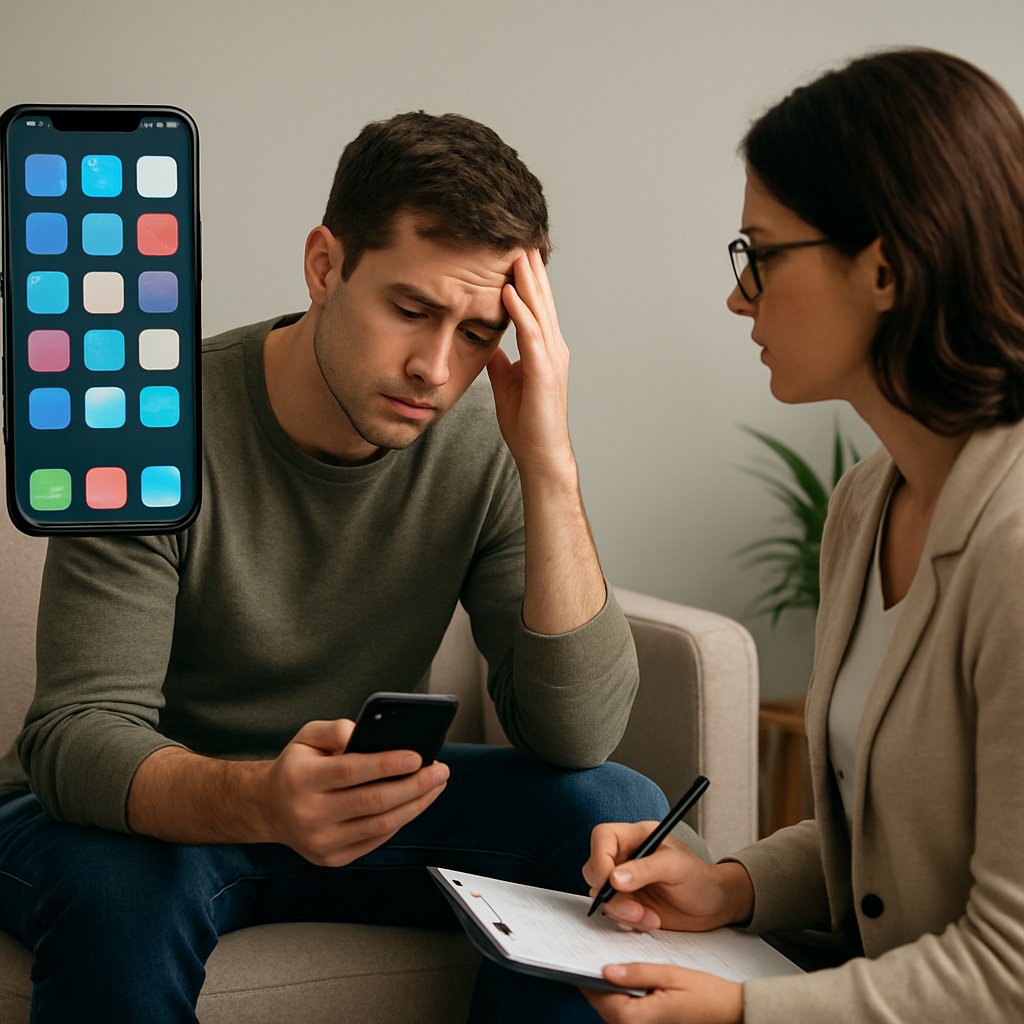
Marios spends about 14 hours every day using his phone. He thinks of his phone as a drug he carries in his pocket. Now, he is trying to get help to stop this phone addiction. Marios believes he uses his phone so much because he feels lonely sometimes.

Phone addiction isn't officially a medical condition, but many people are affected by it. More people are seeking help in rehab centers for phone dependency. Experts explain that smartphones are changing how our brains work. People are finding it hard to ignore notifications and spend more time on screens.

Many people say they spend too much time with their phones. Some feel guilty because they might be missing real-life moments. Help can be found through group and individual therapy in rehab centers. These therapies help reduce screen time and promote real-world activities.

Original news source: How addicted are we to our phones? Some of us are going to rehab (BBC)

🎧 Listen:

πŸ“– Vocabulary:

1. addiction
2. therapy
3. officially
4. dependency
5. experts
6. chemistry
7. notifications
8. individuals
9. interactions
10. experiences
11. treatments
12. encourage

Group or Classroom Activities

Warm-up Activities:

1. How many hours do you spend on your phone daily?
2. Can you remember a day without using any technology?
3. What is your favorite activity that does not involve screens?
4. How do you feel when you can't use your phone for a day?
5. Discuss a time when you hung out with friends without using phones.

πŸ€” Comprehension Questions:

1. How many hours does Marios spend on his phone each day?

2. What does Marios compare his phone to?

3. Why is Marios seeking therapy?

4. What do experts say about smartphones?

5. What do many individuals report about phone usage?

6. Where is help available for phone dependency?

7. What do therapies in rehab centers encourage?

🎧✍️ Listen and Fill in the Gaps:

spends about 14 every day using his phone. He of his phone as a drug he carries in his pocket. Now, he is trying to get help to stop this phone addiction. Marios believes he uses his phone so much he feels lonely sometimes. Phone addiction isn't officially a condition, but many people are affected by it. More people are help in rehab centers for . Experts explain that smartphones are changing how our brains work. People are finding it hard to notifications and spend more time on screens. Many people say they spend too much time with their phones. Some feel guilty because they might be moments. Help can be found through group and individual therapy in rehab centers. These therapies reduce screen time and promote real-world activities.

πŸ’¬ Discussion Questions:

1. What do you think of people using their phones too much?
2. Have you ever felt addicted to a device?
3. How can phones negatively impact real-life interactions?
4. Why might someone compare their phone to a drug?
5. What are some ways to spend less time on the phone?
6. How does social media contribute to phone addiction?
7. Would you consider seeking help if you were addicted to your phone?
8. What activities can be more enjoyable than using phones?
9. Is it easy to ignore phone notifications? Why or why not?
10. Can phone addiction affect homework or study time?
11. What would you miss most without your phone?
12. How do your friends use their phones?

Individual Activities

πŸ“–πŸ’­ Vocabulary Meanings:

Click a dot next to a word, then click the dot next to its meaning to draw a line connecting them.


Words

1. addiction
2. therapy
3. officially
4. dependency
5. experts
6. chemistry
7. notifications
8. individuals
9. interactions
10. experiences
11. treatments
12. encourage

Meanings

(A) alerts or messages
(B) formally recognized
(C) communication between people
(D) treatment to heal a disorder
(E) study of substances
(F) to inspire or give support
(G) specialists in a field
(H) reliance on something
(I) things that happen to us
(J) plans to heal or fix
(K) needing something very much
(L) single persons

πŸ”‘ Multiple Choice Questions:

1. What does Marios compare his phone to?
(a) A drug in his pocket
(b) A book on a shelf
(c) A computer at home
(d) A friend in need
2. Why is Marios seeking therapy?
(a) To become more popular
(b) To learn more about technology
(c) To help overcome phone addiction
(d) To meet new friends
3. What is not officially considered a medical condition?
(a) Coughing
(b) Phone addiction
(c) Headaches
(d) Dizziness
4. What are smartphones changing according to experts?
(a) Fashion trends
(b) Weather patterns
(c) Transportation systems
(d) Brain chemistry
5. Where are more people seeking help for phone dependency?
(a) Schools
(b) Concerts
(c) Rehab centers
(d) Libraries
6. What do therapies in rehab centers aim to promote?
(a) Longer screen time
(b) New phone apps
(c) More video games
(d) Real-world interactions
7. How much time does Marios spend on his phone each day?
(a) 4 hours
(b) 14 hours
(c) 2 hours
(d) 8 hours
8. What do some people fear they are losing by using phones?
(a) Real-life experiences
(b) Money
(c) Books
(d) Toys

πŸ•΅οΈ True or False Questions:

1. Therapies aim to encourage real-world interactions.
2. Marios believes companionship makes him use his phone rarely.
3. More people are treated for phone dependency in rehab centers.
4. Phone addiction is officially a condition.
5. Many people deny spending too much time on their phones.
6. Some people feel guilty about their phone use.
7. Smartphones are changing our brain chemistry.
8. Marios spends about 2 hours weekly on his phone.

Writing Questions:

1. Write about a day when you used your phone the least.
2. Describe how phone addiction can affect friendships.
3. Explain what you would do if you couldn't use your phone for a week.
4. Discuss why real-life experiences are important.
5. Suggest tips for someone wanting to spend less time on their phone.

How about these other Level 2 articles?

Online
Class
Writing
Coach
β˜• 컀피 3μž” &
무료 ν”Όλ“œλ°±! πŸŽ“
β˜• 컀피 3μž” & 무료 ν”Όλ“œλ°±! πŸŽ“

X

[100% 온라인] λž­μ»€μŠ€ν„° λŒ€ν•™κ΅ μ˜μ–΄ 연ꡬ μ°Έμ—¬μž λͺ¨μ§‘
λ³„λ„μ˜ μ°Έκ°€λΉ„ 없이 영ꡭ λŒ€ν•™ 연ꡬ에 도움도 μ£Όμ‹œκ³ , 무료 μ˜μ–΄ μ‹€μ „ μ—°μŠ΅κ³Ό ν”Όλ“œλ°±λ„ λ°›μ•„λ³΄μ„Έμš”!

영ꡭ λž­μ»€μŠ€ν„° λŒ€ν•™κ΅(Lancaster University)μ—μ„œ ν•œκ΅­μΈ μ˜μ–΄ ν•™μŠ΅μžλΆ„λ“€μ„ λŒ€μƒμœΌλ‘œ μƒˆλ‘œμš΄ 연ꡬ ν”„λ‘œμ νŠΈλ₯Ό μ§„ν–‰ν•©λ‹ˆλ‹€. μ „ κ³Όμ • 온라인으둜 μ§„ν–‰λ˜μ–΄ μ–΄λ””μ„œλ“  νŽΈν•˜κ²Œ μ°Έμ—¬ν•˜μ‹€ 수 μžˆμŠ΅λ‹ˆλ‹€. μ—¬λŸ¬λΆ„μ˜ μ†Œμ€‘ν•œ μ°Έμ—¬λ‘œ ν•œκ΅­μΈμ˜ μ˜μ–΄ μ‚¬μš© 방식을 μ•Œμ•„λ³΄λŠ” ν₯미둜운 연ꡬ가 μ™„μ„±λ©λ‹ˆλ‹€.

🎁 μ°Έμ—¬ ν˜œνƒ:
– 원어민 μ—°κ΅¬μ›κ³Όμ˜ 1:1 νšŒν™” μ—°μŠ΅
– μ‹€μ „ μ˜μž‘ μ—°μŠ΅ & λ§žμΆ€ν˜• μ˜μ–΄ ν”Όλ“œλ°± 리포트
– 컀피 κΈ°ν”„ν‹°μ½˜ 총 3μž” μ„ λ¬Ό! (첫 μ„Έμ…˜ ν›„ 1μž”, λ§ˆμ§€λ§‰ μ„Έμ…˜ μ™„λ£Œ ν›„ 2μž” 더 λ“œλ €μš”! β˜•β˜•)

πŸ“… μ°Έμ—¬ 방식: 총 2회의 온라인 μ„Έμ…˜ (Zoom 등을 이용, 각 μ„Έμ…˜λ‹Ή μ•½ 60~80λΆ„ μ†Œμš”) λ§ν•˜κΈ°μ™€ μ“°κΈ° ν™œλ™μ΄ μ„žμ—¬ μžˆμ–΄ λΆ€λ‹΄ 없이 즐겁게 μ°Έμ—¬ν•˜μ‹€ 수 μžˆμŠ΅λ‹ˆλ‹€.

βœ… λŒ€μƒ: μ˜μ–΄ μ‹€λ ₯에 상관없이 μ°Έμ—¬λ₯Ό ν¬λ§ν•˜λŠ” 18μ„Έ 이상 ν•œκ΅­μΈ λˆ„κ΅¬λ‚˜

Feedback