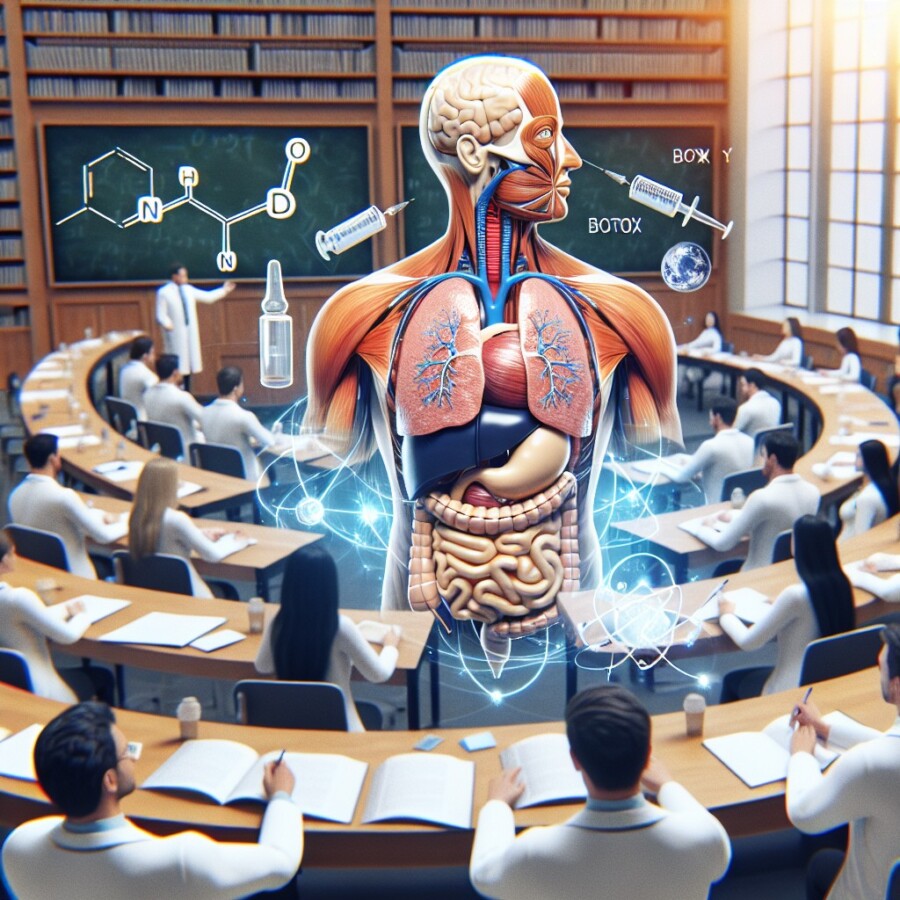

Australian doctor Richard Scolyer, known for his pioneering research on melanoma, remains cancer-free a year after undergoing a world-first treatment for glioblastoma. Glioblastoma is an aggressive form of brain cancer with a low survival rate. However, Scolyer's latest MRI scan showed no recurrence of the tumor. Scolyer, along with his colleague Georgina Long, was named Australian of the Year for their groundbreaking work on melanoma. Their research on immunotherapy has significantly improved outcomes for advanced melanoma patients, with half now essentially cured. Scolyer is now receiving the same immunotherapy treatment in the hope of finding a cure for his brain cancer.
The treatment involves a combination of drugs administered before surgery to remove the tumor. Scolyer is also the first patient to receive a personalized vaccine that enhances the cancer-detecting abilities of the drugs. Although he faced challenges during the initial months of treatment, including seizures and other health issues, Scolyer is now feeling healthier and is back to exercising daily. While he acknowledges that his brain cancer is not cured, he is grateful for the extra time he has to enjoy life with his family.
The results of Scolyer's treatment have generated excitement in the medical community, as they may lead to a discovery that could benefit the thousands of people diagnosed with brain cancer each year. Scolyer and Long hope that their experimental treatment will prolong Scolyer's life and eventually lead to clinical trials for glioblastoma patients. However, they emphasize that they are still far from developing an approved and regulated course of treatment. They are currently awaiting the review of a scientific paper detailing the initial results of Scolyer's treatment.
While Scolyer's prognosis was initially considered grim, his earlier results have been encouraging. However, doctors caution that more time is needed to determine the long-term effectiveness of the treatment. Scolyer is proud of the data his treatment has generated and is grateful to his family and medical team for supporting this experimental approach. He believes that this direction is worth further investigation and provides hope for future patients.
Original news source: Top doctor cancer-free a year after world-first therapy (BBC)
🎧 Listen:
📖 Vocabulary:
Group or Classroom Activities
Warm-up Activities:
– News Summary
Instructions:
1. Divide the class into small groups.
2. Assign each group a specific aspect of the article to summarize (e.g. Scolyer's treatment, the results, the hopes for future patients, etc.).
3. Give the groups a few minutes to read and discuss their assigned section.
4. Each group must then present a brief summary of their assigned aspect to the rest of the class.
5. Encourage discussion and questions after each summary.
– Opinion Poll
Instructions:
1. Ask the students to individually write down their opinion on the following question: "Do you think Scolyer's treatment will lead to a cure for glioblastoma?"
2. Have the students pair up and share their opinions with each other, discussing their reasoning.
3. After a few minutes, bring the class back together and conduct a poll, asking students to raise their hands to indicate whether they agree or disagree with the statement.
4. Facilitate a class discussion, allowing students to share their opinions and reasons for their stance.
– Sketch It
Instructions:
1. Divide the class into pairs.
2. Give each pair a piece of paper and a pen or pencil.
3. Instruct one student in each pair to describe a key aspect of the article (e.g. Scolyer's treatment, the importance of immunotherapy, etc.) while the other student sketches what they hear.
4. After a few minutes, have the pairs switch roles.
5. Allow time for the pairs to share and discuss their sketches with each other and the class.
– Pros and Cons
Instructions:
1. Divide the class into two groups.
2. Assign one group to brainstorm the pros of Scolyer's treatment and the other group to brainstorm the cons.
3. Give the groups a few minutes to discuss and write down their ideas.
4. Have each group present their list of pros or cons to the rest of the class.
5. Encourage a class discussion, allowing students to add to or challenge the ideas presented.
– Future Predictions
Instructions:
1. Instruct the students to individually write down their predictions for the future of cancer treatment based on the article.
2. After a few minutes, have the students pair up and share their predictions with each other, discussing their reasoning.
3. Bring the class back together and allow students to share their predictions with the rest of the class.
4. Facilitate a class discussion, encouraging students to discuss and debate the feasibility and potential impact of the predictions.
🤔 Comprehension Questions:
Glioblastoma is an aggressive form of brain cancer that has a low survival rate. It is considered aggressive because it grows and spreads quickly, making it difficult to treat.
The immunotherapy treatment has significantly improved outcomes for advanced melanoma patients, with half now essentially cured. This treatment boosts the body's immune system to help fight cancer cells.
Richard Scolyer faced challenges during the initial months of treatment, including seizures and other health issues.
The personalized vaccine enhances the cancer-detecting abilities of the drugs by boosting the body's immune response to specifically target and attack cancer cells.
Richard Scolyer's treatment results have generated excitement in the medical community because they may lead to a discovery that could benefit the thousands of people diagnosed with brain cancer each year.
Richard Scolyer and Georgina Long hope that their experimental treatment will prolong Scolyer's life and eventually lead to clinical trials for glioblastoma patients.
Doctors caution that more time is needed to determine the long-term effectiveness of the treatment because it is still in the experimental stage and needs further study and analysis.
Richard Scolyer believes that the direction of his treatment is worth further investigation and provides hope for future patients.
🎧✍️ Listen and Fill in the Gaps:
doctor Richard Scolyer, known for his research on melanoma, remains cancer-free a year after undergoing a world-first treatment for glioblastoma. Glioblastoma is an aggressive form of brain cancer with a low survival rate. However, Scolyer's latest MRI scan showed no recurrence of the tumor. Scolyer, along with his Georgina Long, was named Australian of the Year for their work on melanoma. Their research on immunotherapy has significantly improved outcomes for advanced melanoma patients, with half now essentially cured. Scolyer is now receiving the same immunotherapy treatment in the hope of finding a cure for his cancer. The treatment involves a combination of drugs administered before surgery to remove the tumor. Scolyer is also the first to receive a personalized vaccine that enhances the cancer-detecting abilities of the drugs. Although he faced during the initial months of treatment, including seizures and other health issues, Scolyer is now feeling healthier and is back to daily. While he acknowledges that his brain cancer is not cured, he is grateful for the extra time he has to enjoy life with his family. The results of Scolyer's treatment have generated excitement in the medical community, as they may lead to a that could benefit the thousands of people with brain cancer each year. Scolyer and Long hope that their experimental treatment will Scolyer's life and eventually lead to clinical trials for glioblastoma . However, they emphasize that they are still far from developing an approved and regulated course of treatment. They are currently awaiting the review of a scientific paper detailing the initial results of Scolyer's treatment. While Scolyer's was initially considered grim, his earlier results have been encouraging. However, doctors caution that more time is needed to determine the long-term of the treatment. Scolyer is proud of the data his treatment has and is grateful to his family and medical team for supporting this experimental . He believes that this direction is worth further investigation and provides hope for future patients.
💬 Discussion Questions:
1. What is immunotherapy and how does it work?
2. How would you feel if you were diagnosed with a rare and aggressive form of cancer like glioblastoma?
3. Do you think it's important for doctors and researchers to try experimental treatments, even if they are not yet approved or regulated? Why or why not?
4. What is the significance of Scolyer's treatment being the first of its kind for glioblastoma?
5. How do you think Scolyer's experience as a doctor and researcher has influenced his approach to his own treatment?
6. Do you think it's fair that Scolyer received personalized treatment that is not yet available to the general public? Why or why not?
7. How do you think Scolyer's groundbreaking work on melanoma has influenced his outlook on his own cancer diagnosis?
8. What do you think are the biggest challenges faced by patients who are diagnosed with aggressive forms of cancer?
9. How do you think Scolyer's experience as a cancer patient will impact his future research and work as a doctor?
10. What is the role of hope in cancer treatment and recovery?
11. How do you think Scolyer's treatment could potentially change the way brain cancer is treated in the future?
12. Do you think it's important for doctors and researchers to share their experimental findings with the medical community? Why or why not?
13. How do you think Scolyer's family has supported him throughout his cancer journey?
14. What are some potential ethical considerations surrounding experimental cancer treatments?
15. How do you think Scolyer's story could inspire other cancer patients and their families?
Individual Activities
📖💭 Vocabulary Meanings:
Click a dot next to a word, then click the dot next to its meaning to draw a line connecting them.
Words
Meanings
🔡 Multiple Choice Questions:
🕵️ True or False Questions:
📝 Write a Summary:
Write a summary of this news article in two sentences.
Check your writing now with the best free AI for English writing!