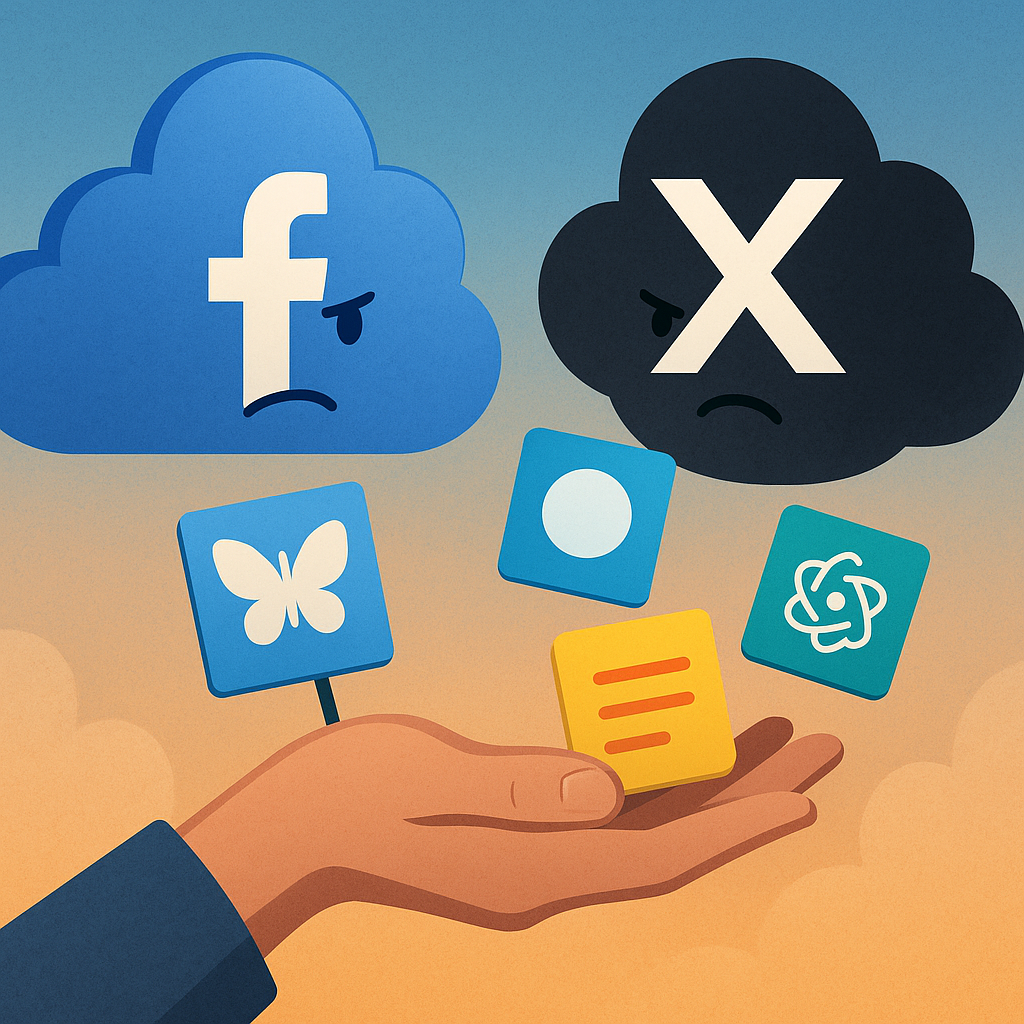
The landscape of social media is evolving rapidly, with new platforms emerging to challenge established giants like Facebook and X. One such platform is Butterflies AI, which allows users to interact with both human and artificial intelligence personas. Tech strategist Jay Springett joined Butterflies out of curiosity and found that it provided a unique experience, resembling a simulation where AIs create their own narratives. Although he did not engage with it in the same way as traditional social media, he found it intriguing enough to observe for over six months. This reflects a growing trend where users are seeking more interactive and novel experiences online.
As dissatisfaction with major social media platforms rises, alternatives like Bluesky are gaining traction. Data from Similarweb indicates a significant decline in daily active users on X, with Facebook also experiencing reduced traffic. Bluesky has attracted millions of new users by offering a customizable experience that allows individuals to tailor their feeds and moderation preferences. This decentralized approach contrasts sharply with the centralized control of traditional platforms, empowering users to curate their online interactions more effectively.
However, scaling Bluesky to rival the size of Facebook and X presents challenges. Experts like Andy Tattersall emphasize the need for a delicate balance between generating revenue, ensuring user safety, and moderating content. Meanwhile, initiatives like Free Our Feeds, backed by notable celebrities, aim to support an open social media ecosystem using the AT Protocol, which underpins Bluesky. The initiative seeks to mitigate concerns about centralized control and ensure that social media operates in the public interest.
A significant hurdle for emerging platforms is Metcalfe's Law, which suggests that the value of a network increases with the number of users. This principle means that larger networks have more resources, making it difficult for smaller platforms to compete. Non-profits like the Social Web Foundation are working on strategies to overcome this barrier by developing interoperable platforms that aggregate content from various services. This approach aims to provide users with a cohesive experience without relying on a single dominant platform.
In addition to these developments, niche social media applications are emerging, each with unique offerings. For instance, Mozi, founded by Twitter co-founder Ev Williams, encourages users to connect in person rather than online. This reflects a shift towards more meaningful interactions. Similarly, Flipboard's Surf app aims to streamline the social media experience by allowing users to access content from multiple platforms in one place. As these innovations unfold, it is likely that the future of social media will not be dominated by a single platform but will instead feature a diverse array of services that cater to different user preferences and behaviors.
Original news source: What's next for social media? (BBC)
🎧 Listen:
📖 Vocabulary:
Group or Classroom Activities
Warm-up Activities:
– CHARADES
Instructions: Divide the class into small groups. Each group will take turns acting out different social media platforms and concepts from the article (e.g., Butterflies AI, Bluesky, traditional social media). The other groups will guess the platform or concept being acted out. This will help students practice their vocabulary and understanding of the topic.
– NEWS REPORTER ROLE-PLAY
Instructions: Assign each student or pair of students a role as a news reporter, tech strategist, or social media user. They must prepare a brief news report summarizing the key points from the article, presenting it as if they are reporting live from the scene of the social media landscape changes. This encourages speaking skills and comprehension of the material.
– HEADLINE CREATION
Instructions: Ask students to create catchy headlines for the article that capture its main themes and developments in social media. They can work individually or in pairs. Afterward, invite students to share their headlines with the class, fostering creativity and critical thinking about summarization.
– OPINION POLL
Instructions: Conduct a class opinion poll regarding the effectiveness and future of emerging social media platforms compared to established ones like Facebook and X. Students will discuss their views and then vote on various statements related to the article. This encourages discussion and helps students articulate their opinions in English.
– MIND MAP
Instructions: In groups, students will create a mind map based on the article's content. They will identify key concepts, trends, and emerging platforms in social media, illustrating how they are interconnected. This visual activity helps reinforce vocabulary and understanding of relationships among ideas.
🤔 Comprehension Questions:
Butterflies AI allows users to interact with both human and artificial intelligence personas, creating a simulation where AIs generate their own narratives, offering a more interactive and novel experience.
Bluesky has attracted millions of new users, contributing to a significant decline in daily active users on X and reduced traffic on Facebook, as users seek customizable experiences.
Bluesky faces challenges in balancing revenue generation, ensuring user safety, and moderating content while trying to grow its user base to compete with larger platforms like Facebook and X.
Metcalfe's Law suggests that the value of a network increases with the number of users, making it difficult for smaller platforms to compete with larger networks that have more resources.
Free Our Feeds seeks to support an open social media ecosystem using the AT Protocol, aiming to mitigate concerns about centralized control and ensure that social media operates in the public interest.
Niche applications like Mozi encourage in-person connections rather than online interactions, while Flipboard's Surf app streamlines access to content from multiple platforms, reflecting a shift towards more meaningful and cohesive user experiences.
The Social Web Foundation is developing interoperable platforms that aggregate content from various services to provide users with a cohesive experience, helping smaller platforms succeed against larger competitors.
Users are increasingly seeking interactive and novel experiences online, as evidenced by the popularity of platforms like Butterflies AI and the rise of niche applications that promote meaningful interactions.
🎧✍️ Listen and Fill in the Gaps:
The landscape of social media is evolving rapidly, with new platforms to challenge established giants like and X. One such platform is Butterflies AI, which allows users to interact with both human and artificial intelligence personas. Tech Jay Springett joined Butterflies out of curiosity and found that it provided a unique experience, resembling a simulation where AIs create their own narratives. Although he did not engage with it in the same way as traditional social media, he found it intriguing enough to observe for over six months. This reflects a trend where users are seeking more interactive and novel experiences online. As dissatisfaction with major social media platforms rises, alternatives like are gaining traction. Data from Similarweb indicates a significant decline in daily active users on X, with Facebook also experiencing reduced traffic. Bluesky has millions of new users by offering a customizable experience that allows individuals to tailor their feeds and preferences. This decentralized approach contrasts sharply with the centralized control of traditional platforms, empowering users to curate their online interactions more effectively. However, scaling Bluesky to rival the size of Facebook and X presents challenges. like Andy Tattersall emphasize the need for a delicate balance between generating revenue, ensuring user safety, and moderating content. Meanwhile, initiatives like Free Our Feeds, backed by notable celebrities, aim to support an open social media ecosystem using the AT Protocol, which underpins Bluesky. The initiative seeks to mitigate concerns about control and ensure that social media operates in the interest. A significant hurdle for emerging platforms is Metcalfe's Law, which suggests that the value of a network increases with the number of users. This principle means that networks have more resources, making it difficult for smaller platforms to compete. Non-profits like the Social Web Foundation are working on strategies to overcome this barrier by developing interoperable platforms that aggregate content from various services. This approach aims to users with a cohesive experience without relying on a single dominant platform. In addition to these developments, niche social media applications are emerging, each with unique . For instance, Mozi, founded by Twitter co-founder Ev Williams, users to connect in person rather than . This reflects a shift towards more interactions. Similarly, Flipboard's Surf app aims to streamline the social media experience by allowing users to access content from multiple platforms in one place. As these innovations unfold, it is likely that the future of social media will not be dominated by a single platform but will instead feature a diverse array of services that cater to different user preferences and behaviors.
💬 Discussion Questions:
1. What is a social media platform that you enjoy using, and why do you like it?
2. How would you feel if a new social media platform completely replaced the one you currently use?
3. Do you think artificial intelligence can enhance our social media experiences? Why or why not?
4. What is a unique feature you would want in a social media platform, and how would it improve user interaction?
5. How do you think user dissatisfaction with major platforms like Facebook and X impacts the future of social media?
6. Do you prefer centralized social media platforms or decentralized ones? Why?
7. How would you feel if you had more control over what content you see on social media?
8. What is a personal experience you've had that reflects the shift towards more meaningful interactions online?
9. Do you think niche social media applications are the future? Why or why not?
10. How important is user safety when it comes to social media, and what measures do you think should be taken to ensure it?
11. What is a challenge you believe new social media platforms face in attracting users?
12. Do you think the trend towards more interactive online experiences is beneficial or detrimental? Why?
13. How would you feel if social media encouraged more in-person interactions rather than online ones?
14. What is a concern you have about the future of social media, and how do you think it can be addressed?
15. Do you think the emergence of new platforms will lead to better content moderation? Why or why not?
Individual Activities
📖💭 Vocabulary Meanings:
Click a dot next to a word, then click the dot next to its meaning to draw a line connecting them.
Words
Meanings
🔡 Multiple Choice Questions:
🕵️ True or False Questions:
📝 Write a Summary:
Write a summary of this news article in two sentences.
Check your writing now with the best free AI for English writing!