

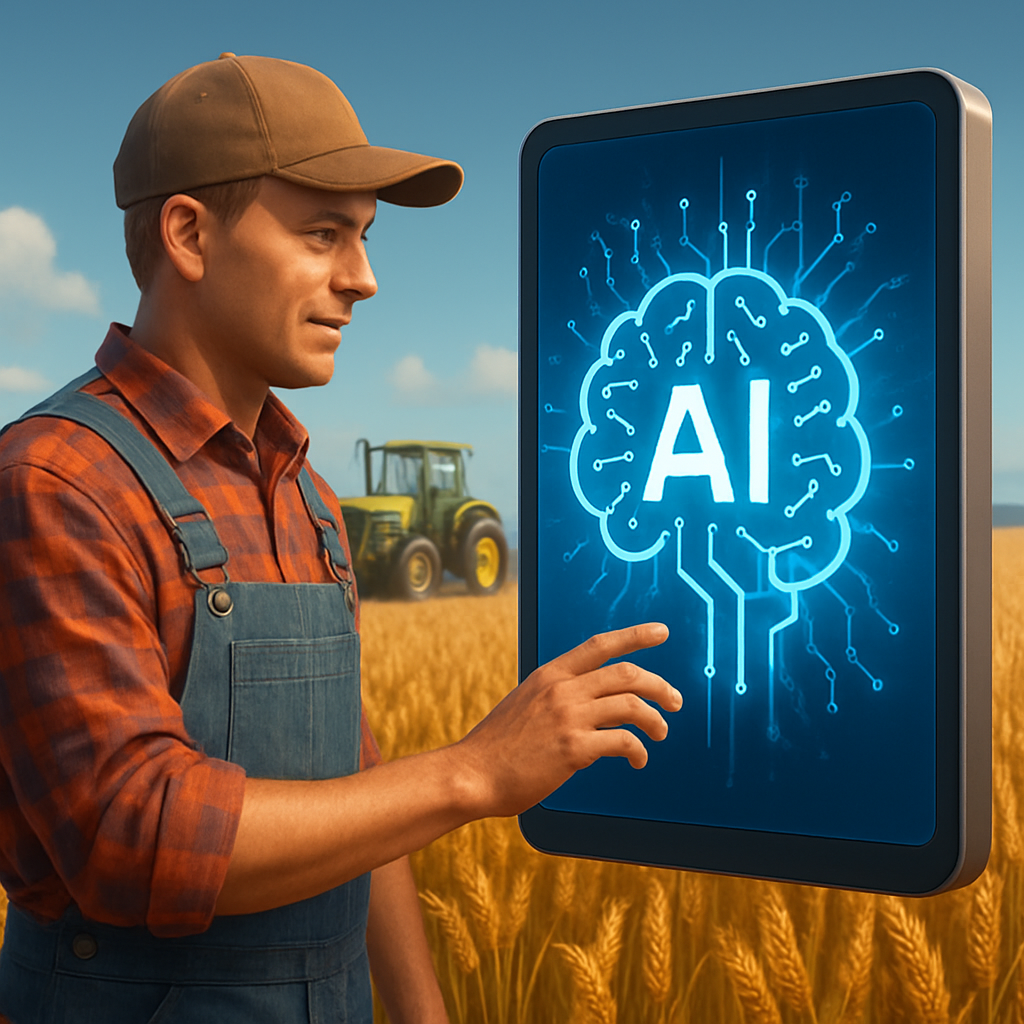
For decades, George McMaster relied on keen observation to assess his cattle’s health, originally beginning his career with just eight cows. Today, on his bustling farm near Islandmagee, he leverages AI technology, notably an AI camera system, which monitors his herd of 300 cows. This system assigns unique IDs to each cow, capturing daily footage and analyzing it to warn of potential health concerns before they're noticeable to the naked eye. George describes this technological leap—from manual labor to digital monitoring via a smartphone—as transformative for his farming routine.
His son, Jack, is equally enthusiastic, having adopted the CattleEye application developed by local innovators. This tool introduces a predictive approach to farming, detecting lameness or declining conditions in cows, which might have otherwise gone unnoticed. These timely alerts allow the McMasters to intervene early, thus maintaining optimal health and productivity among their livestock. The utilization of such advanced technology is undeniably reshaping their farm management practices, making it not only more efficient but also leading to increased milk production.
Caleb Howard, a farmer in County Tyrone, underscores the significance of modern technology by integrating a robotic milking machine on his farm. With the installation of high-speed broadband, he has essentially navigated past connectivity barriers that hindered previous technological adoptions. The autonomous milking system empowers cows to decide their own milk schedule, promoting a stress-free environment. Improved connectivity has facilitated the opening of a farm shop with electronic payment systems, streamlining the business operations.
Elsewhere in Northern Ireland, Robert Smyth employs the FarmDrive app on his dairy farm, a tool he likens to ‘Facebook for cows.’ It centralizes all animal health records, complemented by a photographic database, vastly simplifying compliance processes essential for inspections. The integration of technology has reduced administrative overhead and allowed Robert to focus on other strategic farm operations.
The transformation from traditional to tech-enabled farming echoes historical innovations, such as Harry Ferguson's revolutionary tractor linkage system, further demonstrating how AI technology is becoming indispensable in the agriculture sector. As former Ulster Farmers' Union president Ian Marshall highlights, AI's role in data management is crucial for achieving economic, environmental, and social sustainability, reinforcing how technology will continually shape the future of farming.
Original news source: From agriculture to AI-griculture: How tech is changing farming – BBC News (BBC)
🎧 Listen:
📖 Vocabulary:
Group or Classroom Activities
Warm-up Activities:
1. Discuss how technology has changed farming over the years.
2. Share experiences of seeing technology used in unusual places.
3. Brainstorm potential future applications of AI in everyday life.
4. Debate the benefits and drawbacks of relying heavily on technology.
5. Consider how farmers manage large amounts of data using technology.
🤔 Comprehension Questions:
George McMaster initially used keen observation to assess his cattle's health.
It assigns unique IDs to cows and analyzes footage for potential health concerns.
It detects lameness or declining conditions early, allowing timely intervention.
It enabled him to install a robotic milking machine and open a farm shop.
It centralizes animal health records and reduces administrative overhead.
Harry Ferguson's tractor linkage system is mentioned.
AI supports data management important for economic and environmental sustainability.
🎧✍️ Listen and Fill in the Gaps:
For decades, George McMaster relied on keen to assess his cattle’s health, originally beginning his career with just eight cows. Today, on his farm near Islandmagee, he leverages AI technology, notably an AI system, which monitors his herd of 300 cows. This system assigns IDs to each cow, capturing daily footage and analyzing it to warn of potential health concerns before they're noticeable to the naked eye. George describes this technological leap—from manual labor to digital monitoring via a smartphone—as transformative for his farming routine. His son, Jack, is equally enthusiastic, having the CattleEye application developed by local innovators. This tool introduces a predictive approach to farming, detecting lameness or declining conditions in cows, which might have otherwise gone . These timely alerts allow the McMasters to intervene early, thus maintaining optimal health and productivity among their livestock. The utilization of such advanced technology is undeniably reshaping their farm management practices, making it not only more but also leading to increased milk production. Caleb Howard, a farmer in County Tyrone, underscores the significance of technology by integrating a milking machine on his farm. With the installation of high-speed broadband, he has essentially past connectivity barriers that hindered previous technological . The autonomous milking system empowers cows to decide their own milk schedule, promoting a stress-free environment. Improved connectivity has facilitated the opening of a farm shop with electronic payment systems, streamlining the business operations. Elsewhere in Northern Ireland, Robert Smyth employs the app on his dairy farm, a tool he likens to ‘Facebook for cows.’ It centralizes all animal health records, complemented by a photographic database, vastly simplifying compliance processes essential for inspections. The of technology has reduced administrative overhead and allowed Robert to focus on other strategic farm operations. The from to tech-enabled farming echoes historical innovations, such as Harry Ferguson's revolutionary tractor linkage system, further demonstrating how AI technology is becoming indispensable in the agriculture sector. As former Farmers' Union president Ian Marshall highlights, AI's role in data management is crucial for achieving economic, environmental, and social sustainability, reinforcing how technology will continually shape the future of farming.
💬 Discussion Questions:
1. What are the pros and cons of using AI technology in farming?
2. How might AI technology affect employment in agriculture?
3. Should all farms adopt technology like George McMaster?
4. How important is it for farms to focus on sustainability?
5. Do you think consumers trust products from tech-driven farms more?
6. How can farmers balance traditional methods with modern technology?
7. What role should governments play in supporting tech adoption in farming?
8. How might farm technology impact environmental conservation?
9. Is there a risk of losing farming skills with too much technology reliance?
10. How might farm management change in 50 years?
11. Why do you think some farmers are hesitant to adopt new technologies?
12. Can technology improve animal welfare on farms?
Individual Activities
📖💭 Vocabulary Meanings:
Click a dot next to a word, then click the dot next to its meaning to draw a line connecting them.