
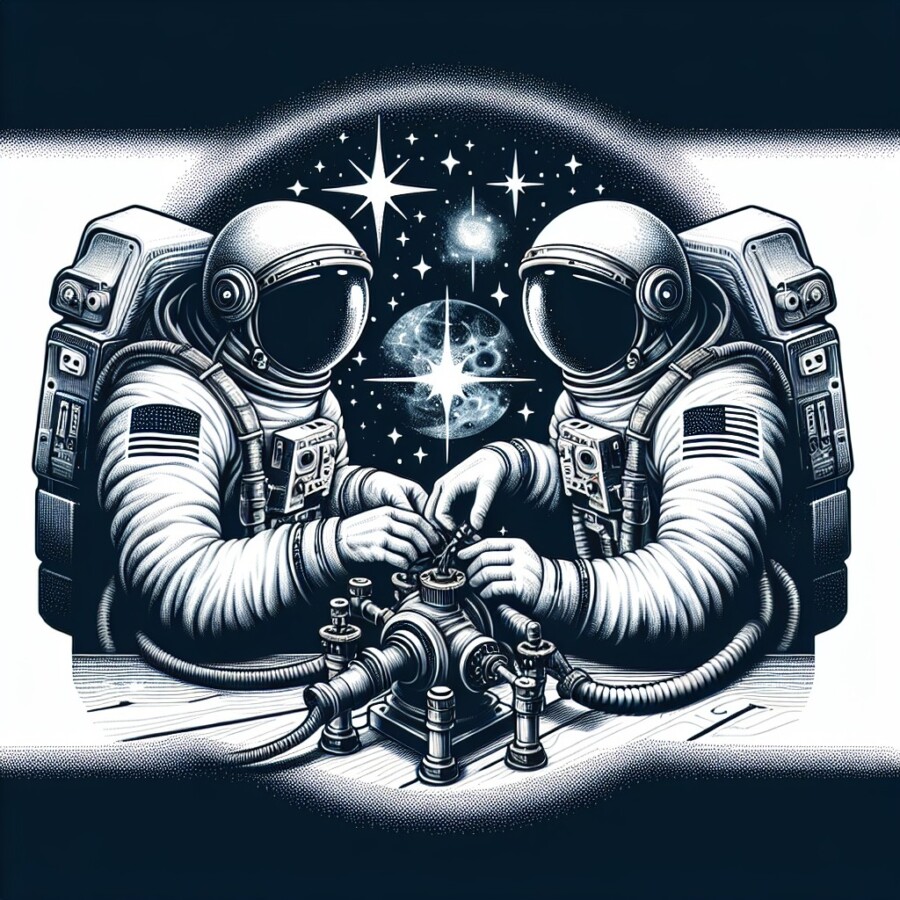
The Apollo missions of the 1960s and 1970s were a significant milestone in space exploration, with 24 NASA astronauts traveling to the Moon. However, as the race to return to the lunar surface heats up, it is important to acknowledge that the number of surviving Apollo astronauts is dwindling. Recently, Ken Mattingly and Frank Borman, both part of the Apollo program, passed away, leaving only eight individuals who have voyaged beyond Earth orbit.
One of the most well-known Apollo astronauts is Buzz Aldrin, who was the second person to step foot on the Moon during the Apollo 11 mission. Although he was proud of his achievement, Aldrin always felt a sense of resentment for not being the first. He remained an advocate for space exploration and even joined expeditions to the North and South Poles in his later years.
Bill Anders, a member of the Apollo 8 crew, was one of the first humans to orbit the Moon. The iconic "Earthrise" image captured by Anders during the mission played a significant role in inspiring the global environmental movement. After retiring from the space program, Anders worked in the aerospace industry and served as the US Ambassador to Norway.
Charlie Duke, one of the four remaining astronauts who have walked on the Moon, had the honor of being the Capsule Communicator during the Apollo 11 mission. He was the one who received Neil Armstrong's famous words, "The Eagle has landed." Duke now lives in Texas with his wife, Dorothy, and remains excited about NASA's future missions.
Fred Haise, a member of the ill-fated Apollo 13 mission, narrowly avoided disaster when an onboard explosion forced the mission to be aborted. After leaving NASA, Haise continued to work in the aerospace industry and became a test pilot on the prototype space shuttle.
Jim Lovell, who was part of the Apollo 8 and Apollo 13 missions, made history as one of the first humans to orbit the Moon. Although he never walked on the lunar surface, Lovell's brush with death during the Apollo 13 mission was immortalized in the film of the same name. Lovell is now the oldest living astronaut.
Harrison Schmitt, a geologist and academic, was part of the last crewed mission to the Moon, Apollo 17. After leaving NASA, Schmitt served as a US Senator and has been known for his skepticism towards the scientific consensus on climate change.
David Scott, the commander of Apollo 15, was one of the first astronauts to drive on the Moon using the Lunar Roving Vehicle. After retiring from NASA, Scott worked in various management roles and has been involved in film and television projects related to space exploration.
Tom Stafford, the commander of Apollo 10, led the final test mission before the historic Apollo 11 landing. He also played a significant role in the Apollo-Soyuz Test Project, the first joint space mission between the US and the Soviet Union. Stafford's friendship with his
Original news source: The last of the Moon men: the stories of the surviving Apollo astronauts (BBC)
🎧 Listen:
📖 Vocabulary:
Group or Classroom Activities
Warm-up Activities:
– News Summary
Instructions: Divide the class into small groups. Each group will read the article and then work together to write a concise summary of the main points. After a designated amount of time, each group will share their summary with the class.
– Opinion Poll
Instructions: Have the students form pairs. Assign each pair an Apollo astronaut mentioned in the article. Each student will take turns asking their partner questions about their assigned astronaut and recording their partner's responses. Afterward, the pairs will share their findings with the class and discuss any differences in opinions.
– Vocabulary Pictionary
Instructions: Write a list of vocabulary words from the article on the board. Divide the class into two teams. One student from each team will come to the front of the class and choose a word from the list. They must then draw a picture to represent the word while their team tries to guess what it is. The team that guesses correctly earns a point. Continue until all the words have been drawn and guessed.
– Keyword Taboo
Instructions: Divide the class into small groups. Give each group a set of index cards with keywords from the article written on them. One student from each group will pick a card and try to describe the keyword to their group without using the word itself. The group must then guess the keyword. Continue until all the keywords have been guessed.
– Future Predictions
Instructions: Have the class form pairs. Each pair will discuss and make predictions about the future of space exploration, based on the information from the article. They should consider factors such as technological advancements, international cooperation, and potential challenges. Afterward, pairs can share their predictions with the class and engage in a class discussion about the future of space exploration.
🤔 Comprehension Questions:
There are currently eight surviving Apollo astronauts who have voyaged beyond Earth orbit.
Buzz Aldrin was the second person to step foot on the Moon during the Apollo 11 mission.
Bill Anders captured the iconic "Earthrise" image during the Apollo 8 mission, which played a significant role in inspiring the global environmental movement.
Charlie Duke was the Capsule Communicator during the Apollo 11 mission.
The Apollo 13 mission experienced an onboard explosion, which forced the mission to be aborted and became a life-threatening situation for the astronauts. They managed to return safely to Earth with the help of NASA's ground control.
Jim Lovell was part of the Apollo 8 and Apollo 13 missions, making history as one of the first humans to orbit the Moon. He also played a significant role in the Apollo 13 mission, where he and his crew faced a life-threatening situation.
After leaving NASA, Harrison Schmitt served as a US Senator and has been known for his skepticism towards the scientific consensus on climate change.
Tom Stafford was the commander of Apollo 10, leading the final test mission before the historic Apollo 11 landing. He also played a significant role in the Apollo-Soyuz Test Project, which was the first joint space mission between the US and the Soviet Union.
🎧✍️ Listen and Fill in the Gaps:
The Apollo missions of the 1960s and 1970s were a significant milestone in space exploration, with 24 NASA astronauts to the Moon. However, as the race to return to the lunar surface heats up, it is important to acknowledge that the of surviving Apollo astronauts is dwindling. Recently, Ken Mattingly and Frank , both part of the Apollo program, passed away, only eight individuals who have voyaged beyond Earth orbit. One of the most well-known Apollo astronauts is Buzz Aldrin, who was the second person to step foot on the Moon during the Apollo 11 mission. Although he was proud of his achievement, Aldrin always felt a sense of resentment for not being the first. He remained an advocate for space exploration and even joined expeditions to the North and South Poles in his later years. Bill Anders, a member of the Apollo 8 crew, was one of the first humans to orbit the Moon. The iconic "Earthrise" captured by Anders during the mission played a significant role in inspiring the global environmental movement. After retiring from the space program, Anders worked in the aerospace industry and served as the US Ambassador to Norway. Charlie Duke, one of the four remaining astronauts who have on the Moon, had the honor of being the Capsule Communicator during the Apollo 11 mission. He was the one who received Neil Armstrong's words, "The Eagle has ." Duke now lives in Texas with his wife, Dorothy, and remains excited about NASA's s. Fred Haise, a of the ill-fated Apollo 13 mission, narrowly avoided disaster when an onboard explosion forced the mission to be aborted. After leaving NASA, Haise continued to work in the aero industry and became a test pilot on the prototype space shuttle. Jim Lovell, who was part of the Apollo 8 and Apollo 13 missions, made history as one of the first humans to orbit the Moon. Although he never walked on the lunar surface, Lovell's brush with death during the Apollo 13 mission was immortalized in the film of the same name. Lovell is now the oldest living astronaut. Harrison Schmitt, a geologist and academic, was part of the last crewed mission to the Moon, Apollo 17. After leaving NASA, Schmitt served as a US Senator and has been known for his skepticism towards the consensus on climate . David , the commander of Apollo 15, was one of the first astronauts to drive on the Moon using the Lunar Roving Vehicle. After retiring from NASA, Scott worked in various management roles and has been involved in film and television projects related to space exploration. Tom Stafford, the commander of Apollo 10, led the final test mission before the historic Apollo 11 landing. He also played a significant role in the Apollo-Soyuz Test Project, the first joint space mission between the US and the Union. Stafford's friendship with his
💬 Discussion Questions:
1. What do you think is the significance of the Apollo missions in space exploration?
2. How do you feel about the fact that the number of surviving Apollo astronauts is decreasing?
3. Do you think being the second person to step foot on the Moon would still be a significant achievement? Why or why not?
4. How would you feel if you were an astronaut who never had the opportunity to walk on the lunar surface?
5. Do you think the iconic "Earthrise" image captured by Bill Anders had a significant impact on the global environmental movement? Why or why not?
6. What are your thoughts on astronauts like Buzz Aldrin and Bill Anders continuing to contribute to society after retiring from the space program?
7. How would you feel if you were the one who received Neil Armstrong's famous words, "The Eagle has landed"?
8. Do you think the Apollo 13 mission and the film based on it have had a lasting impact on space exploration? Why or why not?
9. What are your thoughts on Harrison Schmitt's skepticism towards the scientific consensus on climate change?
10. How do you think driving on the Moon using the Lunar Roving Vehicle would compare to driving on Earth?
11. Do you think the Apollo-Soyuz Test Project was a significant milestone in international cooperation in space exploration? Why or why not?
12. How do you think the friendship between Tom Stafford and his Soviet counterparts impacted the success of the Apollo-Soyuz Test Project?
13. What would you do if you had the opportunity to go on a space mission beyond Earth orbit?
14. How do you think the advancements in space exploration since the Apollo missions have impacted society?
15. Do you think it is important for future generations to learn about and appreciate the achievements of the Apollo astronauts? Why or why not?
Individual Activities
📖💭 Vocabulary Meanings:
Click a dot next to a word, then click the dot next to its meaning to draw a line connecting them.
Words
Meanings
🔡 Multiple Choice Questions:
🕵️ True or False Questions:
📝 Write a Summary:
Write a summary of this news article in two sentences.
Check your writing now with the best free AI for English writing!