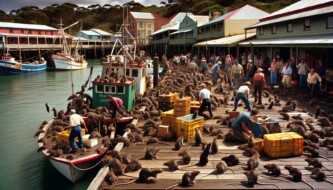
The town of Normanton has been particularly affected, with residents describing the situation as rats being everywhere. One resident mentioned that the rats had destroyed a car overnight by chewing through the wiring. The rats have also invaded the neighboring town of Karumba, raising concerns about the impact on tourism in the area. Karumba is known for its fishing and birdwatching opportunities, and the presence of rats may deter visitors.
Disturbing images and videos have been shared on social media, showing piles of dead rats on the beaches and large numbers of them floating in the river. The surge in the rat population can be attributed to favorable breeding conditions and a plentiful food supply. Experts predict that the situation may worsen with the expected wet weather in Queensland. Parts of Queensland and New South Wales have already experienced an increase in rodent numbers, reaching plague conditions not seen since 2011.
Local residents, particularly those involved in the fishing industry, are concerned about the long-term effects of the rat plague. They fear that it may tarnish the reputation of Karumba and discourage tourists from visiting. Efforts are being made to manage the rat population and mitigate the damage caused by these pests. However, the situation remains challenging, and residents are bracing themselves for the potential escalation of the rat plague in the coming months.
Original news source: Rat plague spreads to Australia's fishing towns (BBC)
📖 Vocabulary:
Group or Classroom Activities
Warm-up Activities:
– News Summary
Instructions:
1. Divide the class into pairs or small groups.
2. Provide each group with a copy of the article or a summary of the article.
3. Instruct the groups to read the article or summary and collectively create a concise news summary, highlighting the key points.
4. After a designated time, have each group share their news summary with the class.
5. Encourage discussion and compare the different summaries to see if any important information was missed.
– Opinion Poll
Instructions:
1. Divide the class into pairs or small groups.
2. Instruct each group to come up with a list of questions related to the rat plague in Australia's fishing towns.
3. Have the groups take turns asking the questions to their classmates and recording their responses.
4. After the polling is complete, facilitate a class discussion based on the gathered opinions. Encourage students to explain their viewpoints and engage in respectful debate.
– Vocabulary Pictionary
Instructions:
1. Write a list of vocabulary words from the article on the board.
2. Divide the class into two teams.
3. Call one student from each team to the front of the class.
4. Give each student a vocabulary word from the list.
5. Set a time limit and have the students draw a visual representation of the word on the board without using any letters or numbers.
6. The rest of the team members must guess the word based on the drawing.
7. Repeat steps 3-6 until all the words have been used.
8. Keep score and declare a winning team at the end.
– Headline Creation
Instructions:
1. Divide the class into pairs or small groups.
2. Instruct each group to create a catchy headline related to the rat plague in Australia's fishing towns.
3. Give the groups a few minutes to come up with their headlines.
4. Have each group share their headline with the class and explain why they chose it.
5. Facilitate a class discussion about the different headlines and their effectiveness in capturing attention and conveying the main idea.
– Pros and Cons
Instructions:
1. Divide the class into pairs or small groups.
2. Instruct each group to create a list of pros and cons related to the rat plague in Australia's fishing towns.
3. Give the groups a few minutes to discuss and write down their ideas.
4. Have each group share their list with the class and explain their reasoning behind each point.
5. Encourage respectful discussion and debate among the students, allowing them to weigh the pros and cons and come to their own conclusions about the issue.
🤔 Comprehension Questions:
🎧✍️ Listen and Fill in the Gaps:
Australia's towns are currently facing a rat plague that has been spreading for several months. The increase in the rodent population has caused the rats to move towards the coast in search of food. However, many of them do not survive the journey. This has led to an overwhelming of rats, both dead and alive, washing up on the beaches in Queensland. Residents have reported rats infesting their homes and vehicles, causing to property and creating a nuisance. The town of Normanton has been particularly , with residents the situation as rats being everywhere. One resident mentioned that the rats had destroyed a car overnight by through the wiring. The rats have also invaded the neighboring town of , raising concerns about the impact on tourism in the area. Karumba is known for its fishing and birdwatching opportunities, and the presence of rats may deter visitors. Disturbing images and videos have been shared on social media, piles of dead rats on the beaches and large numbers of them floating in the . The surge in the rat population can be to favorable breeding conditions and a plentiful food supply. Experts predict that the situation may worsen with the expected wet weather in Queensland. Parts of Queensland and New South Wales have already experienced an increase in rodent numbers, plague conditions not seen since 2011. Local residents, particularly those in the fishing industry, are concerned about the long-term effects of the rat . They fear that it may the reputation of Karumba and tourists from visiting. Efforts are being made to manage the rat population and mitigate the damage caused by these pests. However, the situation remains challenging, and residents are bracing themselves for the potential escalation of the rat plague in the coming months.
💬 Discussion Questions:
1. What do you think would be the most challenging aspect of living in a town affected by a rat plague?
2. How would you feel if you found rats infesting your home or vehicle? Why?
3. Do you think the presence of rats would significantly impact tourism in a fishing town like Karumba? Why or why not?
4. What measures do you think should be taken to manage the rat population in these fishing towns?
5. How do you think the rat plague might affect the reputation of Karumba in the long term?
6. Have you ever encountered a pest problem in your own home or community? How did you handle it?
7. Why do you think the rat population has increased in these fishing towns?
8. Do you think the rat plague will continue to worsen with the expected wet weather in Queensland? Why or why not?
9. What impact do you think the rat plague might have on the fishing industry in these towns?
10. How do you think the residents of Normanton and Karumba are coping with the rat infestation?
11. Have you ever witnessed a natural phenomenon or pest problem that affected your local community? What was it like?
12. What steps do you think should be taken to prevent future rat plagues in these fishing towns?
13. How do you think social media has contributed to the spread of information and awareness about the rat plague?
14. Do you think the rat plague will eventually be brought under control in these fishing towns? Why or why not?
15. How do you think the rat plague might impact the daily lives of the residents in Normanton and Karumba?
Individual Activities
📖💭 Vocabulary Meanings:
Click a dot next to a word, then click the dot next to its meaning to draw a line connecting them.
Words
Meanings
🔡 Multiple Choice Questions:
🕵️ True or False Questions:
📝 Write a Summary:
Write a summary of this news article in two sentences.
Check your writing now with the best free AI for English writing!