The Royal Mint, known for producing the UK's coins, has embarked on an innovative initiative to process electronic waste (e-waste) in order to extract gold. This move is part of a larger effort to address the growing problem of discarded electronic devices, which the United Nations reported amounted to 62 million tonnes in 2022. With projections indicating that this figure could increase by approximately one-third by 2030, the Royal Mint has established a large industrial facility in Llantrisant, Wales, dedicated to recovering precious metals from old circuit boards. Initially, the extracted gold will be utilized to create jewelry, with plans to eventually produce commemorative coins.
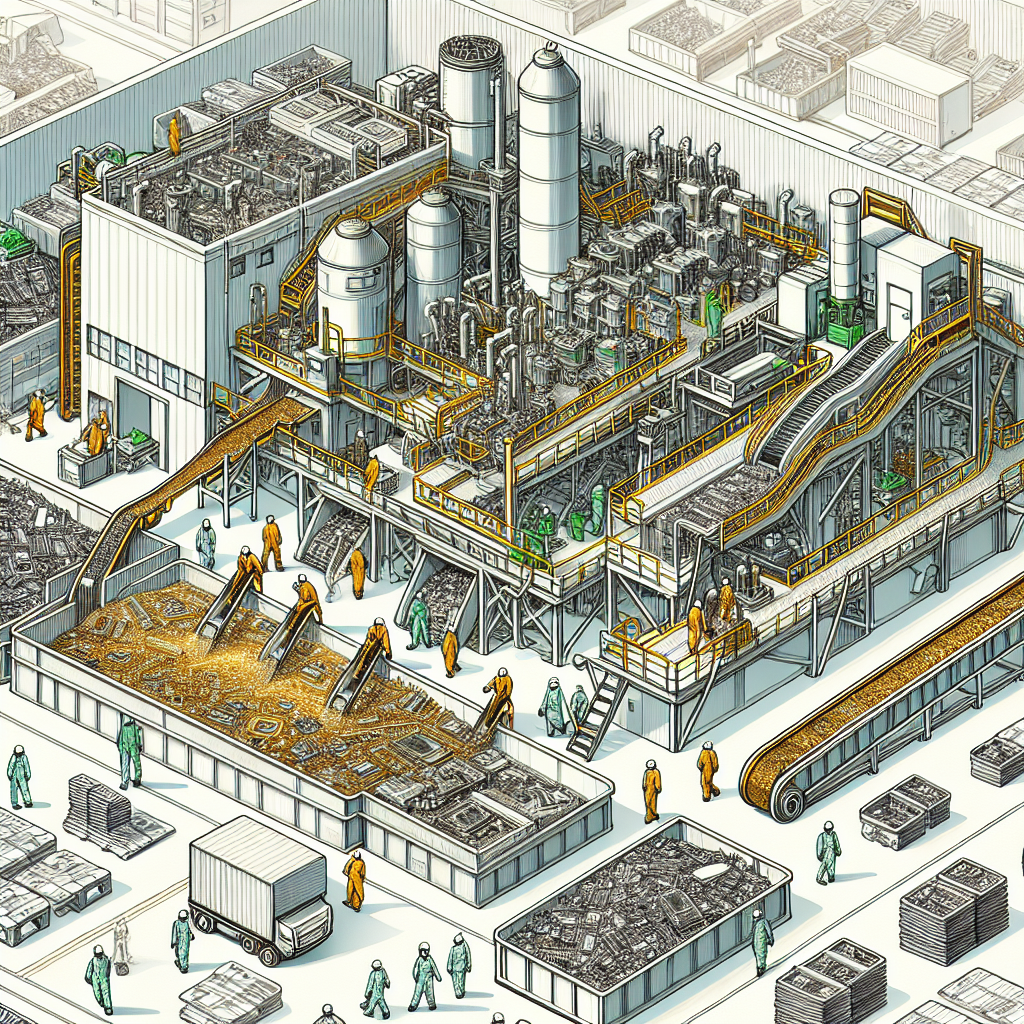
At the Royal Mint's new plant, the process of extracting gold from e-waste begins with the heating of circuit boards to separate their various components. As these materials move along a conveyor belt, they undergo a meticulous sorting and processing procedure that includes sieving, slicing, and dicing. The head of sustainability, Inga Doak, describes this effort as "urban mining," emphasizing the importance of recognizing the value in waste products generated by society. The goal is to recover gold from these discarded items, thereby highlighting the finite nature of this precious resource.
Once the gold-laden components are identified, they are sent to an on-site chemical plant where a special solution is used to leach the gold from the materials. This process is notable for its low energy requirements and the fact that it operates at room temperature, making it more environmentally friendly compared to traditional gold recovery methods that often rely on toxic chemicals and high energy consumption. The result is a powder that contains pure gold, which can be transformed into a gleaming nugget through heating in a furnace.
The Royal Mint aims to process over 4,000 tonnes of e-waste each year, which is expected to yield approximately 450 kilograms of gold, valued at around £27 million based on current market prices. This shift towards e-waste processing represents a significant change for the Royal Mint, which has been the official coin maker for over a millennium. With the decline in cash usage, the company is diversifying its operations to remain financially viable and preserve jobs for its workforce.
In addition to gold recovery, the Royal Mint is exploring ways to repurpose other materials extracted from circuit boards, such as aluminum, copper, tin, and steel. There is also interest in investigating whether ground-up circuit boards could be utilized in the construction industry. This comprehensive approach not only addresses the issue of e-waste but also contributes to sustainable practices by maximizing the use of available resources.
Original news source: Royal Mint starts turning e-waste into gold (BBC)
🎧 Listen:
📖 Vocabulary:
Group or Classroom Activities
Warm-up Activities:
– CHARADES
Instructions: Divide the class into two teams. Each team takes turns sending one member to act out key phrases or concepts from the article without speaking, while their teammates guess what it is. This will help students recall important information and vocabulary related to the article.
– OPINION POLL
Instructions: Pose several thought-provoking questions related to the article, such as "Do you think electronic waste should be processed for precious metals?" or "What are the pros and cons of urban mining?" Have students walk around the classroom and ask their classmates for their opinions, recording the responses to discuss later.
– MIND MAP
Instructions: Have students create a mind map on a large sheet of paper or a whiteboard based on the article. They should identify key themes such as "e-waste," "gold extraction," and "sustainability," and branch out with related ideas, processes, and implications. This visual representation will aid in understanding the article's main concepts.
– HEADLINE CREATION
Instructions: Ask students to come up with catchy headlines for the article that encapsulate its main ideas. They should think of different angles, such as the environmental impact, technological innovation, or economic aspects. Afterward, students can share their headlines and discuss the effectiveness of each.
– FUTURE PREDICTIONS
Instructions: Have students predict what the future might look like for e-waste processing and the Royal Mint in the next ten years. They should consider advancements in technology, changes in consumer behavior, and environmental policies. Students can share their predictions in small groups and discuss the feasibility of each idea.
🤔 Comprehension Questions:
The Royal Mint has embarked on an initiative to process electronic waste (e-waste) in order to extract gold from discarded electronic devices.
The United Nations reported that 62 million tonnes of electronic waste were generated in 2022, with projections indicating that this figure could increase by approximately one-third by 2030.
The extracted gold will initially be utilized to create jewelry, with plans to eventually produce commemorative coins.
Inga Doak refers to the gold extraction process as "urban mining" to emphasize the importance of recognizing the value in waste products generated by society.
The process begins with heating circuit boards to separate their components, followed by a meticulous sorting and processing procedure that includes sieving, slicing, and dicing. Gold-laden components are then sent to an on-site chemical plant where a special solution is used to leach the gold from the materials.
The gold extraction method used by the Royal Mint has low energy requirements and operates at room temperature, making it more environmentally friendly compared to traditional methods that often rely on toxic chemicals and high energy consumption.
The Royal Mint aims to process over 4,000 tonnes of e-waste each year, which is expected to yield approximately 450 kilograms of gold.
The Royal Mint is exploring ways to repurpose other materials extracted from circuit boards, such as aluminum, copper, tin, and steel, and is also investigating the potential use of ground-up circuit boards in the construction industry.
🎧✍️ Listen and Fill in the Gaps:
The Royal Mint, known for producing the UK's coins, has embarked on an innovative initiative to process electronic waste (e-waste) in order to gold. This move is part of a r effort to address the growing problem of discarded electronic devices, which the United Nations reported amounted to 62 million tonnes in 2022. With projections indicating that this figure could increase by approximately one-third by 2030, the Royal Mint has established a large industrial in Llantrisant, Wales, dedicated to recovering precious metals from old circuit boards. Initially, the extracted gold will be utilized to create , with plans to eventually produce commemorative coins. At the Royal Mint's new plant, the process of extracting gold from e-waste begins with the heating of circuit boards to separate their various components. As these materials move along a conveyor belt, they undergo a meticulous sorting and procedure that includes sieving, slicing, and dicing. The head of sustainability, Inga Doak, describes this effort as "urban mining," emphasizing the of recognizing the value in waste products by . The goal is to recover gold from these discarded items, thereby highlighting the finite nature of this precious resource. Once the gold-laden components are identified, they are sent to an on-site chemical plant where a solution is used to leach the gold from the materials. This process is notable for its low energy requirements and the fact that it operates at room temperature, making it more environmentally friendly compared to traditional gold methods that often rely on toxic chemicals and high energy consumption. The is a powder that contains pure gold, which can be transformed into a gleaming nugget through in a furnace. The Royal Mint aims to process over 4,000 tonnes of e-waste each year, which is expected to yield approximately 450 kilograms of gold, valued at around £27 million based on current market prices. This shift towards e-waste processing represents a significant change for the Royal Mint, which has been the official coin maker for over a millennium. With the decline in cash usage, the company is diversifying its operations to remain financially viable and preserve jobs for its workforce. In addition to gold recovery, the Royal Mint is exploring ways to repurpose materials extracted from circuit boards, such as aluminum, copper, tin, and . There is also interest in investigating whether ground-up circuit boards could be in the construction industry. This comprehensive not only addresses the issue of e-waste but also contributes to sustainable practices by maximizing the use of available resources.
💬 Discussion Questions:
1. What is your opinion on the importance of recycling electronic waste?
2. How would you feel if you found out that your old electronics could be turned into valuable materials?
3. Do you think that companies should be responsible for recycling the products they create? Why or why not?
4. What is a sustainable practice that you personally follow in your daily life?
5. How do you think the rise of electronic waste impacts the environment?
6. Do you like the idea of using recycled materials to create new products, such as jewelry or coins? Why?
7. How would you feel if you were offered a piece of jewelry made from recycled gold?
8. Do you think that the concept of "urban mining" will become more popular in the future? Why or why not?
9. What is your experience with recycling in your country? Is it encouraged or easy to do?
10. How do you think awareness about e-waste can be improved among the general public?
11. Do you think the Royal Mint's initiative will inspire other companies to adopt similar practices? Why?
12. What is a challenge you think companies face when trying to implement sustainable practices?
13. How would you feel if you had to give up using electronic devices to reduce e-waste?
14. Do you think that the government should provide incentives for companies that focus on sustainability? Why or why not?
15. What is your perspective on the balance between technological advancement and environmental sustainability?
Individual Activities
📖💭 Vocabulary Meanings:
Click a dot next to a word, then click the dot next to its meaning to draw a line connecting them.
Words
Meanings
🔡 Multiple Choice Questions:
🕵️ True or False Questions:
📝 Write a Summary:
Write a summary of this news article in two sentences.
Check your writing now with the best free AI for English writing!