

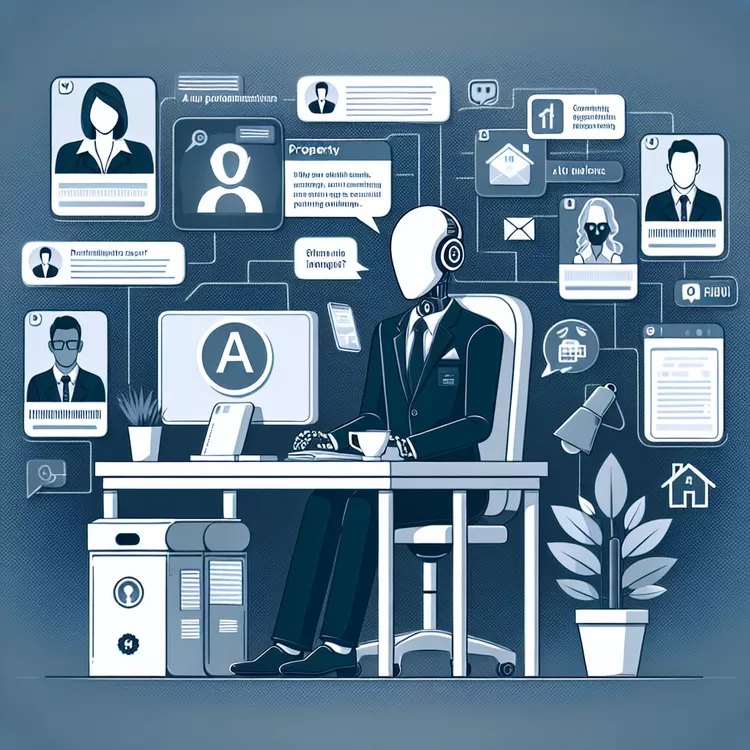
A property expert named Rob Dix has created a digital clone of himself using artificial intelligence (AI) software. This clone takes the form of a chatbot on his website and can answer questions as if it were him. Mr. Dix fed the clone content such as his books, columns, and podcasts to train it to respond in his tone of voice. He created the clone to help answer the many questions he receives from his followers. Mr. Dix is one of around 150 people who have created AI clones of themselves through a UK company called Coachvox AI.
The use of AI clones is a growing trend, with other companies like Synthesia and Delphi offering similar services. Users can upload their previous written or spoken material, such as videos, podcasts, and articles, to train their clones. The clones can then take on some of their workload, such as talking to employees or offering advice to clients. Coachvox AI claims that their clones can reason on new situations instead of just regurgitating old information. Synthesia goes a step further by creating a talking avatar that appears on screen and can communicate in over 120 languages.
The creation of AI clones has its benefits, such as freeing up time for users and providing instant answers to clients. However, there are also downsides to consider. Some experts caution that AI clones may not always provide the appropriate quality of information, especially in complex business situations. Others worry about the limited awareness of machines and the potential dangers of relying on them for decision-making. Mr. Dix is aware of these concerns and emphasizes to users that they are interacting with technology, not a real person.
Overall, the use of AI clones offers a way for individuals to leverage technology to enhance their productivity and provide valuable information to their audience. However, it is important to approach this technology with caution and recognize its limitations.
Original news source: The people creating digital clones of themselves (BBC)
🎧 Listen:
📖 Vocabulary:
Group or Classroom Activities
Warm-up Activities:
– News Summary
Instructions: Divide the class into small groups. Assign each group a different aspect of the article (e.g. the creation of AI clones, the benefits of AI clones, the downsides of AI clones). In their groups, students should discuss the assigned aspect and create a concise news summary of that particular point. Each group will then present their summary to the class, providing a brief overview of their assigned topic.
– Opinion Poll
Instructions: Have the class form pairs or small groups. As a class, brainstorm a list of questions related to the article (e.g. "Do you think AI clones will become more common in the future?"). Each pair or group will then choose one question and conduct an opinion poll among the other students. They should record the responses and then present their findings to the class, including any interesting or surprising results.
– Vocabulary Pictionary
Instructions: Prepare a list of vocabulary words from the article (e.g. artificial intelligence, clone, regurgitate). Divide the class into two teams. One student from each team will come to the front of the class and be shown a vocabulary word. They must then draw a picture on the board to represent that word, while their team tries to guess the word. The team that guesses correctly earns a point. Continue until all the words have been used or until time runs out. The team with the most points wins.
– Speed Summarizing
Instructions: Divide the class into pairs. One student in each pair will be the "speaker" and the other will be the "listener". The speaker will have a limited amount of time (e.g. 1 minute) to summarize the main points of the article to the listener. The listener should actively listen and take notes. After the time is up, the pairs will switch roles and the listener will become the speaker. Each pair will then compare their summaries and discuss any differences or additional points.
– Pros and Cons
Instructions: Divide the class into two groups. Assign one group the task of coming up with the pros of using AI clones, and the other group the task of coming up with the cons. Give the groups some time to brainstorm and write down their ideas. Then, have each group present their arguments to the class. Encourage discussion and debate among the students, allowing them to share their own opinions and thoughts on the topic.
🤔 Comprehension Questions:
🎧✍️ Listen and Fill in the Gaps:
A property expert named Rob Dix has created a digital of himself using artificial intelligence (AI) software. This clone takes the form of a chatbot on his website and can questions as if it were him. Mr. Dix fed the clone content such as his books, columns, and podcasts to train it to respond in his tone of voice. He created the clone to help answer the many questions he receives from his . Mr. Dix is one of around 150 people who have created AI of themselves through a UK company called Coachvox AI. The use of AI clones is a growing , with other companies like Synthesia and offering similar services. Users can upload their previous written or spoken material, such as videos, podcasts, and , to train their clones. The clones can then take on some of their workload, such as talking to or offering advice to clients. Coachvox AI claims that their clones can reason on new situations instead of just regurgitating old information. Synthesia goes a step further by creating a talking avatar that on screen and can communicate in over 120 languages. The creation of AI clones has its benefits, such as freeing up time for users and providing instant answers to clients. However, there are also downsides to . Some experts that AI clones may not always provide the appropriate quality of information, especially in complex business situations. worry about the limited awareness of machines and the potential dangers of relying on them for decision-making. Mr. Dix is aware of these concerns and emphasizes to users that they are interacting with , not a real person. Overall, the use of AI clones offers a way for individuals to leverage technology to enhance their productivity and provide information to their audience. However, it is to this technology with caution and recognize its limitations.
💬 Discussion Questions:
1. What do you think about the idea of creating a digital clone of yourself using AI software?
2. How would you feel if you could have an AI clone to answer questions on your behalf?
3. Do you think AI clones could be helpful in your profession or field of expertise? Why or why not?
4. What are some potential benefits of using AI clones in business situations?
5. What are some potential drawbacks or limitations of relying on AI clones for decision-making?
6. Have you ever used any AI technology or chatbots? If so, what was your experience like?
7. How do you think AI clones could impact the job market in the future?
8. Would you trust an AI clone to provide accurate and reliable information? Why or why not?
9. What concerns or reservations do you have about using AI clones in your personal or professional life?
10. How do you think AI clones could change the way we interact with technology and communicate with others?
11. Do you think AI clones could ever replace human interaction and personal relationships? Why or why not?
12. What ethical considerations should be taken into account when using AI clones?
13. What role do you think AI clones could play in education or learning environments?
14. How do you think AI clones could impact the creative industries, such as writing or music?
15. Do you think AI clones have the potential to revolutionize the way we work and live? Why or why not?
Individual Activities
📖💭 Vocabulary Meanings:
Click a dot next to a word, then click the dot next to its meaning to draw a line connecting them.
Words
Meanings
🔡 Multiple Choice Questions:
🕵️ True or False Questions:
📝 Write a Summary:
Write a summary of this news article in two sentences.
Check your writing now with the best free AI for English writing!