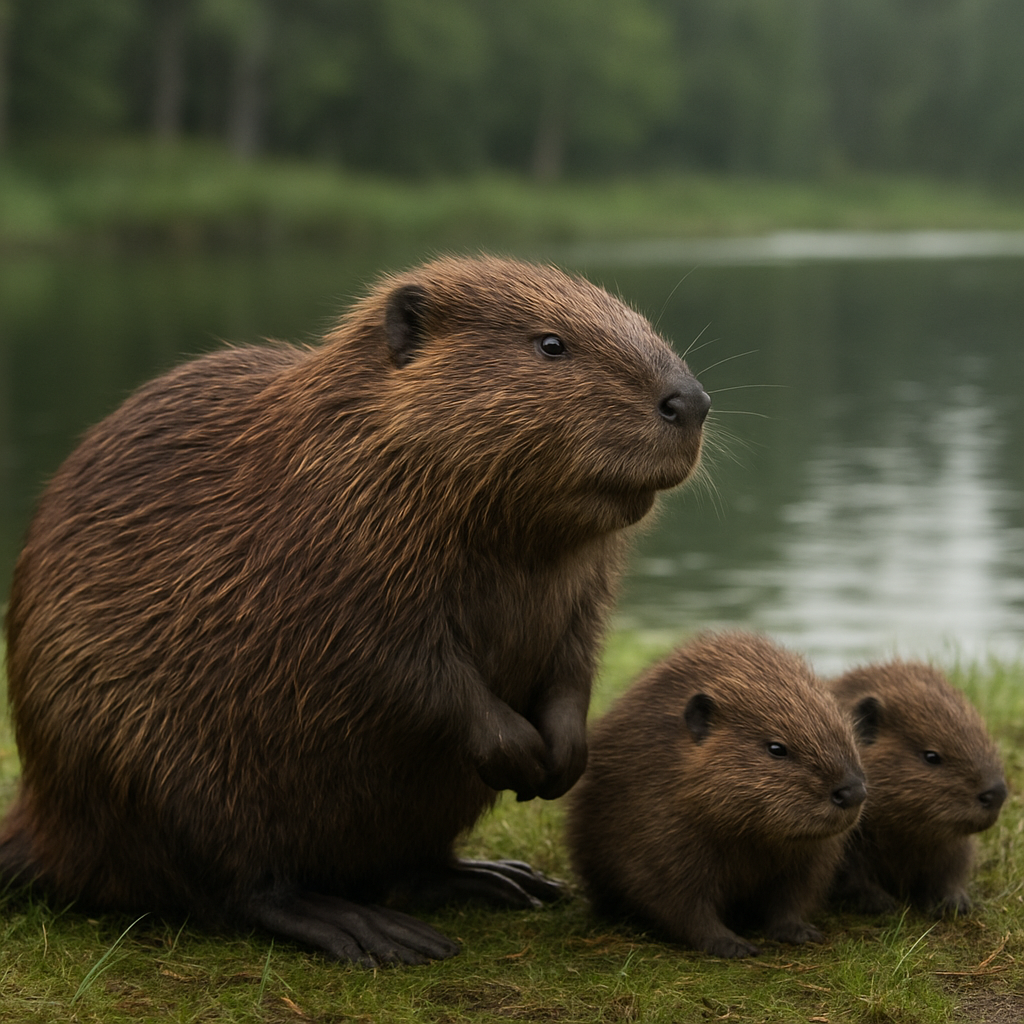
In an ecological triumph, Glen Affric in Scotland has welcomed its first wild-born beavers in over 400 years, a milestone in wildlife conservation. Following the strategic release of beaver families last year by the charity Trees for Life in partnership with Forestry and Land Scotland, the appearance of these kits marks a significant step forward in rewilding efforts within the region. The sighting of at least two newborn beavers at Loch Beinn a Mheadhoin highlights the success of measured conservation strategies in fostering the return of these invaluable ecosystem engineers to their native habitats.
The presence of these kits is particularly noteworthy given the 2009 reintroduction of beavers to Scotland after centuries of absence. This success story is attributed to carefully orchestrated plans designed to facilitate not only the survival of released beavers but also their reproduction and assimilation into the local ecosystem. Dr. Roisin Campbell-Palmer, leading restoration efforts at the Beaver Trust, underlined the significance of rigorous planning and management in achieving these results. The successful integration of beavers demonstrates how educated interventions can aid in ecological restoration.
Beavers play an instrumental role in biodiversity, offering vast benefits such as enhanced water quality and increased opportunities for diverse plant and animal life. By creating dams and wetlands, they help to moderate water flow, reduce erosion, and create habitats crucial for numerous other species. The rewilding of Glen Affric, through strategic translocations under Scotland’s National Beaver Strategy, serves as a study in balancing human influence with natural processes to revitalize native wildlife populations responsibly.
Moreover, this achievement illustrates the dedication of involved parties in formulating and executing conservation projects that prioritize ecological integrity. The successful propagation of wild-born beavers not only rejuvenates the Scottish Highlands' biodiversity but also bolsters community engagement and awareness of conservation issues. Such outcomes encourage widescale backing for continued efforts to preserve and restore ecosystems throughout the nation.
Ultimately, the reintroduction and subsequent thriving of beaver populations in Glen Affric serve as a beacon of hope in conservation circles. These developments validate collaborative, well-planned efforts to restore nature's balance and demonstrate how effectively managed wildlife reintroductions can spur ecological health and resilience across regions. This historic milestone underscores the crucial role of dedicated conservation initiatives in reversing biodiversity loss and promoting sustainable coexistence between humans and wildlife.
Original news source: Glen Affric sees first wild-born beavers in 400 years – BBC News (BBC)
🎧 Listen:
📖 Vocabulary:
Group or Classroom Activities
Warm-up Activities:
1. Have you ever visited a wildlife conservation area? Describe what you saw.
2. Discuss the role of animals in maintaining healthy ecosystems.
3. Share any stories you know about successful animal reintroduction projects.
4. How important do you think biodiversity is, and why?
5. What are some challenges faced in wildlife conservation efforts today?
🤔 Comprehension Questions:
The article highlights the birth of the first wild-born beavers in Glen Affric, Scotland, in over 400 years.
The charity Trees for Life in partnership with Forestry and Land Scotland were key partners in the strategic release.
Beavers enhance water quality, create habitats, moderate water flow, and reduce erosion, benefiting many species.
It signifies the successful reintroduction and ecological integration of the beavers.
It boosts community engagement and increases awareness of conservation issues.
It shows the balance of human influence and natural processes to revitalize native wildlife populations responsibly.
It demonstrates the effectiveness and importance of collaborative, well-planned conservation efforts in restoring ecological health.
🎧✍️ Listen and Fill in the Gaps:
In an ecological triumph, Glen Affric in Scotland has welcomed its first beavers in over 400 years, a milestone in wildlife conservation. Following the strategic of families last year by the charity Trees for Life in partnership with Forestry and Land Scotland, the appearance of these kits marks a significant step forward in rewilding efforts within the region. The sighting of at least two newborn beavers at Loch Beinn a Mheadhoin highlights the success of measured conservation strategies in fostering the return of these ecosystem engineers to their native habitats. The of these kits is particularly noteworthy given the 2009 reintroduction of beavers to Scotland after centuries of absence. This success story is attributed to orchestrated plans designed to facilitate not only the survival of released beavers but also their reproduction and assimilation into the ecosystem. Dr. Roisin Campbell-Palmer, leading restoration efforts at the Beaver Trust, underlined the significance of planning and management in achieving these results. The successful integration of beavers demonstrates how educated interventions can aid in ecological restoration. Beavers play an instrumental role in biodiversity, offering vast benefits such as enhanced water quality and increased opportunities for and animal life. By creating dams and wetlands, they help to moderate water flow, reduce erosion, and create crucial for numerous other species. The rewilding of Glen Affric, through strategic translocations under Scotland’s National Beaver Strategy, serves as a study in balancing human influence with natural processes to revitalize native wildlife populations responsibly. Moreover, this achievement illustrates the dedication of involved parties in formulating and executing projects that prioritize ecological integrity. The successful propagation of wild-born beavers not only rejuvenates the Scottish Highlands' biodiversity but also bolsters community engagement and of conservation issues. Such encourage widescale backing for continued efforts to and restore ecosystems throughout the nation. Ultimately, the reintroduction and subsequent thriving of beaver populations in Glen Affric serve as a beacon of hope in conservation circles. These developments validate collaborative, well-planned efforts to restore nature's balance and how effectively managed wildlife reintroductions can spur ecological health and resilience across regions. This historic milestone underscores the crucial role of dedicated conservation initiatives in reversing biodiversity loss and promoting sustainable coexistence between humans and wildlife.
💬 Discussion Questions:
1. What is your opinion on rewilding projects?
2. How do beavers impact their environment in positive ways?
3. Why do you think biodiversity is important for the planet?
4. Are there any downsides to wildlife reintroduction?
5. In what ways can local communities benefit from conservation efforts?
6. What might be the consequences if conservation efforts are not undertaken?
7. How can governments better support wildlife conservation initiatives?
8. Discuss other examples of animals that have been successfully reintroduced into the wild.
9. What role do organizations like Trees for Life play in conservation?
10. How do you think technology can aid in conservation efforts?
11. What are some ways individuals can contribute to conservation?
12. Do you think rewilding can help combat climate change? Why or why not?
Individual Activities
📖💭 Vocabulary Meanings:
Click a dot next to a word, then click the dot next to its meaning to draw a line connecting them.