
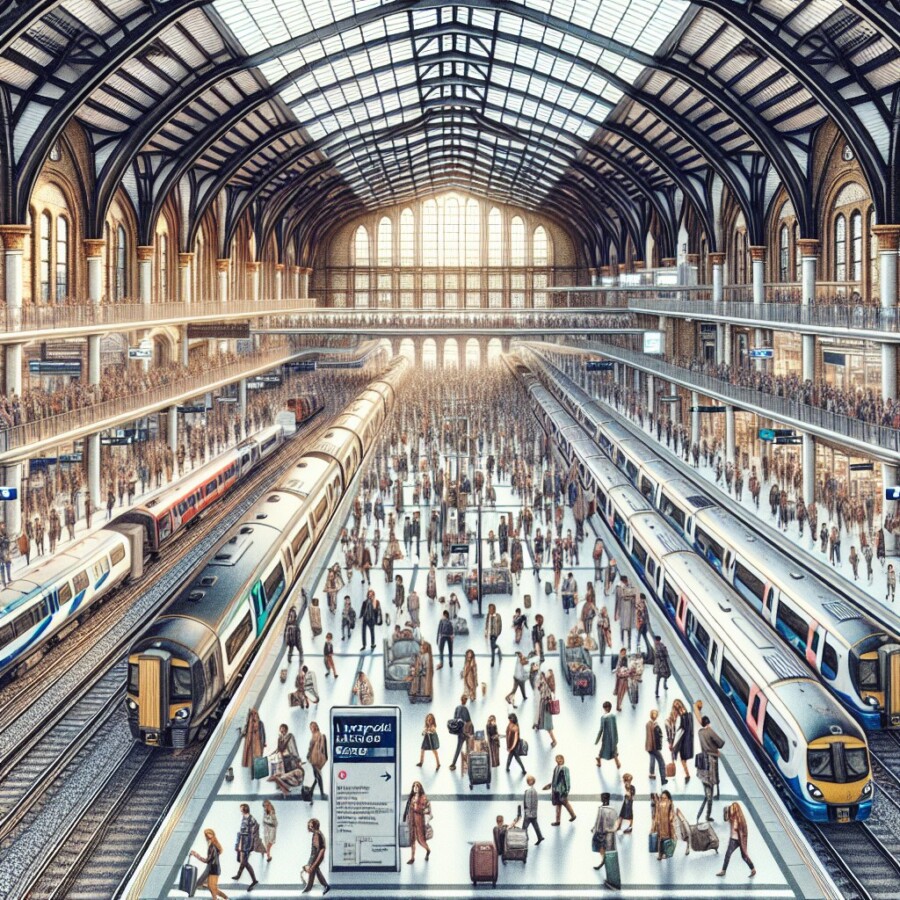
Liverpool Street station in London has become the busiest station in Britain, surpassing Waterloo, according to new figures from the Office of Rail and Road (ORR). The ORR attributed the surge in passengers to the full opening of the Elizabeth line, which has changed the way people travel. Outside of London, the busiest stations were Birmingham New Street, Leeds, Manchester Piccadilly, Glasgow Central, and Cardiff Central. Liverpool Street station saw a year-on-year increase of around 50 million entries and exits, reaching a total of 80.4 million between April 2022 and March 2023.
The opening of the Elizabeth line in May 2022, which also serves Paddington, contributed to Liverpool Street station's rise to the top spot. It recorded 59.2 million entries and exits, while Waterloo fell to third place with 57.8 million entries and exits. The impact of the Elizabeth line on London's transportation network has been significant, with stations like Farringdon experiencing a jump in rankings and serving 30 million passengers. However, the line has faced criticism from the mayor over its performance on shared infrastructure out of Paddington.
The figures highlight the importance of investing in high-quality rail infrastructure. With few major rail projects currently underway, the success of the Elizabeth line demonstrates that people are willing to use and rely on well-designed and efficient transportation systems. Feras Alshaker, director of planning and performance at the ORR, noted that Waterloo had been the busiest station in Britain for most of the previous 18 years. The least used station throughout the year was Denton in Greater Manchester, with only 34 entries and exits, while Teesside Airport station recorded just two entries and exits due to the suspension of its Sunday service.
In summary, Liverpool Street station has become Britain's busiest station, overtaking Waterloo, thanks to the opening of the Elizabeth line. The figures highlight the impact of investing in high-quality rail infrastructure and the willingness of people to use efficient transportation systems.
Original news source: Liverpool Street becomes Britain's busiest station (BBC)
🎧 Listen:
📖 Vocabulary:
Group or Classroom Activities
Warm-up Activities:
– News Summary
Instructions: Have students read the article and write a concise summary of the main points. They should focus on capturing the key information and presenting it in a clear and concise manner.
– Opinion Poll
Instructions: Divide the class into pairs or small groups. Each group should discuss and come up with their opinions on the following question: "Do you think investing in high-quality rail infrastructure is important for a city's transportation system?" After discussing, each group will present their opinions to the class and a poll will be conducted to see which opinion is most popular among the students.
– Vocabulary Pictionary
Instructions: Provide a list of vocabulary words from the article. Divide the class into small groups and give each group a set of vocabulary words. One student from each group will take turns drawing a picture to represent one of the words, while the other students in the group try to guess the word. The first group to guess the correct word gets a point. Continue until all the words have been guessed.
– Headline Creation
Instructions: Ask students to create a catchy headline for the article. They should try to capture the main idea of the article in a few words. After giving them some time to think, have students share their headlines with the class and discuss which ones they think are the most effective.
– Future Predictions
Instructions: In pairs or small groups, have students discuss and make predictions about the future of transportation in their own cities or countries. They should consider factors such as technological advancements, population growth, and environmental concerns. After discussing, each group will present their predictions to the class.
🤔 Comprehension Questions:
🎧✍️ Listen and Fill in the Gaps:
Liverpool Street in London has become the busiest station in Britain, surpassing Waterloo, according to new figures from the Office of Rail and Road (ORR). The ORR attributed the surge in passengers to the full opening of the Elizabeth line, which has changed the way travel. Outside of London, the busiest stations were Birmingham New Street, Leeds, Manchester , Central, and Cardiff Central. Liverpool Street station saw a year-on-year increase of around 50 million entries and exits, reaching a of 80.4 million between April 2022 and March 2023. The opening of the line in May 2022, which also serves Paddington, contributed to Liverpool Street station's rise to the top spot. It recorded 59.2 million and exits, while Waterloo fell to third place with 57.8 million entries and exits. The impact of the Elizabeth line on London's transportation network has been significant, with like Farringdon experiencing a jump in rankings and serving 30 million passengers. However, the line has faced criticism from the mayor over its performance on shared infrastructure out of Paddington. The highlight the importance of investing in high-quality rail infrastructure. With few major rail projects currently underway, the success of the Elizabeth line demonstrates that people are willing to use and rely on well-designed and efficient systems. Feras , director of and performance at the ORR, noted that Waterloo had been the busiest station in Britain for most of the previous 18 . The least used station throughout the year was Denton in Greater Manchester, with only 34 entries and , while Teesside Airport station recorded just two entries and exits due to the suspension of its Sunday service. In summary, Liverpool Street station has become Britain's busiest station, overtaking , thanks to the opening of the Elizabeth line. The figures highlight the impact of investing in high-quality rail infrastructure and the of people to use efficient transportation systems.
💬 Discussion Questions:
1. What is your opinion on the rise of Liverpool Street station as the busiest station in Britain?
2. How would you feel if your regular train station suddenly became overcrowded and busy?
3. Do you like using public transportation? Why or why not?
4. Do you think investing in high-quality rail infrastructure is important for a city? Why or why not?
5. How do you think the opening of the Elizabeth line has changed the way people travel in London?
6. Have you ever experienced a significant change in transportation options in your city? How did it affect you?
7. What do you think are the advantages and disadvantages of having a busy train station in your city?
8. How do you think the increase in passengers at Liverpool Street station will impact the surrounding area and businesses?
9. Do you think it is necessary to constantly update and improve transportation systems in a city? Why or why not?
10. Have you ever encountered any issues or problems while using public transportation? What were they and how did you handle them?
11. How do you think the opening of the Elizabeth line has affected other forms of transportation in London, such as buses or taxis?
12. What changes do you think should be made to improve the efficiency and effectiveness of public transportation in your city?
13. Have you ever used the Elizabeth line or any other new transportation system? How was your experience?
14. How do you think the ranking of train stations in terms of passenger numbers can impact the reputation and perception of a city?
15. What role do you think public transportation plays in reducing traffic congestion and pollution in a city?
Individual Activities
📖💭 Vocabulary Meanings:
Click a dot next to a word, then click the dot next to its meaning to draw a line connecting them.
Words
Meanings
🔡 Multiple Choice Questions:
🕵️ True or False Questions:
📝 Write a Summary:
Write a summary of this news article in two sentences.
Check your writing now with the best free AI for English writing!