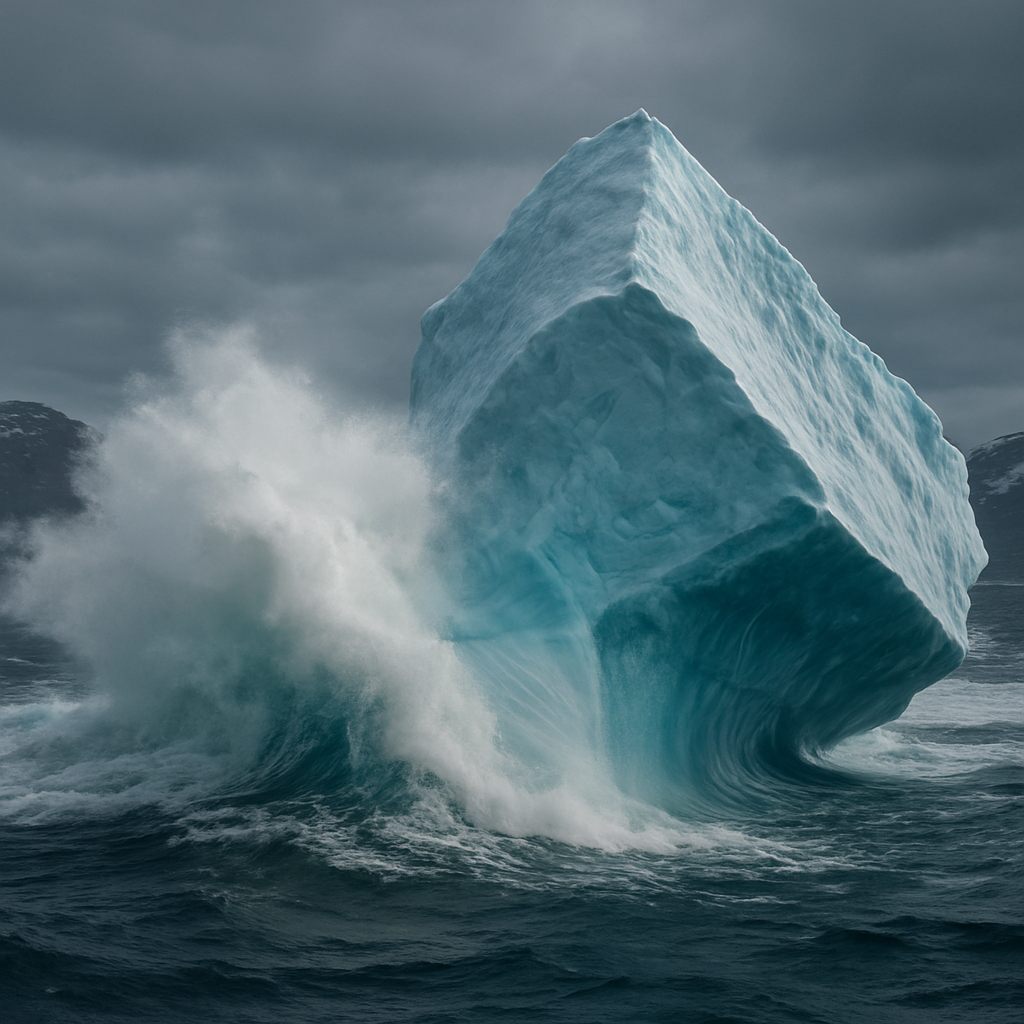
A big iceberg flipped over near Greenland's coast. This happened by a city called Ilulissat. Someone saw this amazing event and caught it on camera. When the iceberg turned, it made huge waves that hit the coast.
Near Ilulissat is the Ilulissat Icefjord, famous for its big icebergs and glaciers. Many nature lovers visit because of its icy beauty. This place is special and is a UNESCO World Heritage site. The ice there makes it an exciting place to explore.
In Greenland, icebergs can change shape or flip. This happens because of the ice melting and moving. These changes can make the sea more dangerous. Scientists watch them closely to learn more.
2. iceberga large piece of ice floating in the sea
3. astonishingamazing or surprising
4. coastthe land along the sea
5. eyewitnessa person who sees something happen
6. UNESCOan organization that protects important places
7. glacierslarge masses of ice on land
8. conditionsthe state of something, like weather
9. scientistspeople who study science
10. observedwatched carefully
11. capturedrecorded or took a picture of
12. shiftingmoving from one place to another
Group or Classroom Activities
Warm-up Activities:
1. Describe what an iceberg is. 2. Have you ever seen a video of an iceberg? What was it like? 3. What do you know about Greenland? 4. Why do you think ice melts? 5. Can you name some places with lots of ice and snow?
🤔 Comprehension Questions:
1. Where did the iceberg flip occur?
Near the coast of Greenland.
2. What did the turning iceberg cause?
It created large waves.
3. Why is Ilulissat a popular travel spot?
Because of its natural ice beauty.
4. What kind of site is the Ilulissat Icefjord?
It is a UNESCO World Heritage site.
5. What causes icebergs in Greenland to flip?
Melting and shifting ice cause them to flip.
6. Who observes the changes in icebergs?
Scientists observe them.
7. What effect can changing icebergs have on the sea?
They can affect sea conditions, making it more dangerous.
🎧✍️ Listen and Fill in the Gaps:
A big iceberg flipped over near Greenland's coast. This by a city called . Someone saw this amazing event and it on camera. When the iceberg turned, it huge waves that hit the coast. Near Ilulissat is the Ilulissat Icefjord, famous for its big icebergs and . Many nature lovers because of its icy . This place is special and is a UNESCO World Heritage . The ice there it an exciting place to explore. In Greenland, icebergs can change shape or flip. This happens of the ice melting and . These can make the sea more dangerous. Scientists watch them closely to learn more.
💬 Discussion Questions:
1. Why do you think people are fascinated by icebergs? 2. How do you feel about visiting cold places like Greenland? 3. What do you think causes icebergs to flip? 4. Have you ever been to a UNESCO World Heritage site? What was it like? 5. Would you prefer to visit a place with ice or a warm beach? Why? 6. How does seeing nature in videos differ from seeing it in person? 7. Why is it important to protect natural sites like Ilulissat Icefjord? 8. How do you think changes in Earth's climate affect icebergs? 9. What role do you think scientists play in understanding nature? 10. How would you react to seeing an iceberg flip in person? 11. Why might big waves be dangerous? 12. How does the beauty of nature make you feel?
Individual Activities
📖💭 Vocabulary Meanings:
Click a dot next to a word, then click the dot next to its meaning to draw a line connecting them.
Words
1. massive
2. iceberg
3. astonishing
4. coast
5. eyewitness
6. UNESCO
7. glaciers
8. conditions
9. scientists
10. observed
11. captured
12. shifting
Meanings
(A) the state of something, like weather
(B) large masses of ice on land
(C) an organization that protects important places
(D) a person who sees something happen
(E) the land along the sea
(F) people who study science
(G) a large piece of ice floating in the sea
(H) very large
(I) recorded or took a picture of
(J) moving from one place to another
(K) watched carefully
(L) amazing or surprising
🔡 Multiple Choice Questions:
1. Where did the iceberg flip over?
(a) Near the coast of France
(b) Near the city of Paris
(c) Near the coast of Greenland
(d) Near a desert
2. What is special about Ilulissat Icefjord?
(a) It's the hottest place on Earth
(b) It has no icebergs
(c) It's in a desert
(d) It's a UNESCO World Heritage site
3. Who caught the iceberg flipping on video?
(a) A scientist
(b) An eyewitness
(c) A policeman
(d) A teacher
4. What did the flipping iceberg create?
(a) Large waves
(b) Small ripples
(c) Hurricanes
(d) Earthquakes
5. Why do icebergs flip over?
(a) Because of strong winds
(b) Because they are pushed by boats
(c) Because they are attacked by wildlife
(d) Because of melting and moving ice
6. Why do scientists observe icebergs?
(a) To make ice for drinks
(b) To learn about sea conditions
(c) To build houses
(d) To create maps
7. What makes Ilulissat a popular travel spot?
(a) Its hot weather
(b) Its sandy beaches
(c) Its icy nature
(d) Its tall mountains
8. How do changes in icebergs affect the sea?
(a) They can make it dangerous
(b) They make it warmer
(c) They turn the sea purple
(d) They remove fish
🕵️ True or False Questions:
1. Icebergs can change due to melting and shifting.
2. Ilulissat is known for large icebergs and glaciers.
3. The iceberg created small ripples.
4. Ilulissat Icefjord is a UNESCO site.
5. A tiny iceberg remained still far from Greenland's coast.
6. Few people avoid Ilulissat for its unnatural ugliness.
7. Scientists ignore icebergs to forget about sea conditions.
8. The event was filmed by an eyewitness.
Writing Questions:
1. Write about a time you witnessed something amazing in nature.
2. Describe what you would do if you saw an iceberg flip over.
3. Explain why you think protecting natural sites is important.
4. Imagine you're visiting Greenland. What would you hope to see?
5. Discuss how you think changing climates impact our planet.