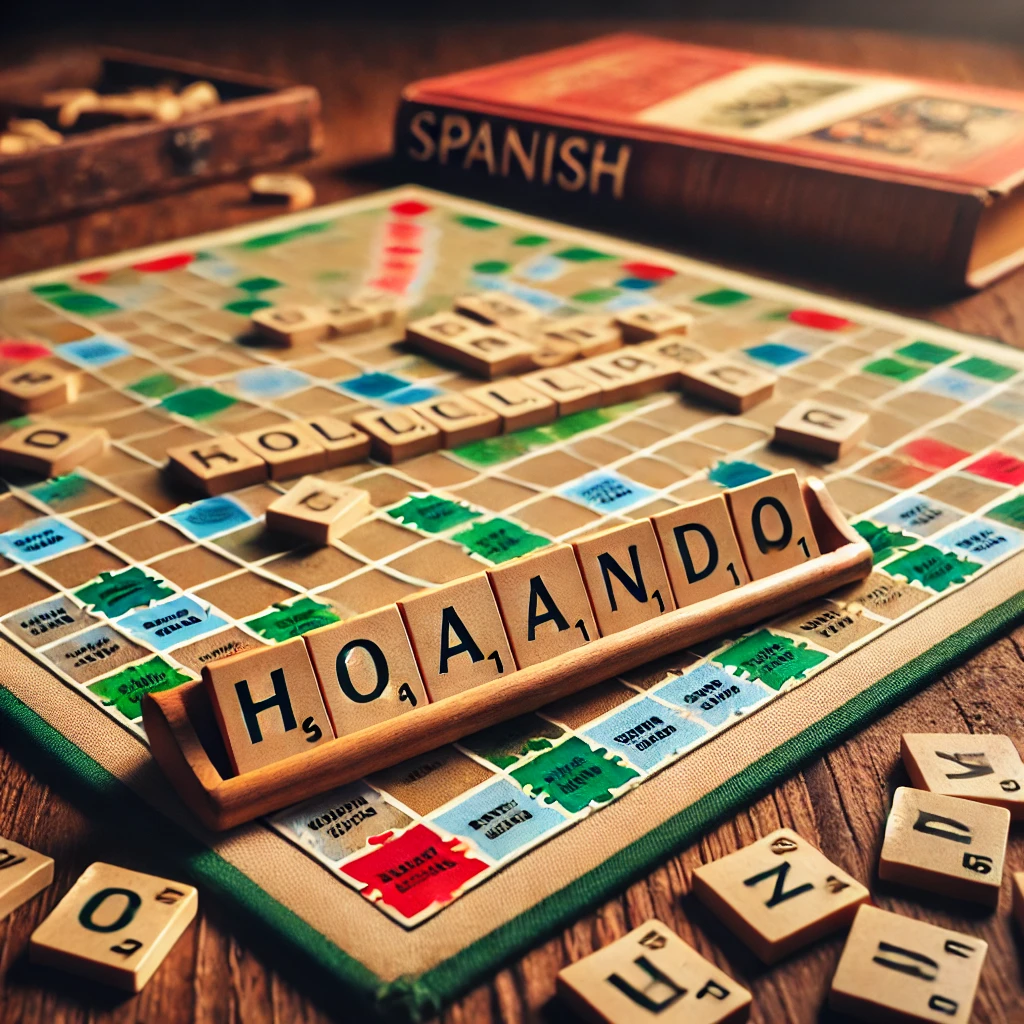
In a remarkable achievement, a New Zealand man named Nigel Richards has won the world title for Spanish-language Scrabble, despite not speaking Spanish. This victory took place during his first competitive game in the language, held in Granada, Spain, where he managed to win 23 out of 24 games. Richards is already an accomplished player, holding five world titles in English Scrabble, and his latest triumph has drawn significant attention within the Scrabble community.
Richards prepared for this competition by dedicating a year to memorizing the Spanish Scrabble word list. According to his friend Liz Fagerlund, who is also a Scrabble official in New Zealand, Richards possesses an extraordinary ability to visualize words as images, which allows him to recall them with ease. This unique skill has led him to success in various language competitions, raising questions about how he can achieve such feats without understanding the language itself.
The runner-up in the tournament was Benjamín Olaizola from Argentina, who won 18 games but could not surpass Richards’ performance. Alejandro Terenzani, one of the contest organizers, expressed his astonishment at Richards’ achievement, noting that nothing like this had ever occurred in Spanish Scrabble before. The unexpected nature of Richards' success left many in the community both amazed and impressed, as they had anticipated a strong performance but did not foresee such dominance.
Richards is no stranger to competing in languages he does not speak. In 2015, he won the French Scrabble world championship after studying the word list for just nine weeks, and he successfully defended his title in 2018. His ability to adapt to different languages and their respective strategies has solidified his reputation as one of the greatest Scrabble players of all time. However, the Spanish language presented new challenges, including a greater number of longer words that required a different approach to gameplay.
Despite his fame in the Scrabble world, Richards remains a private individual who shies away from media attention. His mother has mentioned that he did not excel in English during his school years and has a mathematical approach to the game rather than a linguistic one. While he enjoys the game and engages with fans at events, he prefers to maintain a low profile and does not seek out interviews. This enigmatic nature adds to the intrigue surrounding his extraordinary accomplishments in the world of competitive Scrabble.
Original news source: A New Zealander studied for a year to win the Spanish world Scrabble title. He doesn’t speak Spanish (AP News)
🎧 Listen:
📖 Vocabulary:
Group or Classroom Activities
Warm-up Activities:
– CHARADES
Instructions: Divide the class into small groups. Each group will take turns acting out key terms or concepts from the article without using words. The other groups will guess the term being acted out. Terms can include "Scrabble," "Spanish," "competition," "memorizing," etc.
– OPINION POLL
Instructions: Pose a question related to the article, such as "Do you think it's possible to excel in a language without speaking it?" Students will walk around the classroom and ask at least three classmates for their opinions, then share the most common responses with the class.
– HEADLINE CREATION
Instructions: Ask students to create a catchy headline for the article that captures its essence. They can work in pairs or small groups to come up with different options and then share their headlines with the class for discussion.
– MIND MAP
Instructions: In groups, students will create a mind map based on the article. They should include key themes such as "language learning," "competitive Scrabble," and "Nigel Richards." Each group will present their mind map to the class, explaining their connections.
– SPEED SUMMARIZING
Instructions: Provide each student with a few minutes to read the article. After reading, they will have 30 seconds to summarize it to a partner. After they have shared, they will switch partners and summarize again, encouraging them to refine their summaries with each round.
🤔 Comprehension Questions:
Nigel Richards won the world title for Spanish-language Scrabble despite not speaking Spanish, winning 23 out of 24 games in his first competitive game in the language.
Richards dedicated a year to memorizing the Spanish Scrabble word list.
He has an extraordinary ability to visualize words as images, which allows him to recall them with ease.
The runner-up was Benjamín Olaizola from Argentina, who won 18 games.
Alejandro Terenzani expressed astonishment at Richards’ achievement, noting that nothing like this had ever occurred in Spanish Scrabble before.
Richards is no stranger to competing in languages he does not speak, having previously won the French Scrabble world championship after studying the word list for just nine weeks.
The Spanish language presented new challenges, including a greater number of longer words that required a different approach to gameplay.
Despite his fame in the Scrabble world, Richards remains a private individual who shies away from media attention and prefers to maintain a low profile, not seeking out interviews.
🎧✍️ Listen and Fill in the Gaps:
In a remarkable achievement, a New Zealand man named Nigel Richards has won the world for Spanish-language Scrabble, despite not speaking Spanish. This victory took place during his first competitive game in the language, held in Granada, Spain, where he managed to win 23 out of 24 games. Richards is already an player, holding five world in English Scrabble, and his latest triumph has significant attention within the Scrabble community. Richards prepared for this competition by dedicating a year to memorizing the Spanish Scrabble word list. According to his friend Liz Fagerlund, who is also a Scrabble official in New Zealand, Richards possesses an extraordinary ability to visualize words as images, which allows him to recall them with ease. This unique skill has led him to success in various competitions, raising about how he can achieve such feats without understanding the language itself. The runner-up in the tournament was Benjamín Olaizola from Argentina, who won 18 games but could not surpass Richards’ . Alejandro Terenzani, one of the contest organizers, expressed his astonishment at Richards’ achievement, noting that nothing like this had ever in Spanish Scrabble before. The unexpected nature of Richards' success left many in the community both amazed and impressed, as they had anticipated a performance but did not foresee such dominance. Richards is no stranger to competing in he does not speak. In 2015, he won the French Scrabble world after the word list for just nine weeks, and he successfully defended his title in 2018. His ability to adapt to different languages and their respective strategies has solidified his reputation as one of the greatest Scrabble players of all time. However, the Spanish language presented new challenges, a greater number of longer words that required a different approach to gameplay. Despite his fame in the Scrabble world, Richards remains a private individual who shies away from media attention. His mother has mentioned that he did not in during his school years and has a mathematical approach to the game rather than a linguistic one. While he enjoys the game and engages with fans at events, he prefers to maintain a low profile and does not seek out interviews. This nature adds to the intrigue surrounding his extraordinary accomplishments in the world of competitive Scrabble.
💬 Discussion Questions:
1. What is your opinion on the idea of someone winning a language-based competition without speaking the language?
2. How would you feel if you had to prepare for a competition in a language you didn’t speak?
3. Do you think memorizing words alone is enough to succeed in a language-based game? Why or why not?
4. What is a skill you believe is essential for success in competitive games like Scrabble?
5. How do you think cultural understanding plays a role in language-based competitions?
6. Do you like playing word games such as Scrabble? Why or why not?
7. What is your experience with learning a new language, and how does it compare to learning vocabulary for a game?
8. How would you approach learning a new language for a competition?
9. Do you think it is possible to excel in a language without understanding its grammar or nuances? Why or why not?
10. What is a challenge you have faced when trying to learn a new skill or hobby?
11. How do you think Nigel Richards’ unique approach to visualization contributes to his success in Scrabble?
12. Do you think competitive games like Scrabble can help improve language skills? Why or why not?
13. How would you feel if you were in the position of the runner-up, having lost to someone who doesn’t speak the language?
14. What is your opinion on the balance between natural talent and hard work in achieving success?
15. How do you think Richards’ preference for privacy affects public perception of his achievements?
Individual Activities
📖💭 Vocabulary Meanings:
Click a dot next to a word, then click the dot next to its meaning to draw a line connecting them.
Words
Meanings
🔡 Multiple Choice Questions:
🕵️ True or False Questions:
📝 Write a Summary:
Write a summary of this news article in two sentences.
Check your writing now with the best free AI for English writing!