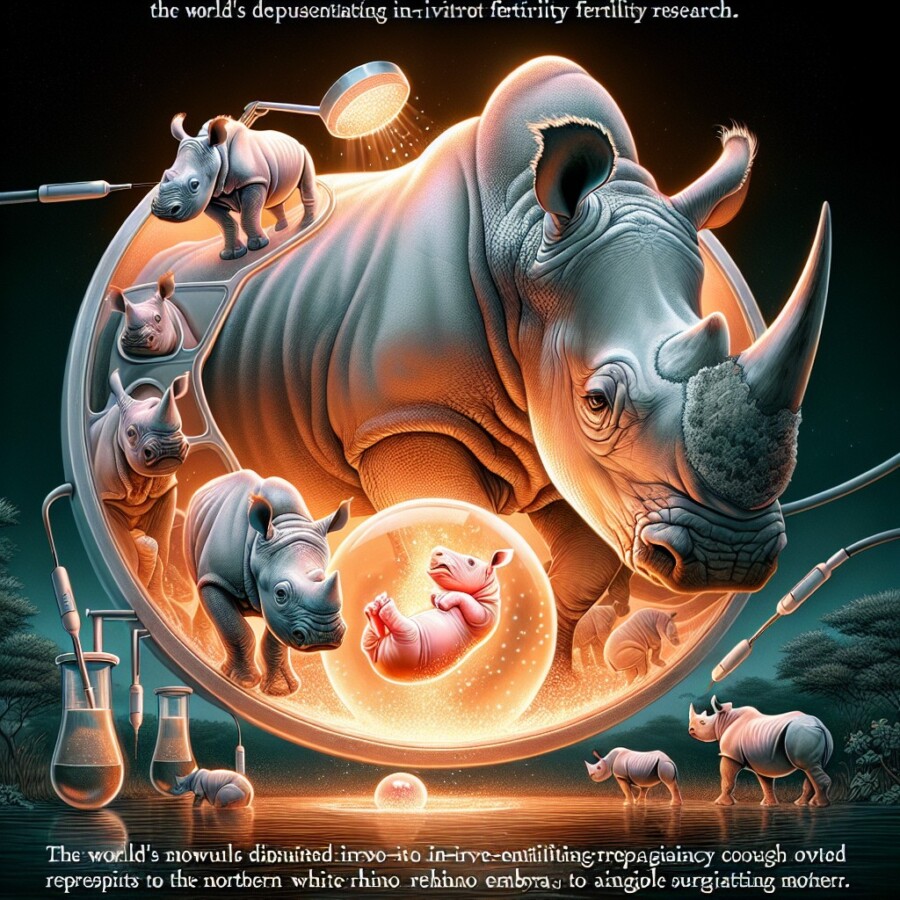
A groundbreaking achievement in fertility science has given hope to the northern white rhino, a species on the brink of extinction. With only two of these animals left in the world, scientists have successfully achieved the world's first IVF rhino pregnancy by transferring a lab-created rhino embryo into a surrogate mother. This procedure was carried out using southern white rhinos, a closely related sub-species. The next step is to repeat this process with northern white embryos. The success of this achievement has given scientists confidence that they can save the species by creating northern white rhinos in the same manner.
Northern white rhinos were once widespread across central Africa but were driven to extinction by illegal poaching driven by the demand for rhino horn. Now, only two females, Najin and Fatu, remain under tight security at the Ol Pejeta Conservancy in Kenya. The Biorescue project, an international consortium dedicated to saving this species, has turned to radical fertility science to bring these animals back from the brink. The project began with southern white rhinos, a population that has seen conservation success despite being threatened by illegal hunting.
The Biorescue team faced numerous challenges in their work, including collecting eggs from the two-tonne animals and creating rhino embryos in a lab. It took 13 attempts to achieve the first viable IVF pregnancy using southern white rhinos. The success was unfortunately followed by tragedy when the surrogate mother died from an infection caused by bacteria found in the soil. However, the technique proved to be effective, demonstrating that a viable pregnancy through rhino IVF is possible. The next step is to attempt this with northern white rhino embryos.
There are currently only 30 northern white rhino embryos in existence, stored in liquid nitrogen in Germany and Italy. These embryos were created using eggs harvested from Fatu and sperm collected from two male northern white rhinos before they died. However, the birth of a northern white calf will require another scientific first. Neither of the surviving northern whites can carry a pregnancy due to age and health problems, so the embryo will be implanted into the womb of a surrogate southern white rhino. While this has never been tried before, the team is confident it will work.
The Biorescue team hopes to implant the embryos in the coming months, aiming for the calf to be born while some northern white rhinos are still alive. They believe it is crucial to preserve the social communication and heritage of the northern white rhino by allowing the calf to learn from the last two rhinos. However, simply adding a few more animals through IVF will not save the species due to the lack of genetic diversity. Therefore, the team is also working on an experimental technique to create rhino sperm and eggs from stem cells. This will take time and present many scientific challenges. Despite some experts questioning the allocation of resources to a species on the verge of extinction, the Biorescue team believes that since humans are responsible for the extinction of the northern white rh
Original news source: World's first IVF rhino pregnancy 'could save species' (BBC)
🎧 Listen:
📖 Vocabulary:
Group or Classroom Activities
Warm-up Activities:
– News Summary
Instructions: Have the students read the article individually or in pairs. Then, ask them to write a summary of the article in their own words, highlighting the key points and main ideas. They should aim to condense the information into a concise paragraph or two. Afterward, have them share their summaries with a partner or small group and discuss any similarities or differences.
– Opinion Poll
Instructions: Divide the class into small groups. Assign each group a role, such as scientists, conservationists, or members of the general public. Give them a few minutes to discuss and form opinions about the Biorescue project and the use of fertility science to save the northern white rhino. Then, have each group prepare a list of questions related to their role. Each group will take turns conducting an opinion poll by asking the other groups their questions and recording their responses. Afterward, have a class discussion about the different opinions and perspectives.
– Vocabulary Pictionary
Instructions: Select a list of key vocabulary words from the article, such as IVF, embryo, extinction, poaching, conservation, etc. Divide the class into pairs or small groups. Give each group a set of vocabulary words. One student from each group will choose a word and draw a picture to represent it, while the other students in the group try to guess the word. Encourage them to use their knowledge of the article to help them guess. After a set time limit, rotate roles within the groups and continue until all the words have been guessed.
– Pros and Cons
Instructions: Divide the class into two groups: one representing the supporters of the Biorescue project and the other representing the critics. Give each group time to brainstorm and discuss the pros and cons of using fertility science to save the northern white rhino. Once they have compiled a list, allow each group to present their arguments to the class. Encourage a respectful debate and discussion, allowing students from each group to respond to the opposing side's arguments.
– Future Predictions
Instructions: Have the students imagine they are scientists working on the Biorescue project. In pairs or small groups, ask them to brainstorm and discuss their predictions for the future of the northern white rhino. What challenges might they face? What breakthroughs could be made? How might the conservation landscape change? Afterward, have each group share their predictions with the class and facilitate a discussion about the various possibilities.
🤔 Comprehension Questions:
🎧✍️ Listen and Fill in the Gaps:
A groundbreaking achievement in science has given hope to the northern white rhino, a species on the brink of extinction. With only two of these animals left in the world, have successfully achieved the world's first IVF rhino pregnancy by transferring a lab-created rhino embryo into a surrogate mother. This procedure was carried out using white , a closely related sub-species. The next step is to repeat this process with northern white embryos. The success of this achievement has given scientists confidence that they can save the species by creating northern white rhinos in the same manner. Northern white rhinos were once widespread across central Africa but were driven to extinction by illegal poaching driven by the demand for rhino horn. Now, only two females, Najin and Fatu, remain under tight security at the Ol Pejeta Conservancy in Kenya. The Biorescue project, an international consortium dedicated to saving this species, has turned to radical fertility science to bring these animals back from the brink. The project began with southern white rhinos, a population that has seen success despite being threatened by illegal hunting. The Biorescue team faced numerous challenges in their work, collecting eggs from the two-tonne animals and creating rhino embryos in a lab. It took 13 to achieve the first viable IVF pregnancy using southern white rhinos. The success was unfortunately followed by tragedy when the mother died from an infection caused by bacteria found in the soil. However, the technique proved to be effective, demonstrating that a viable pregnancy through rhino IVF is . The next step is to attempt this with white rhino embryos. There are currently only 30 northern white rhino embryos in existence, stored in liquid nitrogen in Germany and Italy. These embryos were using eggs harvested from Fatu and sperm collected from two male northern white rhinos before they died. However, the birth of a northern white calf will require another scientific first. Neither of the surviving northern whites can carry a pregnancy due to age and health problems, so the embryo will be implanted into the womb of a surrogate southern white rhino. While this has never been before, the team is confident it will work. The Biorescue team hopes to implant the embryos in the coming months, aiming for the calf to be born while some northern white rhinos are still alive. They believe it is crucial to preserve the social communication and heritage of the northern white rhino by allowing the calf to learn from the last two rhinos. However, simply adding a few more animals through IVF will not save the species due to the lack of genetic diversity. Therefore, the team is also working on an experimental technique to create rhino sperm and eggs from stem . This will take time and present many scientific challenges. Despite some experts questioning the allocation of resources to a species on the verge of , the team that since humans are responsible for the extinction of the northern white rh
💬 Discussion Questions:
1. What is your opinion on using IVF to save the northern white rhino species?
2. How would you feel if you were part of the team working on the Biorescue project?
3. Do you think it is worth allocating resources to save a species on the verge of extinction? Why or why not?
4. What is the significance of preserving the social communication and heritage of the northern white rhino?
5. How do you think the birth of a northern white calf can impact the conservation efforts for the species?
6. Do you think it is ethical to use stem cells to create rhino sperm and eggs? Why or why not?
7. What challenges do you think the Biorescue team will face in implanting the embryos into the surrogate rhino?
8. How do you think the birth of a northern white calf will impact the public's awareness of rhino conservation?
9. What is the role of humans in the extinction of the northern white rhino?
10. How do you think the success of the IVF rhino pregnancy will impact future conservation efforts for other endangered species?
11. Do you think it is necessary to focus on genetic diversity in the conservation of the northern white rhino? Why or why not?
12. How do you think the success of the IVF rhino pregnancy will impact public opinion on using technology for conservation purposes?
13. What challenges do you think the Biorescue team will face in creating rhino sperm and eggs from stem cells?
14. How do you think the success of the IVF rhino pregnancy will impact the future of fertility science?
15. Do you think it is important to save the northern white rhino species? Why or why not?
Individual Activities
📖💭 Vocabulary Meanings:
Click a dot next to a word, then click the dot next to its meaning to draw a line connecting them.
Words
Meanings
🔡 Multiple Choice Questions:
🕵️ True or False Questions:
📝 Write a Summary:
Write a summary of this news article in two sentences.
Check your writing now with the best free AI for English writing!