


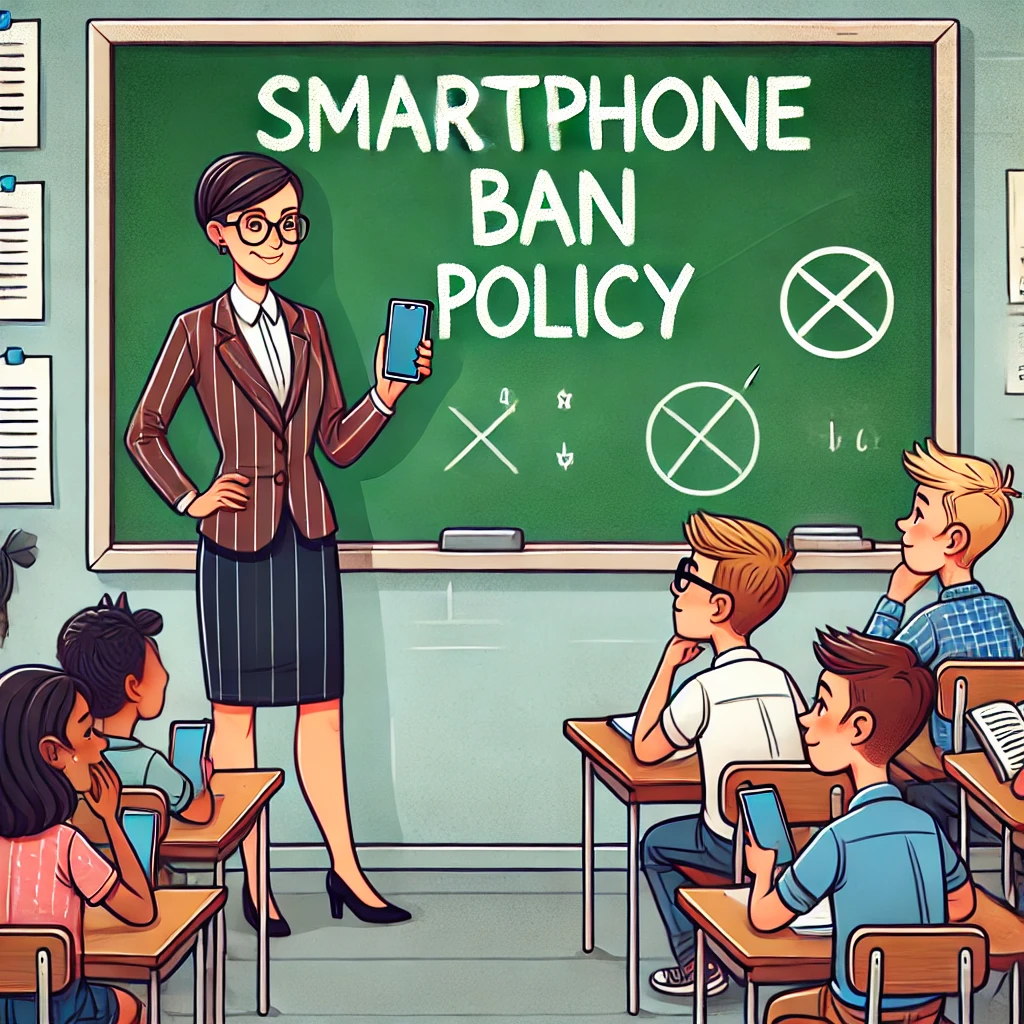
US states are considering banning smartphones in schools as a response to the growing dependency children have on these devices. California and New York, two of the most populous states, are currently discussing state-wide policies on the issue. The concern is not new, as schools have been debating smartphone use for decades. However, the recent wave of regulations aims to further restrict phone use in schools. Many schools already have policies in place, with about 76% of schools prohibiting non-academic phone use in the 2021-2022 school year.
The debate surrounding phones in schools has been ongoing since the devices became popular. Early critics were concerned about distractions and their association with the drug trade. However, after the 1999 shooting at Columbine High School, phones were seen as a crucial communication tool for emergencies. Some states relaxed their phone bans, including California, which repealed its ban in 2002. The debate resurfaced as schools recognized phones as a distraction, a tool for cyberbullying, and a means for cheating. The city of New York initially enforced a strict ban but later allowed individual schools to set their own policies.
The current push to ban smartphones in schools is also driven by concerns about student mental health and social media use. Surgeon General Vivek Murthy has called for warning labels on social media platforms, comparing them to cigarette warning labels. Research has shown that excessive social media use can increase the risk of mental health problems in adolescents. Experts argue that phones in schools make it difficult for students to focus, build relationships, and learn effectively.
Implementing and enforcing these policies is a challenge. Schools need strong community consensus and consistent enforcement for the policies to be effective. Ken Trump, the president of the National School Safety and Security Services, emphasizes the complexity of the issue. In Los Angeles, board members recently voted to ban smartphones from schools, but the details of how the policy will be implemented are still unclear. Some students argue that monitoring thousands of students in large campuses is practically impossible.
In conclusion, US states are considering banning smartphones in schools to address the growing dependency children have on these devices. The debate has been ongoing for years, but recent concerns about student mental health and social media use have reignited the discussion. Implementing and enforcing these policies pose challenges, but schools are striving to strike a balance between safety and limiting distractions.
Original news source: US states want to ban phones in schools. It might be a challenge (BBC)
🎧 Listen:
📖 Vocabulary:
Group or Classroom Activities
Warm-up Activities:
– News Summary
Instructions: Divide the class into small groups. Each group will read the article and then create a concise summary of the main points. They should focus on capturing the key arguments, concerns, and proposed solutions regarding the use of smartphones in schools. After a designated time, each group will present their summary to the class, and the class can discuss any differences or similarities in their summaries.
– Opinion Poll
Instructions: Create a list of statements related to the use of smartphones in schools, such as "Smartphones should be completely banned in schools" or "Smartphones should be allowed for educational purposes only." Divide the class into pairs or small groups. Each group will discuss the statements and indicate whether they agree or disagree, providing reasons for their opinions. After the discussion, conduct a class-wide poll by having each group share their opinions and tallying the responses on the board. Discuss the results as a class and encourage respectful debate.
– Vocabulary Pictionary
Instructions: Provide each student with a list of vocabulary words from the article, such as "dependency," "restrict," "cyberbullying," and "consensus." Randomly select one student to come to the front of the class and choose a word from the list without showing it to the class. The student will then have to draw a picture that represents the word, while the rest of the class tries to guess what the word is. The first student to guess correctly will have a turn to draw the next word.
– Pros and Cons
Instructions: Divide the class into two groups. Assign one group to create a list of the pros of allowing smartphones in schools, and assign the other group to create a list of the cons. After a designated time, have each group present their lists to the class. Encourage the students to consider various perspectives and provide evidence to support their points. Facilitate a class discussion where students can express their opinions and debate the pros and cons of allowing smartphones in schools.
– Future Predictions
Instructions: In pairs or small groups, have students discuss and make predictions about the future of smartphones in schools. They should consider factors such as technological advancements, societal attitudes, and potential policy changes. Each group will then present their predictions to the class, explaining their reasoning and supporting their ideas with evidence from the article or their own knowledge. Encourage the class to ask questions and engage in a thoughtful discussion about the potential future impact of smartphones in schools.
🤔 Comprehension Questions:
🎧✍️ Listen and Fill in the Gaps:
US states are considering smartphones in schools as a response to the growing children have on these . California and New York, two of the most populous states, are currently discussing state-wide policies on the issue. The concern is not new, as schools have been debating smartphone use for decades. However, the recent wave of regulations aims to further restrict phone use in schools. Many schools already have policies in place, with about 76% of schools prohibiting non-academic phone use in the 2021-2022 school year. The debate surrounding phones in schools has been ongoing since the devices became popular. critics were concerned about distractions and their association with the drug trade. However, after the 1999 shooting at Columbine High School, phones were seen as a crucial communication tool for emergencies. Some states their phone bans, including California, which repealed its ban in 2002. The debate resurfaced as recognized phones as a distraction, a tool for cyberbullying, and a means for cheating. The city of New York initially enforced a strict ban but later allowed schools to set their own policies. The push to ban smartphones in schools is also driven by concerns about student mental health and social media use. Surgeon General Murthy has called for warning labels on media platforms, comparing them to cigarette warning labels. Research has shown that excessive social media use can increase the risk of mental health problems in adolescents. Experts argue that phones in schools make it difficult for students to focus, build relationships, and learn effectively. Implementing and these policies is a challenge. Schools need strong community consensus and consistent enforcement for the policies to be effective. Ken Trump, the president of the National School Safety and Security Services, the complexity of the issue. In Los Angeles, board members recently voted to ban smartphones from schools, but the details of how the policy will be implemented are still unclear. Some students argue that monitoring thousands of students in large is practically impossible. In conclusion, US states are considering banning smartphones in schools to address the growing dependency children have on these devices. The debate has been ongoing for , but recent concerns about student mental health and social media use have the . Implementing and enforcing these policies pose challenges, but schools are striving to strike a balance between safety and limiting distractions.
💬 Discussion Questions:
1. What is your opinion on banning smartphones in schools?
2. How would you feel if your state implemented a ban on smartphones in schools?
3. Do you think banning smartphones in schools would be effective in addressing the dependency children have on these devices? Why or why not?
4. How do you think banning smartphones in schools would impact students' ability to communicate during emergencies?
5. Do you think smartphones are a distraction in schools? Why or why not?
6. What are some potential benefits of allowing smartphones in schools?
7. How do you think banning smartphones in schools would affect students' social relationships?
8. Do you think excessive social media use can negatively impact students' mental health? Why or why not?
9. How do you think banning smartphones in schools would impact students' ability to learn effectively?
10. Have you ever experienced or witnessed cyberbullying through smartphones? How did it affect the individuals involved?
11. What are some alternative solutions to addressing the dependency children have on smartphones in schools?
12. How do you think banning smartphones in schools would impact students' overall safety?
13. Do you think it is fair for individual schools to set their own policies regarding smartphone use? Why or why not?
14. How do you think banning smartphones in schools would affect parents' ability to communicate with their children during school hours?
15. What strategies do you think schools can use to effectively enforce a ban on smartphones?
Individual Activities
📖💭 Vocabulary Meanings:
Click a dot next to a word, then click the dot next to its meaning to draw a line connecting them.
Words
Meanings
🔡 Multiple Choice Questions:
🕵️ True or False Questions:
📝 Write a Summary:
Write a summary of this news article in two sentences.
Check your writing now with the best free AI for English writing!