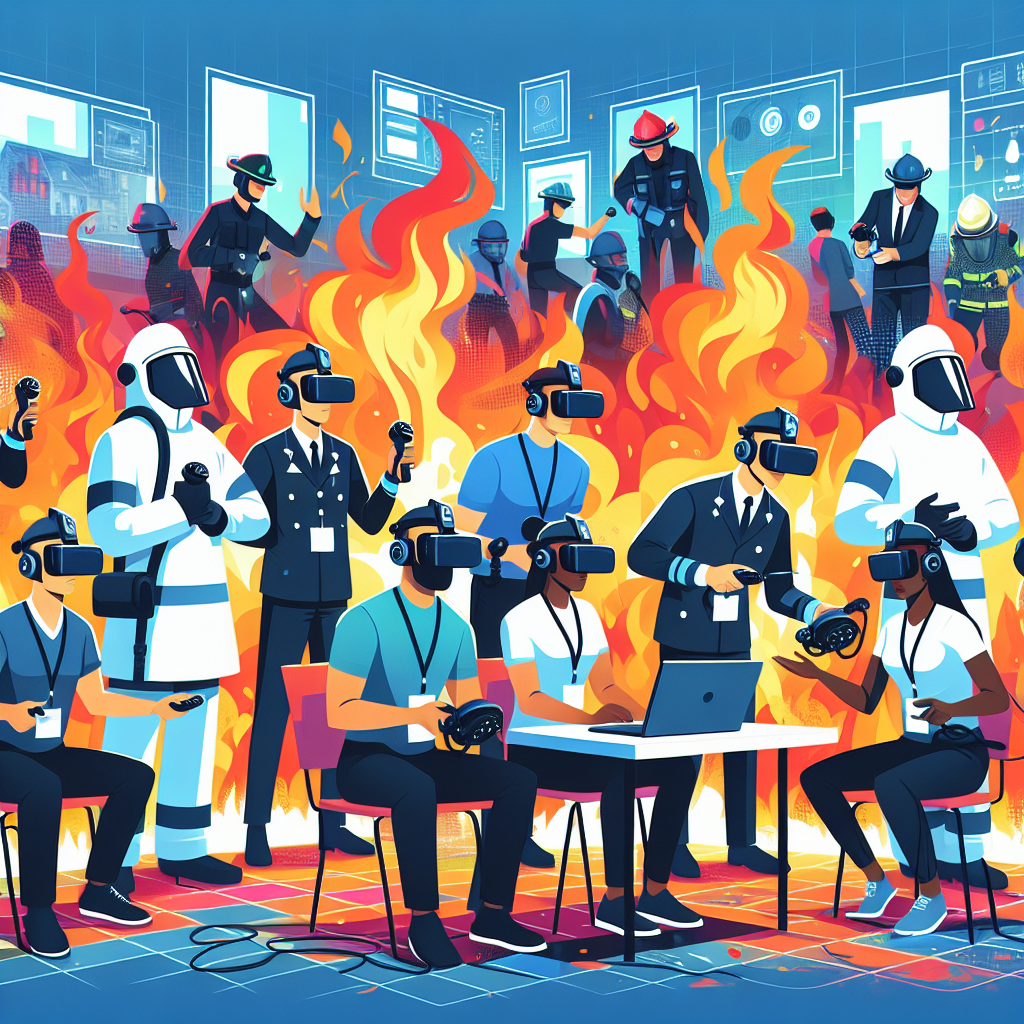
Virtual reality (VR) technology is emerging as a promising tool for training fire investigators. Researchers at the University of Dundee, in collaboration with emergency services, have developed a method to create mock crime scenes that simulate real-life fire scenarios. By conducting controlled burns and meticulously measuring the outcomes, they can gather valuable data that informs the investigation process. This innovative approach allows for the reconstruction of fire scenes in a virtual environment, providing a unique opportunity for training and analysis.
The use of VR in fire investigation training has shown significant potential. Studies indicate that investigators who utilize this technology are more successful in determining the origin and progression of fires. The immersive nature of virtual reality enables trainees to engage with the scene in a way that traditional training methods cannot replicate. By experiencing the dynamics of a fire in a controlled virtual setting, investigators can enhance their skills and improve their understanding of fire behavior.
The team at the University of Dundee envisions a future where virtual reality becomes a standard component of training for new fire investigators. This technology not only facilitates hands-on learning but also promotes collaboration among various emergency services. By sharing data and experiences in a virtual format, investigators can learn from one another and develop a more comprehensive understanding of fire investigation techniques.
Moreover, the application of VR extends beyond training; it can also serve as a valuable tool for data sharing. Investigators can present their findings in a virtual environment, allowing for easier communication and collaboration with colleagues and other stakeholders. This capability could lead to more efficient investigations and improved outcomes in fire-related incidents.
In conclusion, the integration of virtual reality into fire investigation training represents a significant advancement in the field. As researchers continue to explore its potential, the hope is that VR will not only enhance the skills of new investigators but also foster a culture of collaboration and knowledge sharing among emergency services. This innovative approach may ultimately lead to more effective fire investigations and improved public safety.
Original news source: Investigating crime scenes in virtual reality (BBC)
🎧 Listen:
📖 Vocabulary:
Group or Classroom Activities
Warm-up Activities:
– CHARADES
Instructions: Students will act out different terms related to virtual reality and fire investigation without speaking. Classmates will guess the word or phrase based on the actions. Terms can include "virtual reality," "fire investigation," "controlled burn," and "emergency services."
– OPINION POLL
Instructions: Students will discuss their opinions on the effectiveness of virtual reality in training for various professions, including fire investigation. They will then conduct a quick poll within the class, asking each other to express their views and tallying the results on the board.
– MIND MAP
Instructions: In small groups, students will create a mind map based on the article. They will identify key concepts like "VR technology," "fire training," "collaboration," and "data sharing," connecting related ideas and discussing their significance in the context of fire investigations.
– HEADLINE CREATION
Instructions: Students will be tasked with creating catchy headlines for the article. They should aim to summarize the main points in an engaging way, focusing on the innovative use of virtual reality in fire investigation training.
– TWO TRUTHS AND A LIE
Instructions: Students will individually come up with three statements about the article—two true statements and one false one. They will share their statements with a partner, who will then guess which one is the lie, fostering discussion and comprehension of the article's content.
🤔 Comprehension Questions:
Researchers at the University of Dundee developed a method to create mock crime scenes that simulate real-life fire scenarios using virtual reality technology.
VR technology enhances the training experience by providing an immersive environment that allows trainees to engage with fire scenes in a way that traditional methods cannot replicate, improving their understanding of fire behavior.
Conducting controlled burns allows researchers to gather valuable data on the outcomes of fire scenarios, which informs the investigation process and aids in the reconstruction of fire scenes in a virtual environment.
VR facilitates collaboration by allowing investigators to share data and experiences in a virtual format, enabling them to learn from one another and develop a more comprehensive understanding of fire investigation techniques.
Researchers envision that virtual reality will become a standard component of training for new fire investigators, promoting hands-on learning and collaboration among emergency services.
The use of VR allows investigators to present their findings in a virtual environment, making it easier to communicate and collaborate with colleagues and other stakeholders, potentially leading to more efficient investigations.
Researchers hope to enhance the skills of new investigators, foster a culture of collaboration and knowledge sharing among emergency services, and ultimately lead to more effective fire investigations and improved public safety.
The immersive nature of VR allows trainees to experience the dynamics of a fire in a controlled virtual setting, which helps them enhance their skills and improve their understanding of fire behavior.
🎧✍️ Listen and Fill in the Gaps:
Virtual reality (VR) technology is emerging as a promising tool for training fire investigators. Researchers at the of , in collaboration with emergency , have developed a method to create mock crime scenes that simulate real-life fire scenarios. By conducting controlled and meticulously measuring the outcomes, they can gather valuable data that informs the investigation process. This innovative approach allows for the reconstruction of fire scenes in a virtual environment, providing a unique opportunity for training and analysis. The use of VR in fire investigation training has shown significant potential. Studies indicate that investigators who this technology are more successful in determining the origin and progression of fires. The immersive nature of virtual reality enables trainees to engage with the scene in a way that traditional training cannot replicate. By the dynamics of a fire in a virtual setting, investigators can enhance their skills and improve their understanding of fire behavior. The team at the University of Dundee envisions a future where virtual reality becomes a standard component of training for new fire investigators. This technology not only facilitates hands-on ing but also promotes collaboration among various emergency services. By sharing data and experiences in a virtual format, investigators can learn from one another and develop a more comprehensive understanding of fire investigation techniques. Moreover, the application of VR beyond training; it can also serve as a valuable tool for data sharing. Investigators can their in a virtual environment, allowing for easier communication and collaboration with colleagues and other stakeholders. This capability could lead to more efficient investigations and improved outcomes in fire-related incidents. In conclusion, the of virtual reality into fire investigation training represents a significant advancement in the . As researchers continue to explore its potential, the hope is that VR will not only the skills of new investigators but also foster a culture of collaboration and knowledge sharing among emergency services. This innovative approach may ultimately lead to more effective fire investigations and improved public .
💬 Discussion Questions:
1. What is your opinion on the use of virtual reality technology in training for emergency services?
2. How would you feel if you had the opportunity to train using virtual reality for a job you are interested in?
3. Do you think traditional training methods are sufficient for preparing fire investigators? Why or why not?
4. What is a significant advantage of using virtual reality in training compared to hands-on experience?
5. How do you think the use of VR could change the way we approach training in other fields, such as medicine or aviation?
6. Do you like the idea of experiencing dangerous situations in a virtual environment instead of in real life? Why?
7. How would you feel if virtual reality became the standard training tool for all emergency responders?
8. Do you think that collaboration through virtual platforms can improve teamwork among emergency services? Why or why not?
9. What is a potential drawback of relying heavily on virtual reality for training purposes?
10. How do you think the integration of VR in training could impact public safety in the long run?
11. Do you believe that hands-on experience is more valuable than virtual training? Why or why not?
12. How would you react if you were required to use virtual reality as part of your training for a job?
13. What is a way that virtual reality could be misused in a training context?
14. Do you think that the use of VR in training could help reduce the number of accidents during real-life emergency situations? Why?
15. How do you envision the future of training for emergency services evolving with the advancement of technology like VR?
Individual Activities
📖💭 Vocabulary Meanings:
Click a dot next to a word, then click the dot next to its meaning to draw a line connecting them.
Words
Meanings
🔡 Multiple Choice Questions:
🕵️ True or False Questions:
📝 Write a Summary:
Write a summary of this news article in two sentences.
Check your writing now with the best free AI for English writing!