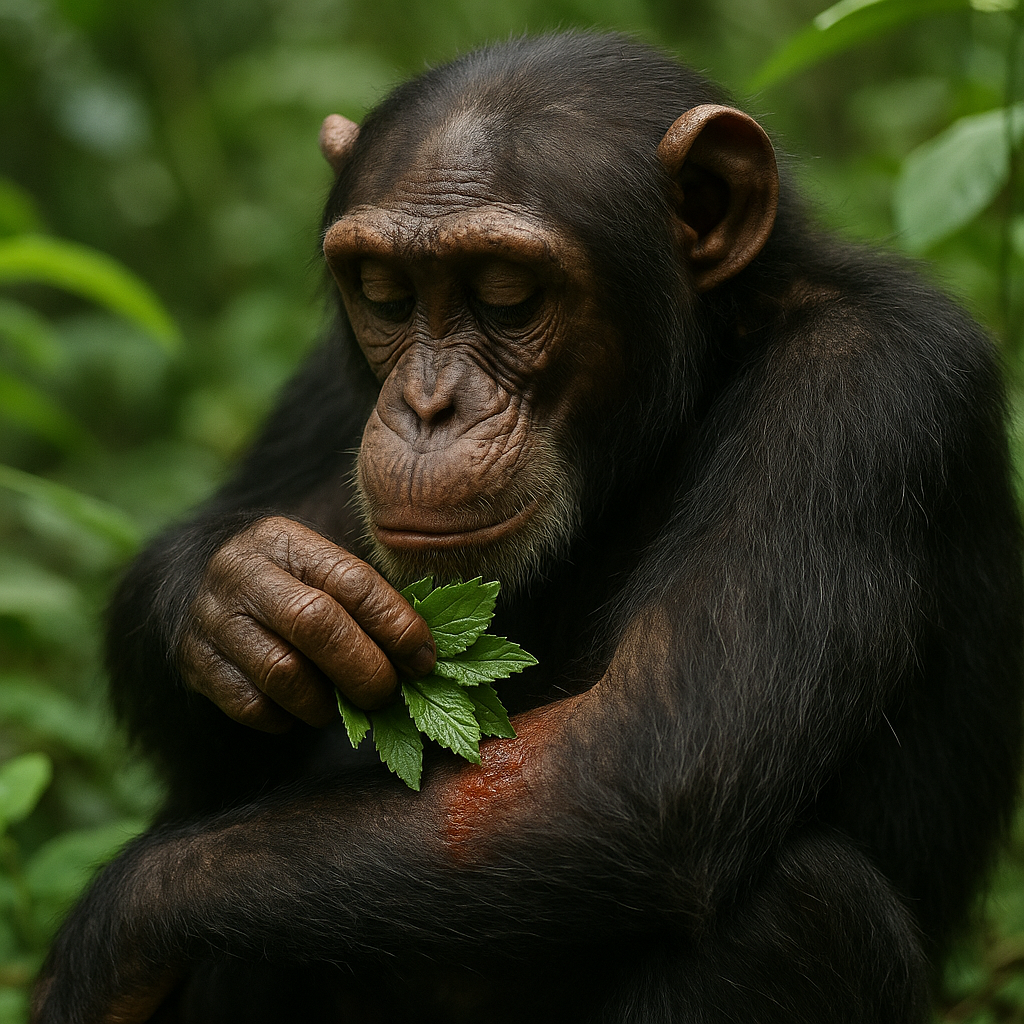
In Uganda, wild chimpanzees have been seen using plants to heal their injuries. Scientists from the University of Oxford watched chimpanzees put plants on their cuts and wounds. This shows that chimpanzees know how to use nature to stay healthy. The study was shared in a science journal and helps us learn more about how animals like gorillas and orangutans use natural medicine too.
The lead scientist, Elodie Freymann, said chimpanzees have many ways to care for themselves. They might chew plants or put them on their injuries. One video even showed a young chimp helping her mom with a wound, showing they can be caring. The scientists also looked at stories from the past where chimps used leaves to clean themselves or helped each other with traps.
These findings show that chimpanzees know a lot about their surroundings and which plants can help them heal. Some plants they use have special qualities that fight germs. Learning about this can help us find new medicines. Dr. Freymann said understanding chimpanzees better helps us appreciate how smart they are and how they survive in the wild.
Original news source: Wild chimpanzees filmed using forest 'first aid' (BBC)
🎧 Listen:
📖 Vocabulary:
Group or Classroom Activities
Warm-up Activities:
– CHARADES
Instructions: Divide the class into small groups. Each group takes turns acting out different actions related to the article, such as "putting a plant on a wound" or "chewing leaves." The other groups must guess what the action is. This helps students practice vocabulary and engage with the content in a fun way.
– VOCABULARY PICTIONARY
Instructions: Write key vocabulary words from the article (e.g., chimpanzee, heal, plants, injuries) on separate pieces of paper. Students take turns picking a word and drawing it on the board while their classmates guess the word. This activity reinforces vocabulary recognition and usage in a visual way.
– OPINION POLL
Instructions: Ask students if they think animals can use plants to heal themselves. Have them walk around the classroom and ask their classmates for their opinions. After collecting responses, students can share what they found out, allowing them to practice speaking and listening skills while discussing the topic.
– MIND MAP
Instructions: On a large piece of paper or a whiteboard, write "Chimpanzees and Healing" in the center. Students work in pairs to brainstorm and add related ideas, words, or concepts from the article, such as "nature," "health," "caring," and "medicines." This helps students organize their thoughts and comprehend the main ideas.
– TWO TRUTHS AND A LIE
Instructions: Each student thinks of two true statements and one false statement related to the article's content about chimpanzees and healing. They share their statements with a partner, who must guess which statement is the lie. This encourages critical thinking and helps reinforce comprehension of the article.
🤔 Comprehension Questions:
The scientists watched chimpanzees put plants on their cuts and wounds.
The lead scientist is Elodie Freymann.
Chimpanzees care for their injuries by chewing plants or putting them on their wounds.
The video showed a young chimp helping her mom with a wound.
It is important because it helps us find new medicines and understand how smart chimpanzees are.
Some plants can fight germs and help chimpanzees heal.
Understanding chimpanzees can show us which plants are good for healing, helping us discover new medicines.
🎧✍️ Listen and Fill in the Gaps:
In Uganda, wild chimpanzees have been seen plants to heal their injuries. Scientists from the of Oxford watched chimpanzees put plants on their cuts and wounds. This shows that chimpanzees know how to use nature to stay . The study was shared in a science journal and helps us learn more about how animals like gorillas and orangutans use natural medicine too. The lead , Freymann, said have many ways to care for themselves. They might chew plants or put them on their injuries. One video even showed a young chimp her mom with a wound, showing they can be caring. The scientists also looked at from the past where chimps used leaves to clean themselves or helped each with traps. These findings show that chimpanzees know a lot about their surroundings and which plants can them heal. Some plants they use have special qualities that fight germs. Learning about this can help us find new medicines. Dr. Freymann understanding chimpanzees better helps us appreciate how smart they are and how they in the wild.
💬 Discussion Questions:
1. What is your favorite animal? Why do you like it?
2. How would you feel if you saw a chimpanzee using a plant to help itself?
3. Do you think animals can understand how to heal themselves? Why or why not?
4. What is a plant that you think is good for health?
5. Have you ever used a plant or medicine to help when you were hurt? What happened?
6. How would you feel if you could talk to animals and learn their secrets?
7. Do you like watching animal videos? Why or why not?
8. What do you think is the smartest animal? Why do you think so?
9. How would you feel if you had to find your own medicine in the wild?
10. Do you think it’s important to learn from animals? Why?
11. What is a way you take care of yourself when you feel sick?
12. How would you feel if you could help an animal that was hurt?
Individual Activities
📖💭 Vocabulary Meanings:
Click a dot next to a word, then click the dot next to its meaning to draw a line connecting them.
Words
Meanings
🔡 Multiple Choice Questions:
🕵️ True or False Questions:
📝 Write a Summary:
Write a summary of this news article in two sentences.
Check your writing now with the best free AI for English writing!