

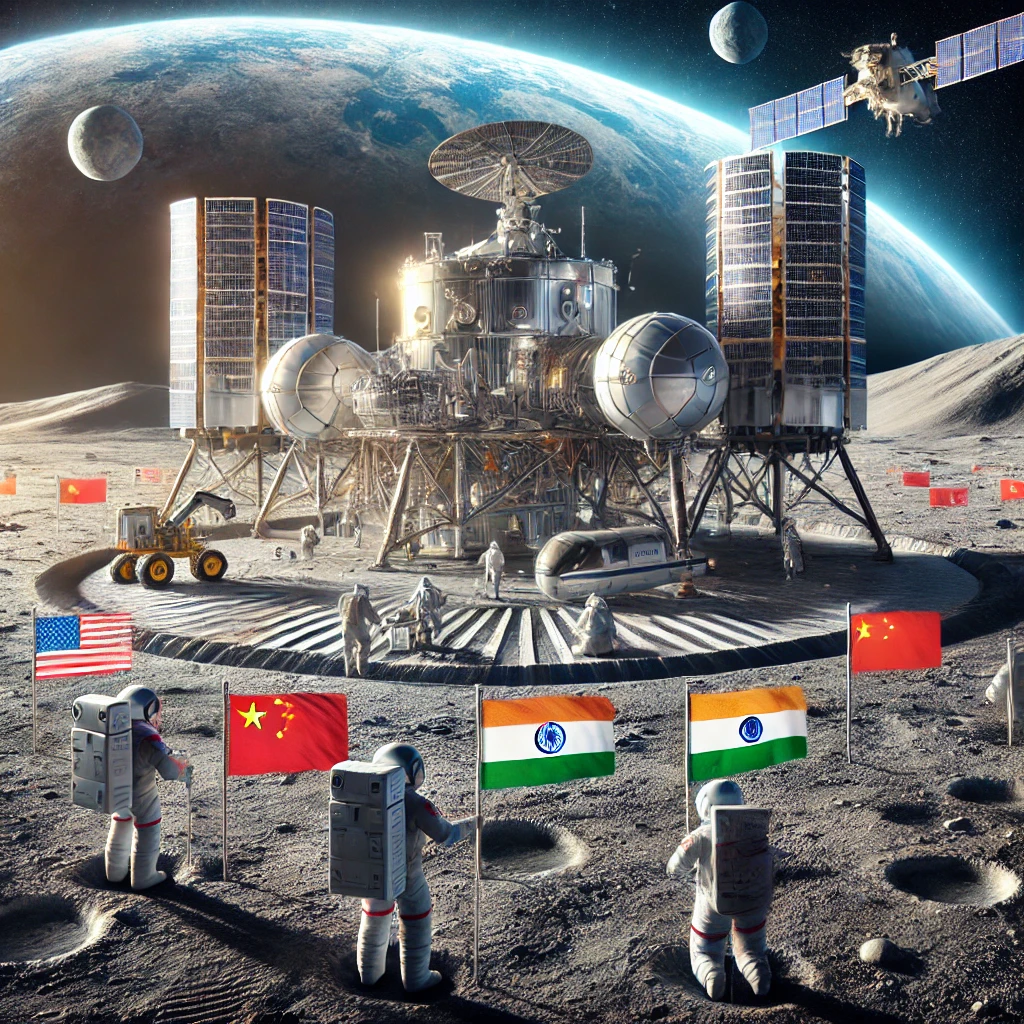
Many countries and companies want to explore and use the Moon. China, India, Japan, and the US have sent spacecraft to the Moon and plan to build bases there. But who owns the Moon and its resources is a big question. The 1967 Outer Space Treaty says no one can own the Moon, but new companies and the value of Moon resources make things complicated.
Water is one of the most important resources on the Moon. It can be used for drinking, making oxygen, and rocket fuel. The US has created the Artemis Accords to guide how countries explore and use the Moon. But not everyone agrees on the rules, and there could be fights over Moon land and resources.
As more people go to the Moon, we need to think about the future. The Moon belongs to everyone, and we should use it to help all countries. Working together and making fair rules is important to keep the Moon a place for peace and science. We don't want it to become a place for fights between countries.
Original news source: Who owns the Moon? A new space race means it could be up for grabs (BBC)
🎧 Listen:
📖 Vocabulary:
Group or Classroom Activities
Warm-up Activities:
– News Summary
Instructions:
1. Divide the class into small groups.
2. Provide each group with a copy of the article.
3. Instruct the groups to read the article and summarize the main points in a brief news summary.
4. After a designated time, have each group share their news summary with the rest of the class.
– Opinion Poll
Instructions:
1. Ask the students to form pairs.
2. Give each pair a list of questions related to the article.
3. Instruct the students to take turns asking their partner the questions and record their answers.
4. After the discussion, have the pairs share their partner's opinions with the class and facilitate a brief class discussion.
– Vocabulary Pictionary
Instructions:
1. Write down several vocabulary words from the article on separate slips of paper.
2. Divide the class into two teams.
3. One student from each team takes turns selecting a slip of paper and drawing a quick sketch to represent the word without using any letters or numbers.
4. The rest of the team members must guess the word within a certain time limit.
5. The team with the most correct guesses wins the game.
– Keyword Hangman
Instructions:
1. Write down a keyword from the article on the board, leaving out the vowels.
2. Divide the class into two teams.
3. One student from each team takes turns guessing letters to complete the keyword.
4. If a guessed letter is correct, write it in its correct position within the word. If it is incorrect, draw part of a hangman.
5. The team that correctly guesses the keyword first wins the game.
– Future Predictions
Instructions:
1. Ask the students to work individually.
2. Instruct them to read the article and think about the future implications of Moon exploration and resource utilization.
3. Have the students write down their predictions for what they think will happen in the future, based on the information in the article.
4. After a designated time, allow the students to share their predictions with a partner and discuss their reasoning behind their predictions.
🤔 Comprehension Questions:
Many countries and companies want to explore and use the Moon because they believe it has valuable resources and can help with scientific research.
Water is an important resource on the Moon that can be used for drinking, making oxygen, and rocket fuel.
The name of the agreement is the Artemis Accords.
Some people disagree on the rules for exploring and using the Moon because they have different ideas about who should own the Moon and its resources.
The Moon belongs to everyone.
It is important for countries to work together and make fair rules for the Moon to avoid fights and conflicts between countries and to ensure that the Moon can be used to benefit all countries.
We do not want the Moon to become a place for fights between countries.
🎧✍️ Listen and Fill in the Gaps:
Many countries and companies want to explore and use the Moon. China, , Japan, and the US have sent spacecraft to the Moon and to bases there. But who owns the Moon and its resources is a big question. The 1967 Outer Space Treaty says no one can own the , but new companies and the value of Moon resources make things complicated. Water is one of the most important resources on the Moon. It can be used for drinking, oxygen, and fuel. The US has created the Artemis to how countries explore and use the Moon. But not everyone agrees on the rules, and there could be fights over Moon land and resources. As more people go to the Moon, we to think about the future. The Moon belongs to everyone, and we should use it to help all countries. Working together and making fair rules is to keep the Moon a place for peace and . We don't want it to become a place for between countries.
💬 Discussion Questions:
1. What is the Moon?
2. How would you feel if you could go to the Moon one day?
3. Do you think it's fair that no one can own the Moon? Why or why not?
4. What are some resources on the Moon that people can use?
5. How do you think water can be used on the Moon?
6. Do you like the idea of building bases on the Moon? Why or why not?
7. What do you think the Artemis Accords are?
8. How do you think fights over Moon land and resources can be avoided?
9. What do you think would happen if more people go to the Moon?
10. Why do you think it's important to work together and make fair rules for the Moon?
11. Do you think the Moon should be a place for peace and science? Why or why not?
12. What do you think would happen if the Moon becomes a place for fights between countries?
Individual Activities
📖💭 Vocabulary Meanings:
Click a dot next to a word, then click the dot next to its meaning to draw a line connecting them.
Words
Meanings
🔡 Multiple Choice Questions:
🕵️ True or False Questions:
📝 Write a Summary:
Write a summary of this news article in two sentences.
Check your writing now with the best free AI for English writing!