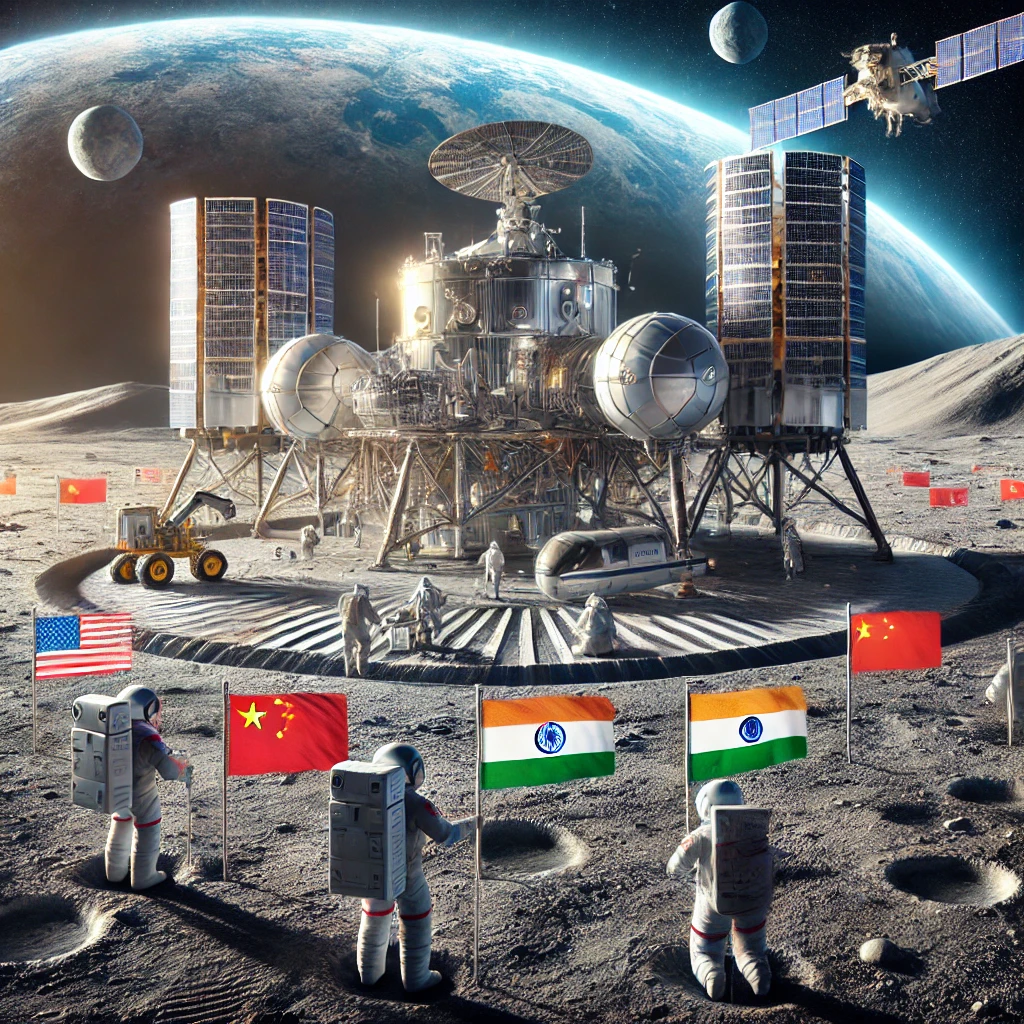
The Moon has become a big deal lately because lots of countries and companies want to explore it and use its stuff. This has started a race to be the best in space. China, India, Japan, and the US have all landed spacecraft on the Moon. They're even planning to build bases and send people there. But this race could cause problems because the laws about space exploration aren't keeping up with all the progress.
In 1967, a treaty called the Outer Space Treaty said that no country can own the Moon. It belongs to everyone and should be explored for the benefit of all nations. But this treaty was made because people were scared that space would become a war zone during the Cold War. The current space race is different because it's not just countries, but also private companies, trying to explore the Moon. This raises questions about how we should regulate using the Moon's resources.
Even though countries are the main ones exploring the Moon, private companies are getting more involved. But these companies still need permission from a country to go to space, and that's limited by international treaties. It's a big deal to be one of the first to land on the Moon because it brings a lot of prestige and money. The Moon's resources, like minerals and water, are really valuable. Water is especially important because we can use it for drinking, making oxygen, and fuel for rockets.
The US is trying to make new rules for exploring the Moon with the Artemis Accords. These rules say that we should follow the international treaties when using the Moon's resources, but we might need some new rules too. More than 40 countries have agreed to these rules, but China hasn't. Some people think the United Nations should make the new rules so that every country can be involved.
In the end, the Moon is becoming a place where lots of countries and companies want to go and use its resources. The laws we have now aren't keeping up with all the progress, which is causing problems. We need new rules to make sure we use the Moon's resources fairly and peacefully. The United Nations and international cooperation will be really important in deciding how we explore the Moon in the future.
Original news source: Who owns the Moon? A new space race means it could be up for grabs (BBC)
🎧 Listen:
📖 Vocabulary:
Group or Classroom Activities
Warm-up Activities:
– News Summary
Instructions: Divide the class into small groups. Each group will read the article and then create a 1-2 minute news summary of the main points. They can choose one person to be the news anchor and others can be reporters. Each group will then present their news summary to the class.
– Opinion Poll
Instructions: In pairs, students will take turns asking each other questions related to the article. They can ask questions like "Do you think private companies should be allowed to explore the Moon?" or "Should the United Nations make new rules for using the Moon's resources?" After asking the question, the student must give their own opinion and explain why.
– Sketch It
Instructions: Divide the class into pairs. One student will describe a scene or concept from the article while the other student tries to sketch it. They cannot show each other their work until the end. After the sketch is complete, they can compare and discuss their interpretations.
– Vocabulary Pictionary
Instructions: Write down key vocabulary words from the article on separate pieces of paper and put them in a hat or bowl. Divide the class into two teams. One student from each team will take turns picking a word and then drawing it on the board. Their team must guess the word within a certain time limit. The team with the most correct guesses wins.
– Future Predictions
Instructions: In pairs, students will discuss and make predictions about the future of space exploration and the use of the Moon's resources. They can use phrases like "In the future, I think…" or "I predict that…" After discussing their predictions, they can share them with the class.
🤔 Comprehension Questions:
The Moon has become a big deal because many countries and companies want to explore it and use its resources.
China, India, Japan, and the US have all landed spacecraft on the Moon.
The Outer Space Treaty states that no country can own the Moon. It belongs to everyone and should be explored for the benefit of all nations.
The laws about space exploration were created because people were scared that space would become a war zone during the Cold War.
The current space race is different because it involves not only countries, but also private companies. This raises questions about how to regulate the use of the Moon's resources.
Private companies are getting more involved because they see the potential for prestige and money in being one of the first to land on the Moon. The Moon's resources, such as minerals and water, are also valuable.
Being one of the first to land on the Moon brings a lot of prestige and money. It also allows access to valuable resources like minerals and water.
Some valuable resources on the Moon include minerals and water. Water is especially important because it can be used for drinking, making oxygen, and fuel for rockets.
🎧✍️ Listen and Fill in the Gaps:
The Moon has become a big deal lately because lots of countries and companies want to explore it and use its stuff. This has started a race to be the best in space. China, India, Japan, and the US have all spacecraft on the Moon. They're even planning to build bases and send people there. But this race could cause problems because the laws about space exploration aren't up with all the progress. In 1967, a called the Outer Space Treaty said that no country can own the Moon. It to everyone and should be explored for the of all nations. But this treaty was made because people were scared that space would become a war zone during the Cold War. The current space race is different because it's not just countries, but also private companies, to explore the Moon. This raises questions about how we should regulate the Moon's resources. Even though countries are the main ones exploring the Moon, private companies are getting more involved. But these companies still need permission from a country to go to space, and that's by international treaties. It's a big deal to be one of the first to land on the Moon because it brings a lot of prestige and money. The Moon's , like minerals and water, are really valuable. Water is especially important because we can use it for drinking, making , and fuel for rockets. The US is trying to make new for exploring the Moon with the Accords. These rules say that we should follow the international treaties when using the Moon's resources, but we might need some new rules too. More than 40 countries have agreed to these rules, but China hasn't. Some people the United Nations should make the new rules so that every can be involved. In the end, the Moon is becoming a place where lots of countries and companies want to go and use its resources. The laws we have now aren't keeping up with all the progress, which is causing problems. We need new rules to make sure we use the Moon's resources fairly and peacefully. The United Nations and cooperation will be really important in deciding how we the Moon in the future.
💬 Discussion Questions:
1. What do you think would be the benefits of exploring the Moon?
2. How would you feel if you had the opportunity to go to the Moon?
3. Do you think it's fair that no country can own the Moon? Why or why not?
4. What do you think are some challenges that might arise from private companies exploring the Moon?
5. Do you think it's important for the United Nations to make new rules for exploring the Moon? Why or why not?
6. What are some reasons why water is valuable on the Moon?
7. How do you think the Moon's resources could be used to benefit all nations?
8. Do you think it's necessary for countries to build bases on the Moon? Why or why not?
9. How do you think the Moon becoming a place for exploration will impact the future?
10. What are some potential conflicts that could arise from the race to explore the Moon?
11. How do you think international cooperation can help in deciding how we explore the Moon?
12. Do you think it's fair that only countries and private companies are involved in exploring the Moon? Why or why not?
13. What do you think are some potential risks of exploring the Moon?
14. How do you think the Moon's resources could be used to benefit life on Earth?
15. Do you think it's possible for countries and companies to explore the Moon peacefully? Why or why not?
Individual Activities
📖💭 Vocabulary Meanings:
Click a dot next to a word, then click the dot next to its meaning to draw a line connecting them.
Words
Meanings
🔡 Multiple Choice Questions:
🕵️ True or False Questions:
📝 Write a Summary:
Write a summary of this news article in two sentences.
Check your writing now with the best free AI for English writing!