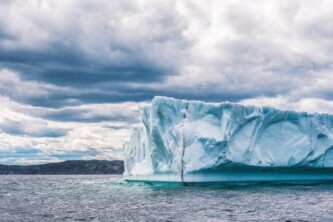
A23a is not only big, but it's also really thick. It's about 400 meters thick, which is taller than the London Shard, which is only 310 meters tall. This iceberg was part of a group that broke away from the Filchner Ice Shelf in Antarctica. It broke away when there was a Soviet research station there, which shows how long ago it happened. Even though they sent a team to remove equipment from the research station, A23a stayed stuck to the ocean floor.
We're not exactly sure why A23a is finally moving after almost 40 years. Some experts think it might be because of changes in water temperatures, while others think it was just a matter of time. Dr. Andrew Fleming, a scientist who studies remote sensing, saw the first movement of A23a in 2020. In the past few months, it has been pushed by winds and currents and is now passing the top of the Antarctic Peninsula.
Once A23a enters the Antarctic Circumpolar Current, it will be carried towards the South Atlantic on a path called "iceberg alley." This is the same route that the famous explorer Sir Ernest Shackleton used in 1916 to escape from Antarctica after his ship got crushed by sea ice. If A23a gets stuck at South Georgia, it could mess up the normal routes that seals, penguins, and other seabirds take to find food. But it's important to know that icebergs are actually important for the environment. As they melt, they release minerals that give nutrients to organisms at the bottom of the ocean food chain.
Scientists will keep a close eye on A23a and study how it affects the ecosystem around it. Even though there might be some risks, icebergs aren't just dangerous objects. They also help with the life in the ocean.
Original news source: A23a: World's biggest iceberg on the move after 30 years (BBC)
📖 Vocabulary:
Group or Classroom Activities
Warm-up Activities:
– News Summary
Instructions: Divide the class into pairs or small groups. Give each group a few minutes to read the article together. Then, ask each group to summarize the main points of the article in a short news summary. They can take turns presenting their summaries to the class.
– Opinion Poll
Instructions: Divide the class into pairs or small groups. Ask each group to come up with a question related to the article, such as "Do you think it's important to study icebergs?" or "Should we be concerned about the movement of A23a?" Have groups take turns asking their question to the class and recording the responses. Afterward, facilitate a discussion based on the different opinions shared.
– Vocabulary Pictionary
Instructions: Write a list of vocabulary words from the article on the board, such as "iceberg," "Antarctica," "ocean floor," "remote sensing," etc. Divide the class into two teams. Give each team a minute to choose one word from the list, without showing the other team. The chosen team then has to draw a picture representing the word, while the other team tries to guess what the word is. The team that guesses correctly gets a point. Repeat with different words until all have been guessed.
– Sketch It
Instructions: Pair up the students and give each pair a piece of paper and a pen or pencil. Ask one student from each pair to describe a specific part of the article, such as the size of A23a or the reasons why it might be moving. The other student must listen and sketch a visual representation of what they hear. Afterward, have pairs compare their sketches and discuss any differences or similarities.
– Think-Pair-Share
Instructions: Ask the students to think individually about the environmental impact of icebergs and the movement of A23a. After a few minutes, pair up the students and have them share their thoughts with each other. Then, bring the class back together and ask a few pairs to share their discussions with the whole group. Encourage students to ask questions or offer their own insights during the sharing session.
🤔 Comprehension Questions:
A23a has been stuck to the ocean floor for over 30 years.
A23a is about twice the size of Greater London.
A23a is about 400 meters thick, which is taller than the London Shard.
A23a broke away from the Filchner Ice Shelf in 1986.
Some experts think A23a might be moving due to changes in water temperatures or simply because it was a matter of time.
Dr. Andrew Fleming, a scientist who studies remote sensing, saw the first movement of A23a in 2020.
Once A23a enters the Antarctic Circumpolar Current, it will be carried towards the South Atlantic on a path called "iceberg alley."
Icebergs are important for the environment because as they melt, they release minerals that give nutrients to organisms at the bottom of the ocean food chain.
🎧✍️ Listen and Fill in the Gaps:
The world's biggest iceberg, called A23a, is finally moving after being stuck to the ocean floor for over 30 . This huge iceberg broke away from the coast of Antarctica in 1986 but got stuck in the Weddell Sea, an ice island. It's about twice the size of Greater London, with an area of almost 4,000 square . In the past year, it has started quickly and is now about to leave Antarctic waters. A23a is not only big, but it's also really thick. It's about 400 meters thick, which is taller than the London Shard, which is only 310 meters tall. This iceberg was part of a group that broke away from the Filchner Ice Shelf in Antarctica. It broke away when there was a Soviet research station there, which shows how long ago it happened. Even though they sent a team to remove equipment from the research station, A23a stuck to the floor. We're not exactly sure why A23a is finally moving after almost 40 years. Some experts it might be because of changes in water , while others think it was just a matter of time. Dr. Andrew Fleming, a scientist who studies remote sensing, saw the first movement of A23a in 2020. In the past few months, it has been pushed by winds and currents and is now passing the top of the Peninsula. Once A23a enters the Antarctic Circumpolar , it will be carried towards the Atlantic on a path called "iceberg alley." This is the same route that the explorer Sir Ernest Shackleton used in 1916 to escape from Antarctica after his ship got crushed by sea ice. If A23a gets stuck at South Georgia, it could mess up the normal routes that seals, , and other seabirds take to find food. But it's important to know that icebergs are actually important for the environment. As they melt, they release minerals that give nutrients to organisms at the bottom of the ocean food . Scientists will keep a close eye on A23a and how it affects the ecosystem around it. Even though there might be some risks, icebergs aren't just dangerous . They also help with the life in the ocean.
💬 Discussion Questions:
1. What is an iceberg?
2. How would you feel if you saw a huge iceberg like A23a in person?
3. Do you think it's strange that A23a was stuck to the ocean floor for over 30 years? Why or why not?
4. Have you ever seen an iceberg before? If so, where and what was it like?
5. What do you think caused A23a to finally start moving after so many years?
6. How do you think the movement of A23a might affect the ecosystem in the ocean?
7. Do you think it's important for scientists to study the effects of A23a on the environment? Why or why not?
8. What do you think would happen if A23a gets stuck at South Georgia?
9. How do you think icebergs help with the life in the ocean?
10. Do you think it's risky for A23a to be drifting towards the South Atlantic? Why or why not?
11. If you were a scientist studying A23a, what would you want to learn about it?
12. Have you ever heard of Sir Ernest Shackleton? If so, what do you know about him?
13. How do you think the melting of icebergs could affect the food chain in the ocean?
14. Do you think it's important for people to be aware of the movement of icebergs? Why or why not?
15. If you had the chance, would you like to visit Antarctica and see icebergs up close? Why or why not?
Individual Activities
📖💭 Vocabulary Meanings:
Click a dot next to a word, then click the dot next to its meaning to draw a line connecting them.
Words
Meanings
🔡 Multiple Choice Questions:
🕵️ True or False Questions:
📝 Write a Summary:
Write a summary of this news article in two sentences.
Check your writing now with the best free AI for English writing!