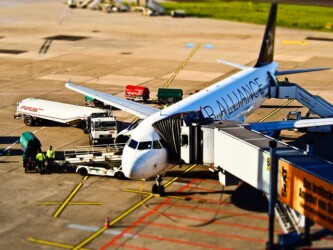
The Advertising Standards Authority (ASA) has banned ads from Air France, Lufthansa, and Etihad because they were misleading about the airlines' impact on the environment. The ads didn't show the true effects of the airlines on climate change. Air France said they cared about the environment, Lufthansa told people to "fly more sustainably," and Etihad used the words "environmental advocacy." The ASA checks if companies are "greenwashing," which is when they pretend to be more environmentally friendly than they really are.
Lufthansa said "fly more sustainably" was about their "Green Fares" option, which uses fuel that's better for the environment and supports climate protection projects. They want to be carbon neutral by 2050 and will take out the phrase from future ads. Etihad Airways removed all mentions of "environmental advocacy" from their ads after the complaint. The ASA used an artificial intelligence system to find the misleading ads.
This isn't the first time Lufthansa has been called out for greenwashing. In a previous campaign, they made people think they had already done things to reduce their impact on the environment. The ASA agreed that air travel creates a lot of CO2 and other emissions that cause climate change. The ASA has also banned ads from other companies like Persil, HSBC, Shell, Innocent, Oatly, Golden Leaves, and JC Atkinson & Son for greenwashing.
Companies are under more pressure to reduce their carbon emissions, especially airlines. In November, a flight across the Atlantic used fuel that's better for the environment, showing that greener flying is possible. But right now, sustainable aviation fuels make up less than 0.1% of all aviation fuel used worldwide, and there are no commercial plants in the UK. The UK government wants 10% of aviation fuel to be sustainable by 2030.
Original news source: Airline adverts banned over 'greenwashing' claims (BBC)
🎧 Listen:
📖 Vocabulary:
Group or Classroom Activities
Warm-up Activities:
– News Summary
Instructions: In pairs, students will read the article and then write a concise summary of the main points. They should focus on the key information and use their own words to summarize the article in about 5-7 sentences. Afterward, they can share their summaries with the class.
– Opinion Poll
Instructions: In small groups, students will discuss their opinions on the actions taken by the ASA to ban the misleading ads. They should consider whether they agree or disagree with the decision, and why. Each group will then present their opinions to the class, and a class-wide discussion can take place.
– Vocabulary Pictionary
Instructions: Divide the class into teams. Give each team a set of vocabulary words from the article. One student from each team will come to the front of the class and silently draw a picture representing one of the words. Their team members must guess the word based on the drawing. The team with the most correct guesses wins.
– Pros and Cons
Instructions: In pairs, students will discuss the pros and cons of companies being held accountable for greenwashing in their advertising. They should consider the benefits and drawbacks of the ASA's actions, as well as the potential impact on consumers and the environment. Afterward, pairs can share their ideas with the class.
– Future Predictions
Instructions: Individually, students will write a short paragraph predicting what they think the future of advertising and environmental messaging will look like. They should consider how companies may adapt their advertising strategies to be more environmentally conscious, and how consumers may respond. Students can then share their predictions with a partner and discuss their ideas.
🤔 Comprehension Questions:
🎧✍️ Listen and Fill in the Gaps:
The Advertising Standards Authority (ASA) has banned ads from Air France, , and because they were misleading about the ' impact on the environment. The ads didn't show the true of the airlines on climate change. Air France said they cared about the environment, Lufthansa told people to "fly more sustainably," and Etihad used the words "environmental advocacy." The ASA checks if companies are "greenwashing," which is when they pretend to be more ally friendly than they really are. Lufthansa said "fly more sustainably" was about their "Green Fares" , which uses fuel that's better for the environment and supports climate protection projects. They want to be carbon neutral by 2050 and will take out the phrase from future ads. Etihad removed all mentions of "environmental advocacy" from their ads after the complaint. The ASA used an intelligence system to find the misleading ads. This isn't the first time Lufthansa has been called out for greenwashing. In a previous campaign, they made people think they had already done to their impact on the environment. The ASA agreed that air travel creates a lot of CO2 and other emissions that cause climate change. The ASA has also banned ads from other like , HSBC, Shell, Innocent, Oatly, Golden Leaves, and JC Atkinson & Son for greenwashing. Companies are under more pressure to reduce their carbon emissions, especially airlines. In , a flight across the used fuel that's better for the environment, showing that flying is possible. But right now, sustainable aviation fuels make up less than 0.1% of all aviation fuel used worldwide, and there are no commercial in the UK. The UK government wants 10% of aviation fuel to be sustainable by 2030.
💬 Discussion Questions:
1. What is greenwashing and why is it a problem?
2. How do you feel about companies that pretend to be more environmentally friendly than they really are?
3. Do you think it's important for companies to be transparent about their impact on the environment? Why or why not?
4. How would you feel if you found out that an airline you liked was greenwashing in their advertisements?
5. Do you think it's possible for airlines to be completely carbon neutral by 2050? Why or why not?
6. What do you think about the use of artificial intelligence to find misleading ads?
7. Have you ever seen an advertisement that you thought was misleading? Can you describe it?
8. How do you think companies can be held accountable for greenwashing?
9. Do you think it's fair for the ASA to ban misleading ads? Why or why not?
10. What actions do you think airlines could take to be more environmentally friendly?
11. How do you think the aviation industry can increase the use of sustainable aviation fuels?
12. Do you think the UK government's goal of having 10% of aviation fuel be sustainable by 2030 is realistic? Why or why not?
13. How do you feel about the current state of greener flying and sustainable aviation fuels?
14. Have you ever made a purchasing decision based on a company's environmental claims? Can you give an example?
15. What do you think consumers can do to encourage companies to be more environmentally friendly?
Individual Activities
📖💭 Vocabulary Meanings:
Click a dot next to a word, then click the dot next to its meaning to draw a line connecting them.
Words
Meanings
🔡 Multiple Choice Questions:
🕵️ True or False Questions:
📝 Write a Summary:
Write a summary of this news article in two sentences.
Check your writing now with the best free AI for English writing!