
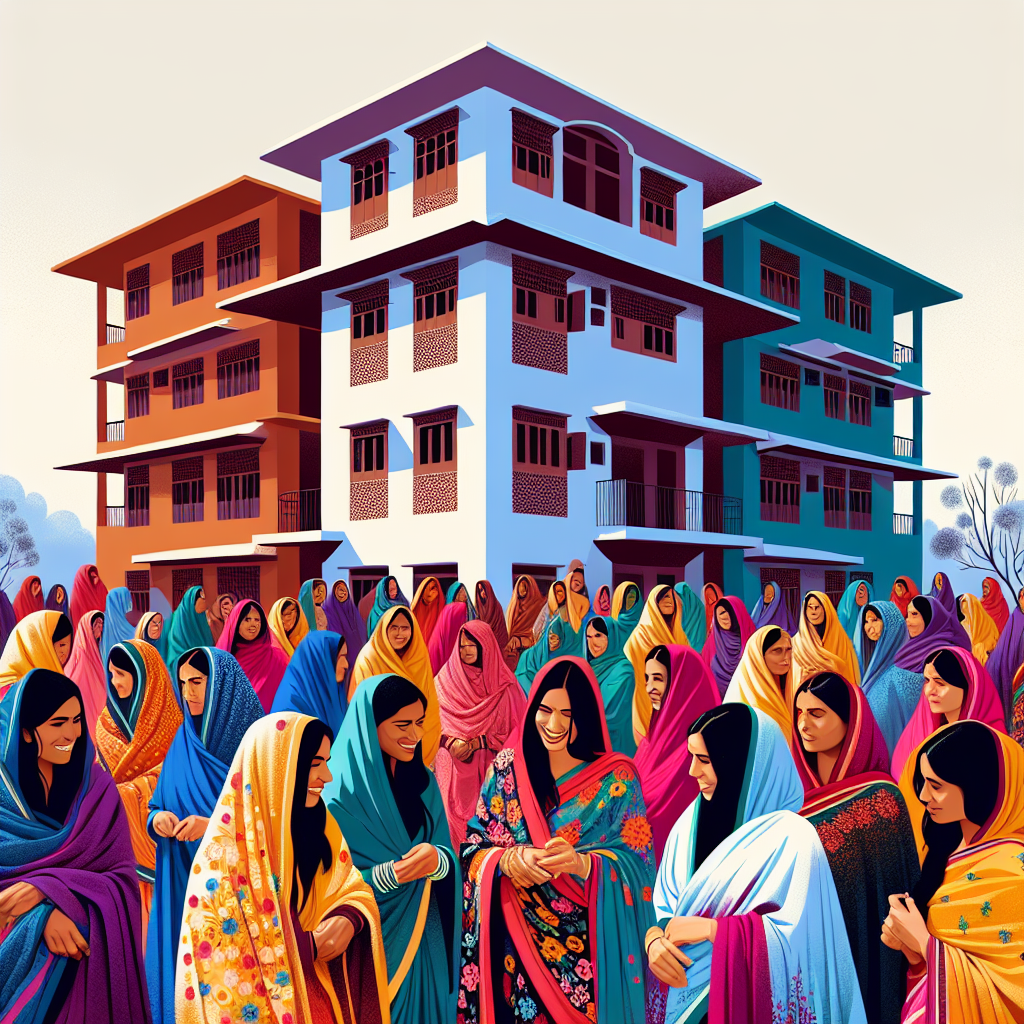
On a cold December morning in Delhi, a lively group of women dressed in colorful saris and warm shawls gathered outside a three-storey building that is home to one of India's oldest social enterprises. This cooperative, called Shri Mahila Griha Udyog Lijjat Papad, was started in 1959 in Mumbai by seven housewives who wanted to earn money by making papad, a popular crispy snack in Indian food. Over the last sixty-five years, the cooperative has grown a lot, now having over 45,000 women members and making a huge annual income of 16 billion rupees, with products even being sent to countries like the UK and the US.
The women at Lijjat mainly work from home, making different products like spices and detergents, but their most famous item is still the Lijjat brand of poppadoms. Lakshmi, a 70-year-old manager at the Delhi center, shares how joining the cooperative changed her life after her husband passed away and she needed a job. With not much education, a neighbor introduced her to Lijjat, and she found a caring community that helped her earn a good income while taking care of her family. Now, she manages 150 women at the center, showing how the cooperative helps women balance work and home life.
Every morning, the cooperative provides rides for its members to the nearest Lijjat center, where they pick up pre-mixed dough made from lentils and spices. The women then go back home to roll the dough into thin, round papads. At first, it took Lakshmi several hours to make just one kilogram of dried lentil papad, but now she can do it in just thirty minutes. The main office in Mumbai takes care of getting the raw materials, which are then sent out to women all over the country for them to produce and package.
The story of Lijjat goes back to the 1950s in India, a time when the country was trying to rebuild after gaining independence. Women faced many challenges in a conservative society that often limited their chances for education and jobs. The founders of Lijjat were a group of strong women living in a crowded Mumbai apartment who wanted to use their cooking skills to help their families. With the help of a social worker, they got a small loan to buy ingredients, and even though it was hard to find buyers at first, their hard work paid off as their poppadoms became popular.
Original news source: How a home-made snack empowered Indian women (BBC)
🎧 Listen:
📖 Vocabulary:
Group or Classroom Activities
Warm-up Activities:
– CHARADES
Instructions: Divide the class into two teams. Each team takes turns sending one member to act out a word or phrase related to the article (e.g., "popped papad," "women's cooperative," "Delhi"). The acting student cannot speak and must rely on gestures for their team to guess the word or phrase within a time limit.
– OPINION POLL
Instructions: Prepare a series of statements based on the article (e.g., "Women should work from home," "Social enterprises are important for communities"). Students walk around the room, discussing each statement with their peers and placing themselves on a spectrum from "strongly agree" to "strongly disagree." Afterward, discuss the results as a class.
– MIND MAP
Instructions: In small groups, students create a mind map on a large sheet of paper that illustrates key concepts from the article. They should include topics such as "Lijjat Papad," "women empowerment," and "social enterprises," branching out to include details and personal reflections. Each group then presents their mind map to the class.
– HEADLINE CREATION
Instructions: Students work in pairs to come up with catchy headlines for the article. They should think about the most important aspects, such as the cooperative's impact on women and the community. After brainstorming, each pair shares their headlines, and the class votes on the most engaging one.
– TWO TRUTHS AND A LIE
Instructions: Each student thinks of three statements about the article—two that are true and one that is false. They take turns sharing their statements with the class, while the other students guess which statement is the lie. This encourages critical thinking and attention to detail in the reading.
🤔 Comprehension Questions:
The main goal of the seven housewives was to earn money by making papad, a popular crispy snack in Indian food.
The cooperative has grown to over 45,000 women members and now has an annual income of 16 billion rupees, significantly increasing since its start.
Besides poppadoms, the women at Lijjat make products like spices and detergents.
Joining the cooperative helped Lakshmi earn a good income and provided her with a caring community to support her while she took care of her family.
The women pick up pre-mixed dough from the nearest Lijjat center, then go home to roll the dough into thin, round papads.
Women faced challenges like limited education and job opportunities in a conservative society. The founders overcame these by using their cooking skills and starting a cooperative.
The founders managed to start their business by getting a small loan from a social worker to buy ingredients and through their hard work, they found buyers for their poppadoms.
The cooperative provides rides to members for picking up dough and creates a community that allows women to work from home, helping them manage both their jobs and family duties.
🎧✍️ Listen and Fill in the Gaps:
On a cold December morning in Delhi, a lively of women dressed in colorful saris and warm shawls gathered outside a three-storey building that is home to one of India's oldest social enterprises. This cooperative, called Shri Mahila Griha Udyog Lijjat Papad, was started in 1959 in Mumbai by seven housewives who wanted to earn money by making papad, a popular snack in Indian food. Over the last sixty-five years, the cooperative has grown a lot, now having over 45,000 women members and making a huge annual of 16 billion , with products even being sent to countries like the UK and the US. The women at mainly work from home, making different like and detergents, but their most famous item is still the Lijjat brand of poppadoms. Lakshmi, a 70-year-old manager at the Delhi center, shares how joining the cooperative changed her life after her husband passed away and she needed a job. With not much education, a neighbor introduced her to Lijjat, and she found a caring community that helped her earn a good income while care of her family. Now, she manages 150 women at the center, showing how the cooperative helps balance work and home life. Every morning, the cooperative provides rides for its members to the nearest Lijjat center, where they pick up pre-mixed dough made from and spices. The women then go back home to roll the dough into thin, round papads. At first, it took Lakshmi several hours to make just one of dried lentil papad, but now she can do it in just thirty minutes. The main office in Mumbai takes care of getting the raw , which are then sent out to women all over the country for them to produce and package. The story of Lijjat goes back to the 1950s in India, a time when the country was trying to rebuild after gaining . Women faced many challenges in a society that often limited their chances for education and jobs. The founders of Lijjat were a group of strong women living in a crowded Mumbai apartment who wanted to use their cooking skills to help their families. With the help of a social , they got a small loan to buy ingredients, and even though it was hard to find buyers at first, their hard work paid off as their became popular.
💬 Discussion Questions:
1. What is your opinion on the importance of women working together in a cooperative like Lijjat?
2. How would you feel if you had to start a business with a group of friends or family?
3. Do you think it's important for women to have the opportunity to work and earn their own money? Why or why not?
4. Have you ever participated in a group project or activity? What was your experience like?
5. What is a skill you would like to learn to help you earn money in the future?
6. How do you think social enterprises like Lijjat can impact a community positively?
7. Do you like cooking or baking? If so, what is your favorite dish to make?
8. How would you feel if you had to manage a team of people like Lakshmi does?
9. Do you think it's easier or harder to work from home compared to working in an office? Why?
10. What is a challenge you think women face in your country when it comes to finding jobs?
11. How important do you think it is for communities to support local businesses? Why?
12. Have you ever had to learn a new skill quickly? What was it, and how did you feel about it?
13. Do you think that having a supportive community can help people succeed in their jobs? Why or why not?
14. What is a popular snack in your culture, and how is it made?
15. How would you feel if you were part of a cooperative that helped you and others in your community?
Individual Activities
📖💭 Vocabulary Meanings:
Click a dot next to a word, then click the dot next to its meaning to draw a line connecting them.
Words
Meanings
🔡 Multiple Choice Questions:
🕵️ True or False Questions:
📝 Write a Summary:
Write a summary of this news article in two sentences.
Check your writing now with the best free AI for English writing!