


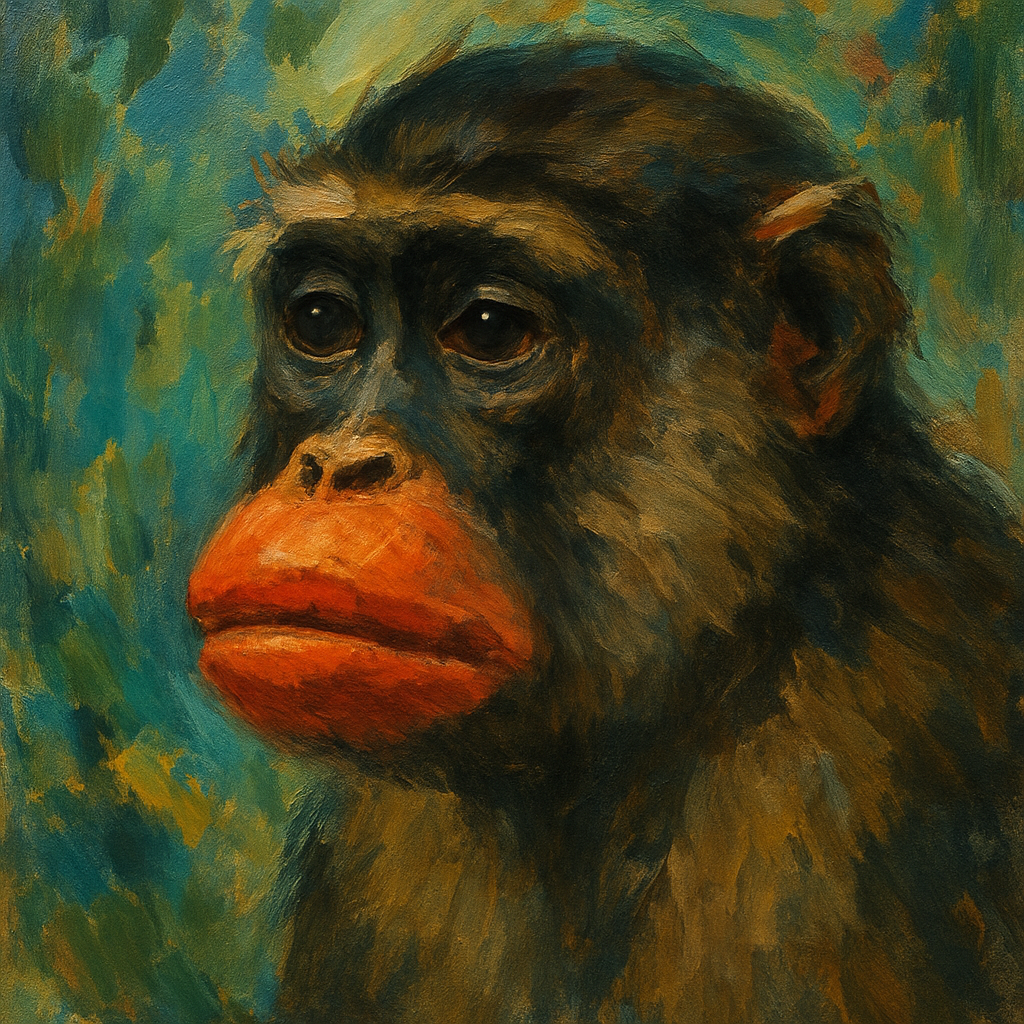
A novel species of monkey has been unearthed in the dense tropical forests of the Democratic Republic of Congo. This intriguing primate, characterized by its distinctive pinkish-orange lips and black face, has been formally named 'Colobus congoensis'. Locally known as 'Likweli', it's a rare addition to the catalog of African wildlife.
Initially reported in 2008 by conservationists working in Lomami National Park, this elusive animal eluded significant scientific documentation until a decade later. An international team led by Junior Amboko, a PhD candidate from Florida Atlantic University, conducted extensive fieldwork, including audio recordings and a detailed genetic analysis, to confirm the monkey as a new species. This marks only the fifth monkey species discovered in Africa over the past 75 years.
The discovery process was a challenging yet rewarding endeavor. Researchers relied on interviews with local villagers who provided scattered sightings of these shy, canopy-dwelling primates. Although the monkeys' resonant calls echo through the forest, they rarely make themselves visible, remaining hidden high in the trees for the most part.
Colobus congoensis' discovery underscores the importance of conserving its natural habitat from threats such as hunting. These herbivorous primates are vital to the ecosystem, contributing to seed dispersal and forest regeneration. Researchers, intrigued by the monkey's vivid facial coloration, speculate its evolutionary purpose may be related to signaling within the species or attracting mates.
Ongoing research aims to enhance understanding of this secretive species’ behavior and ecology. Protection measures are essential as scientists continue to map their population range and study their interactions within their forested environment. The recognition of the Colobus congoensis as a distinct species reinforces the rich biodiversity of the Democratic Republic of Congo.
Original news source: New monkey species with orange lips found 'hiding' in DRC forest (BBC)
🎧 Listen:
📖 Vocabulary:
Group or Classroom Activities
Warm-up Activities:
1. Discuss a time you discovered something unexpected.
2. Talk about your favorite animal and why you like it.
3. Explain the importance of biodiversity in an ecosystem.
4. What interesting wildlife exists in your country?
5. Share your thoughts on why some animals are undiscovered for so long.
🤔 Comprehension Questions:
Colobus congoensis.
In the Democratic Republic of Congo.
Junior Amboko led the team.
Extensive fieldwork, audio recordings, and genetic analysis were used.
Through seed dispersal and forest regeneration.
Monkeys are elusive and remain mostly in the canopy, making observations difficult.
It highlights the rich biodiversity of the Democratic Republic of Congo and the need for habitat conservation.
🎧✍️ Listen and Fill in the Gaps:
A novel species of monkey has been unearthed in the dense tropical forests of the Democratic Republic of . This intriguing primate, characterized by its distinctive lips and black face, has been formally named 'Colobus congoensis'. Locally as 'Likweli', it's a rare addition to the catalog of African wildlife. Initially reported in 2008 by conservationists working in Lomami National Park, this elusive animal eluded significant scientific until a decade later. An international team led by Junior Amboko, a PhD candidate from Florida Atlantic University, conducted extensive fieldwork, recordings and a genetic analysis, to confirm the monkey as a new species. This marks only the fifth monkey species discovered in Africa over the past 75 years. The discovery was a challenging yet rewarding endeavor. Researchers relied on interviews with local villagers who provided sightings of these shy, canopy-dwelling . Although the monkeys' resonant calls echo through the forest, they rarely make themselves visible, remaining hidden high in the trees for the most part. Colobus congoensis' discovery underscores the importance of conserving its natural habitat from threats such as . These herbivorous primates are vital to the ecosystem, contributing to seed dispersal and forest regeneration. Researchers, by the monkey's vivid facial coloration, its evolutionary purpose may be related to signaling within the or attracting . Ongoing research aims to enhance understanding of this secretive species’ behavior and ecology. Protection are essential as scientists continue to map their population range and study their interactions within their forested environment. The recognition of the Colobus congoensis as a distinct species reinforces the rich biodiversity of the Democratic Republic of Congo.
💬 Discussion Questions:
1. How would you feel about discovering a new species?
2. Why might preservation of natural habitats be crucial?
3. Discuss the role local communities play in wildlife conservation.
4. What challenges do researchers face in documenting new species?
5. How can we balance human development with conservation efforts?
6. Why is biodiversity important to the health of an ecosystem?
7. How do cultural perceptions influence conservation?
8. Discuss the ethical considerations in wildlife research.
9. What is your opinion on zoos and wildlife sanctuaries?
10. How have you seen conservation efforts impact local areas?
11. What technologies aid in the discovery of new species?
12. Share your thoughts on the role of international collaborations in conservation.
Individual Activities
📖💭 Vocabulary Meanings:
Click a dot next to a word, then click the dot next to its meaning to draw a line connecting them.