Another application of AI in factories is computer vision, which involves training machines to recognize objects in images and video. This technology is used to detect product defects at scale, particularly in complex products like computer chip wafers and circuit boards. Machines equipped with cameras and algorithms can spot surface-level anomalies that may have gone unnoticed by the human eye. AI is also being used to improve visibility in supply chains, allowing companies to analyze and predict suppliers' locations and identify bottlenecks. This information not only benefits companies but also provides consumers with insights into the origins and materials used in their products.
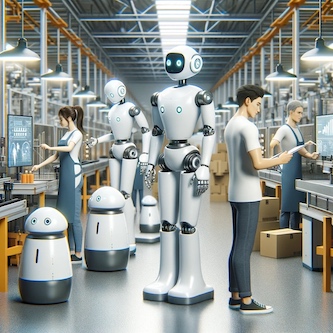
The rising adoption of AI tools in factories raises questions about the impact on workers. Some firms are using AI to enhance worker safety by monitoring factory camera feeds for possible threats or accidents. AI-powered wearables like exoskeletons are also being deployed to prevent strain and injuries among workers. However, industry experts believe that AI can bring more value to workers and customers by enhancing efficiency and meeting their needs on a daily basis. For example, AI can help workers perform their tasks more effectively and deliver products to customers more efficiently.
Overall, AI is revolutionizing manufacturing by enabling real-time process monitoring, predictive maintenance, quality control, and supply chain optimization. It is expected to bring even more exciting opportunities in the future, such as capacity sharing between manufacturers and improved visibility in supply chains. While there are concerns about the impact on workers, AI has the potential to enhance worker safety and deliver more value to both workers and customers. As the manufacturing industry continues to embrace AI, it is important to find a balance between automation and human involvement to ensure a successful and sustainable future.
Original news source: How factories are deploying AI on production lines (BBC)
📖 Vocabulary:
Group or Classroom Activities
Warm-up Activities:
– News Summary
Instructions: Students will work in pairs to summarize the key points of the article in their own words, aiming to condense the information to just a few sentences. They should focus on the main applications of AI in factories and the potential impact on workers and efficiency.
– Sketch It
Instructions: Divide students into small groups and assign each group a different aspect of the AI applications mentioned in the article (e.g., AI-powered sensors, computer vision, worker safety). Each group must create a visual representation (sketch) of how AI is used in that context, and then present it to the class explaining the benefits and challenges depicted in their drawing.
– Opinion Spectrum
Instructions: Set up a line in the classroom representing a spectrum of opinions, from "strongly agree" to "strongly disagree." Read out statements about the use of AI in manufacturing, such as "AI will ultimately replace human workers in factories" or "AI-enhanced predictive maintenance will significantly reduce industrial waste." Students position themselves along the spectrum according to their opinion and discuss their reasoning with the nearest classmates.
– Future Predictions
Instructions: Students will write a short paragraph predicting how AI might further change factory work in the next 20 years. They should consider the implications for efficiency, worker safety, and the global economy. After writing, they will share their predictions with the class and discuss common themes and differing viewpoints.
– Keyword Taboo
Instructions: Prepare cards with keywords from the article (e.g., "artificial intelligence," "predictive maintenance," "supply chain," "worker safety") and related words that cannot be used in the explanation (e.g., for "artificial intelligence," taboo words might be "machines," "smart," "computer," "technology"). Students play in teams. One student draws a card and has to describe the keyword to their teammates without using the related words until the teammates guess the keyword correctly.
🤔 Comprehension Questions:
The primary benefit of PepsiCo using AI-powered sensors is to detect hardware faults and prevent machine failures, thereby improving efficiency and reducing waste.
The AI-powered sensors have been trained on large volumes of audio data to recognize specific patterns of malfunctions by analyzing machine vibrations.
AI-powered sensors contribute to reducing energy consumption and waste by allowing workers to schedule maintenance in advance and avoid costly downtime, which in turn optimizes the use of energy and resources.
The role of computer vision technology in manufacturing is to train machines to recognize objects in images and video, which is used to detect product defects at scale, especially in complex products like computer chip wafers and circuit boards.
AI improves visibility in supply chains by analyzing and predicting suppliers' locations and identifying bottlenecks, which helps companies manage their supply chains more effectively.
AI is enhancing worker safety by monitoring factory camera feeds for potential threats or accidents and deploying AI-powered wearables like exoskeletons to prevent strain and injuries among workers.
Future opportunities for AI in manufacturing include enabling real-time process monitoring, predictive maintenance, quality control, supply chain optimization, capacity sharing between manufacturers, and improved visibility in supply chains.
Finding a balance between automation and human involvement is important to ensure a successful and sustainable future for the manufacturing industry, where AI can enhance worker safety and efficiency without fully displacing human workers.
🎧✍️ Listen and Fill in the Gaps:
Factories around the world are increasingly deploying artificial intelligence (AI) on their production lines to improve efficiency and reduce . One is PepsiCo, which is using AI-powered sensors created by tech firm Augury to detect hardware faults and prevent machine failures. These sensors have been trained on large of audio data to recognize specific patterns of malfunctions. By analyzing machine vibrations and collecting information on equipment health, can schedule maintenance in advance and avoid costly downtime. AI-powered sensors also help reduce energy consumption and cut down on waste across operations. Another application of AI in factories is computer vision, which involves training machines to recognize objects in images and video. This technology is used to detect product defects at scale, particularly in complex products like computer chip wafers and boards. Machines equipped with and algorithms can spot surface-level anomalies that may have gone unnoticed by the eye. AI is also being used to improve visibility in supply chains, allowing companies to analyze and suppliers' locations and identify bottlenecks. This information not only benefits companies but also provides consumers with insights into the origins and materials used in their products. The rising adoption of AI tools in factories questions about the impact on workers. Some firms are using AI to enhance worker by monitoring factory camera feeds for possible or accidents. AI-powered wearables like exoskeletons are also being deployed to prevent strain and injuries among workers. However, experts believe that AI can bring more value to workers and customers by enhancing efficiency and meeting their needs on a daily basis. For example, AI can help workers perform their tasks more effectively and deliver products to customers more efficiently. Overall, AI is revolutionizing manufacturing by enabling real-time process monitoring, predictive maintenance, quality , and chain optimization. It is expected to bring even more exciting opportunities in the , such as capacity sharing between manufacturers and improved visibility in supply chains. While there are concerns about the impact on workers, AI has the potential to enhance worker safety and deliver more to both workers and customers. As the manufacturing industry continues to embrace AI, it is important to find a balance between automation and human involvement to ensure a successful and sustainable future.
💬 Discussion Questions:
1. What is your understanding of artificial intelligence (AI) and how do you think it's changing the landscape of modern industries?
2. How would you feel if your job was assisted or replaced by AI-powered technology?
3. Do you believe AI can enhance worker safety as much as human vigilance can? Why or why not?
4. Can you think of any other industries, besides manufacturing, where AI could significantly improve efficiency?
5. What are some ethical considerations that companies should keep in mind when deploying AI in the workplace?
6. Do you think the use of AI in factories will lead to a significant reduction in employment opportunities? Why or why not?
7. How do you perceive the balance between automation and human involvement in the workforce?
8. Do you like the idea of AI-powered wearables like exoskeletons to prevent strain and injuries? Why or why not?
9. What is your opinion on the potential for AI to create new job opportunities that may not exist today?
10. Have you ever used a product or service that you knew was created with the help of AI? What was your impression of its quality?
11. Do you think AI can truly predict and prevent all types of machine failures in a factory setting?
12. How do you feel about the idea of AI monitoring workers for safety? Do you think it could infringe on personal privacy?
13. Do you believe that AI can provide a level of quality control that surpasses human capabilities?
14. How important do you think it is for consumers to have insights into the origins and materials used in the products they buy?
15. What do you think are the most significant challenges that industries face when integrating AI into their operations?
Individual Activities
📖💭 Vocabulary Meanings:
Click a dot next to a word, then click the dot next to its meaning to draw a line connecting them.
Words
Meanings
🔡 Multiple Choice Questions:
🕵️ True or False Questions:
📝 Write a Summary:
Write a summary of this news article in two sentences.
Check your writing now with the best free AI for English writing!