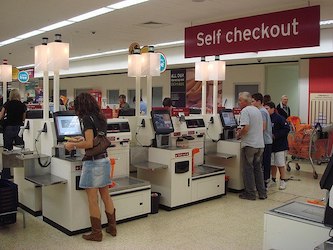
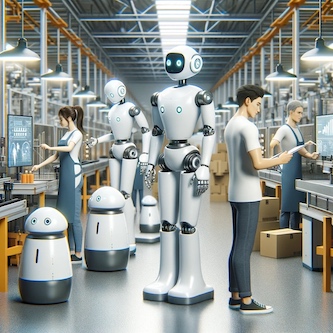
Smart machines help us know more about how things are made and moved from place to place. They can guess when a machine will need fixing and can find mistakes in things we make. These smart machines are becoming normal in factories. They also help factories share space and let people know more about where things come from.
Smart machines are changing how we make things. They help find problems in machines and in the things we make. They also help us know more about where things come from. Some people worry about jobs, but these smart machines can also help keep workers safe and help them do their jobs better.
Original news source: How factories are deploying AI on production lines (BBC)
📖 Vocabulary:
Group or Classroom Activities
Warm-up Activities:
– News Reporter Role-play
Instructions: Students pair up and one student plays the role of a news reporter while the other is an expert on smart machines in factories. The reporter asks questions about how smart machines are used in factories, their benefits, and their impact on workers. They should use information from the article to make their interview as realistic as possible.
– Vocabulary Pictionary
Instructions: Write down key vocabulary from the article on slips of paper (e.g., smart machines, sensors, cameras, factories, jobs, etc.). Students take turns drawing the words on the board without writing any letters or words, while their classmates guess the vocabulary. This will help reinforce understanding of the article's content and key terms.
– Opinion Spectrum
Instructions: Create a line in the classroom representing a spectrum of opinions about the use of smart machines in factories, from "very positive" to "very negative." Read statements from the article or related to the topic and ask students to stand at the point in the spectrum that represents their opinion. Then, have students discuss their positions in small groups.
– Sketch It
Instructions: Ask students to draw a simple sketch that represents the concept of a smart factory with machines, sensors, and workers. After they have completed their drawings, students should share their sketches with a partner and explain how each element relates to the article and the importance of each component in a modern factory setting.
– Think-Pair-Share
Instructions: Pose a question to the class, such as "How do smart machines improve the manufacturing process?" or "What are the potential downsides of using smart machines in factories?" Give students a moment to think individually, then have them pair up to discuss their thoughts. Finally, bring the class back together and have pairs share their ideas with the whole group.
🤔 Comprehension Questions:
Smart sensors help workers find problems with machines and fix them before they break.
PepsiCo is a company that makes drinks. They use smart sensors to make sure their machines are working properly.
Smart cameras help by finding small mistakes in things like computer parts that people might not notice.
Smart machines can guess when a machine will need to be fixed.
Smart machines are becoming normal because they help find problems and understand how things are made and moved.
Smart machines help us understand how things are made and where they come from.
Some people worry about jobs, but smart machines can also keep workers safe and help them do their work better.
🎧✍️ Listen and Fill in the Gaps:
Factories are using smart machines to work better and make mistakes. A company that drinks, called PepsiCo, uses smart sensors to check if their machines are working right. These sensors workers fix machines before they break. Smart cameras also help find tiny mistakes in things like parts that people might not see. Smart help us know about how things are made and moved from place to place. They can guess when a machine will need fixing and can find mistakes in things we . These smart machines are becoming normal in factories. They also help factories share and let people more about where things come from. Smart machines are changing how we make things. They help problems in machines and in the things we make. They also help us know more about where things come from. Some people worry about , but these smart machines can also help keep workers and help them do their jobs better.
💬 Discussion Questions:
1. What is a smart machine?
2. Do you like the idea of smart machines helping in factories? Why or why not?
3. How would you feel if a smart machine helped you with your homework?
4. Do you think smart machines can make mistakes? Why or why not?
5. Have you ever seen a smart machine? What did it do?
6. Why do you think machines need to be fixed before they break?
7. What is a sensor? Can you think of a sensor you have used?
8. Do you think smart cameras are good at finding mistakes? Why?
9. Would you like to work with smart machines? Why or why not?
10. Do you think smart machines can help keep workers safe? How?
11. Are you worried that smart machines might take people's jobs? Why or why not?
12. Do you think knowing where things come from is important? Why?
Individual Activities
📖💭 Vocabulary Meanings:
Click a dot next to a word, then click the dot next to its meaning to draw a line connecting them.
Words
Meanings
🔡 Multiple Choice Questions:
🕵️ True or False Questions:
📝 Write a Summary:
Write a summary of this news article in two sentences.
Check your writing now with the best free AI for English writing!