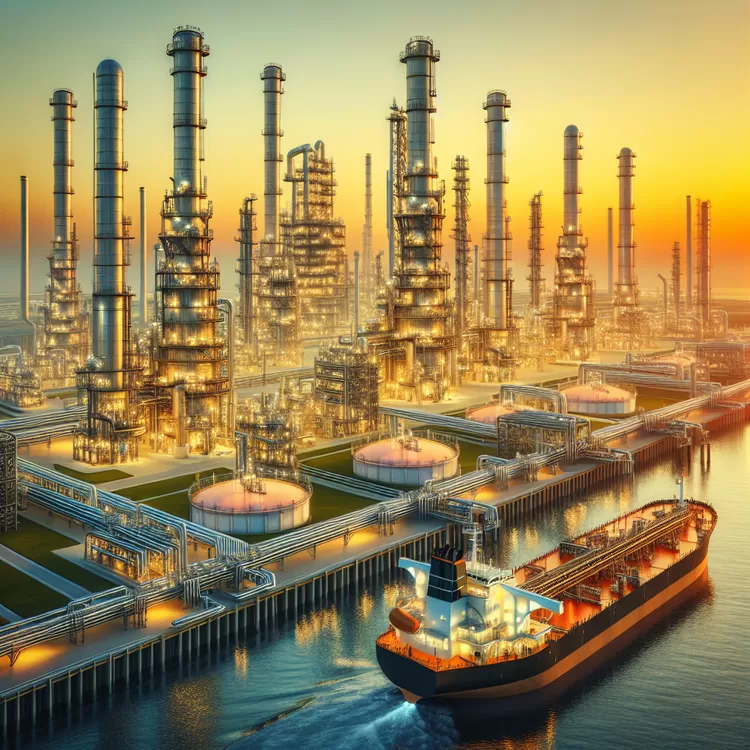
Nigeria has taken a significant step towards once again producing refined oil with the delivery of a million barrels of crude oil to a new refinery in the country. This marks a major milestone in Nigeria's journey towards becoming self-sufficient in fuel production. In the past, Nigeria, despite being rich in oil, has had to import refined oil, which has imposed additional costs on the country. The Dangote refinery, which took nearly seven years to build, is expected to start producing fuel once it receives five million more barrels of crude oil. When fully operational, the refinery, which cost $19 billion, is predicted to produce about 650,000 barrels per day, starting with diesel, aviation fuel, and liquefied petroleum gas before progressing to petrol production.
Aliko Dangote, Africa's richest man and president of the Dangote Group, has expressed his focus on ramping up the refinery to its full capacity in the coming months. He looks forward to delivering the first batch of products to the Nigerian market. The company aims to eventually provide 100% of Nigeria's refined product requirements and have surplus for export. This is significant for Nigeria, as it is the largest economy in Africa and one of the continent's largest oil producers. The country has faced challenges in fuel supply, including foreign currency shortages, which have contributed to frequent scarcity. The cost of fuel has also been a major political issue, with the removal of fuel subsidies leading to a significant increase in prices.
President Bola Tinubu, who recently took office, removed the fuel subsidy, which had been costing the government a substantial amount of money. This decision resulted in a more than 400% increase in fuel prices. While labor unions have pressured the government to reverse this decision, President Tinubu believes it will have long-term benefits. The government has stated that it has already saved over $1.8 billion through the removal of the subsidy, which will be used for social development projects. This move towards self-sufficiency in fuel production will not only reduce Nigeria's reliance on imports but also have economic and political implications for the country.
Original news source: Nigeria takes major step towards once again producing refined oil (BBC)
🎧 Listen:
Group or Classroom Activities
Warm-up Activities:
– News Summary
Instructions:
1. Divide the class into small groups.
2. Provide each group with a copy of the article.
3. Instruct the groups to read the article and create a concise summary of the main points.
4. Give them a time limit to complete the task.
5. Have each group share their summaries with the class.
– Opinion Poll
Instructions:
1. Divide the class into pairs.
2. Instruct each pair to read the article individually.
3. After reading, have them discuss their opinions on Nigeria's move towards self-sufficiency in fuel production.
4. Provide a list of discussion questions related to the topic, such as "Do you think it is important for countries to produce their own fuel?" or "What are the potential benefits and drawbacks of Nigeria's decision?"
5. After discussing, have each pair present their opinions to the class and facilitate a class discussion.
– Headline Creation
Instructions:
1. Divide the class into small groups.
2. Instruct each group to come up with a catchy headline that summarizes the main idea of the article.
3. Give them a time limit to create their headlines.
4. Have each group share their headlines with the class and discuss the reasoning behind their choices.
5. As a class, vote on the most creative or impactful headline.
– Vocabulary Pictionary
Instructions:
1. Choose several key vocabulary words from the article and write them on individual pieces of paper.
2. Divide the class into pairs.
3. Give each pair a vocabulary word without showing it to the other pair.
4. Instruct the pairs to take turns drawing pictures to represent the word while their partner tries to guess it.
5. After a set time, have each pair switch roles and repeat the activity.
6. Facilitate a class discussion about the vocabulary words and their meanings.
– Future Predictions
Instructions:
1. Instruct each student to imagine they are a reporter from the future, looking back on Nigeria's move towards self-sufficiency in fuel production.
2. Have them write a short news report or opinion piece predicting the impact of this development on Nigeria's economy, politics, and society.
3. After writing, have students pair up and share their predictions with each other.
4. Encourage students to discuss their different perspectives and potential outcomes.
5. Optionally, have a few students share their predictions with the whole class and facilitate a class discussion on the topic.
🤔 Comprehension Questions:
Answer: Nigeria did not have the necessary refining capacity to meet its fuel demands.
Answer: Nearly seven years.
Answer: Diesel, aviation fuel, and liquefied petroleum gas.
Answer: To eventually provide 100% of Nigeria's refined product requirements and have surplus for export.
Answer: It will reduce the country's reliance on imports and have economic and political implications.
Answer: Foreign currency shortages and frequent scarcity.
Answer: A more than 400% increase in fuel prices.
Answer: Reduced costs, increased revenue from exports, greater control over fuel supply, and less dependence on foreign countries.
🎧✍️ Listen and Fill in the Gaps:
Nigeria has a significant step towards once again oil with the delivery of a million barrels of crude oil to a new refinery in the country. This marks a major milestone in Nigeria's journey towards becoming self-sufficient in fuel production. In the past, Nigeria, despite being rich in oil, has had to import refined oil, which has imposed additional costs on the country. The Dangote refinery, which took nearly seven to build, is expected to start producing fuel once it receives five million more barrels of crude oil. When fully operational, the refinery, which cost $19 billion, is predicted to produce about 650,000 per day, with diesel, aviation fuel, and liquefied petroleum gas before progressing to petrol production. Dangote, Africa's richest man and president of the Dangote Group, has expressed his focus on ramping up the refinery to its full capacity in the coming months. He looks forward to delivering the first batch of products to the Nigerian market. The aims to eventually provide 100% of Nigeria's refined product requirements and have surplus for export. This is significant for Nigeria, as it is the largest in and one of the continent's largest oil producers. The country has faced challenges in fuel supply, including foreign currency shortages, which have contributed to frequent scarcity. The cost of fuel has also been a political issue, with the removal of fuel subsidies leading to a significant increase in prices. President Bola Tinubu, who recently took , removed the fuel subsidy, which had been costing the government a substantial amount of money. This decision resulted in a more than 400% in fuel prices. While unions have pressured the government to reverse this decision, President Tinubu believes it will have long-term benefits. The government has stated that it has already saved over $1.8 billion through the removal of the subsidy, which will be used for social projects. This move towards self-sufficiency in fuel production will not only reduce Nigeria's on imports but also have economic and political implications for the country.
💬 Discussion Questions:
1. What are the benefits of Nigeria becoming self-sufficient in fuel production?
2. How do you think the Dangote refinery will impact Nigeria's economy?
3. Do you believe it is important for countries to be self-sufficient in fuel production? Why or why not?
4. How do you think the removal of the fuel subsidy will affect the average Nigerian citizen?
5. What challenges do you think Nigeria may face in ramping up the refinery to its full capacity?
6. How would you feel if your country relied heavily on fuel imports?
7. Do you think the Dangote refinery will be successful in producing enough fuel to meet Nigeria's demand? Why or why not?
8. How might the increase in fuel prices affect the average Nigerian citizen's daily life?
9. What other industries in Nigeria do you think could benefit from the country's self-sufficiency in fuel production?
10. How do you think the Dangote refinery will impact Nigeria's position as one of the largest oil producers in Africa?
11. Do you think other African countries should follow Nigeria's example and invest in their own refineries? Why or why not?
12. How might the Dangote refinery impact Nigeria's relationship with other countries that export refined oil to Nigeria?
13. How do you think the removal of the fuel subsidy will impact Nigeria's political landscape?
14. What do you think are the potential risks and benefits of relying heavily on one refinery for fuel production?
15. How might the Dangote refinery impact Nigeria's overall energy security?
Individual Activities
🔡 Multiple Choice Questions:
🕵️ True or False Questions:
📝 Write a Summary:
Write a summary of this news article in two sentences.
Check your writing now with the best free AI for English writing!