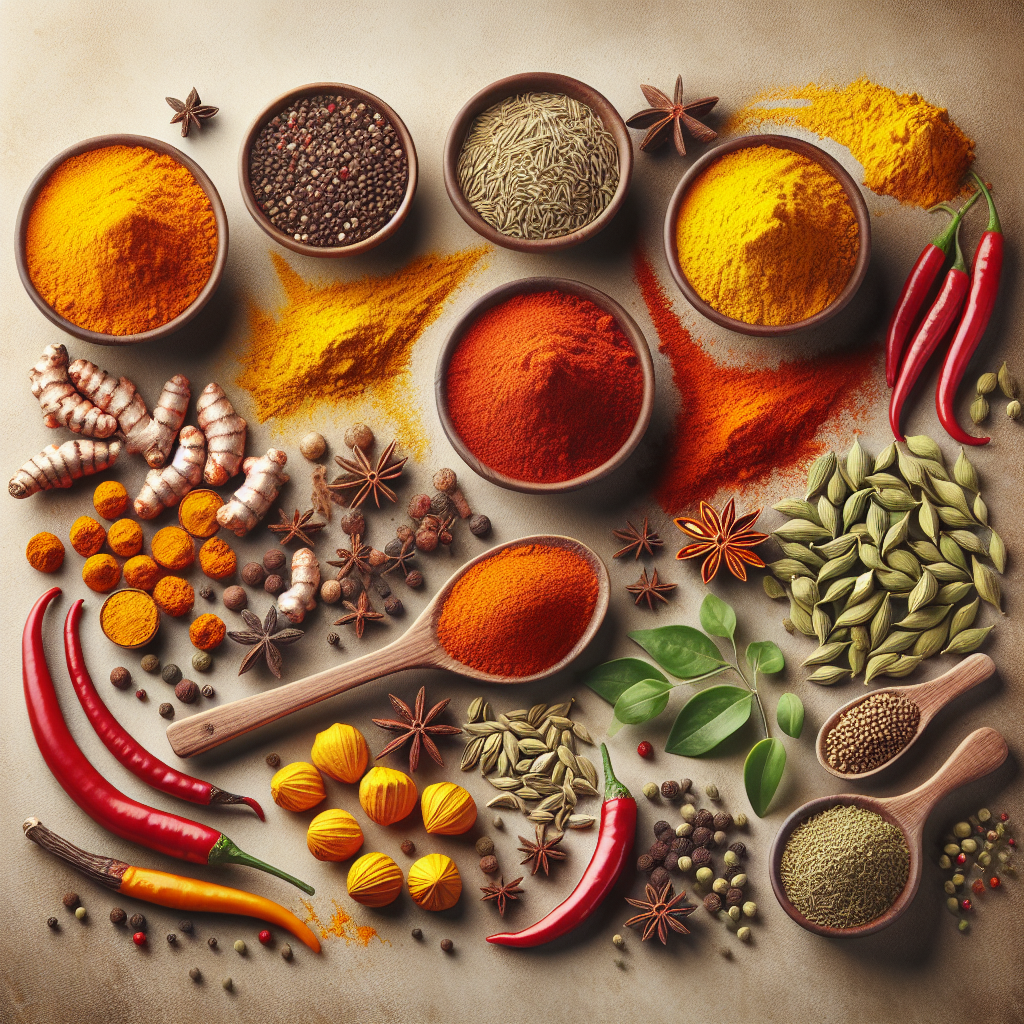
Indian spices, known for their diverse flavors and vibrant colors, are facing safety concerns on the global stage. Singapore, Hong Kong, and the US have halted sales of spices produced by Indian companies MDH and Everest due to suspected elevated levels of a cancer-causing pesticide. The European Union, Maldives, Bangladesh, and Australia have also launched investigations. This is not the first time Indian spices have been found to be contaminated, with previous instances of lead contamination and adulteration. The safety of Indian spices is now being questioned, and the government has instructed quality tests and issued guidelines to exporters.
MDH and Everest are popular and trusted brands in India, with MDH being a 105-year-old family-run firm and Everest claiming to be India's largest manufacturer of spices. The government has taken steps to address the issue, with quality tests being conducted and guidelines issued. However, there are concerns about the decline in India's image as a spice exporter and the long-term effects of repeated cases of contamination. The recent quality concerns could threaten half of India's spice exports, according to a think tank report.
Transparency, stringent enforcement, and clear communication are necessary to safeguard the integrity of India's spice exports. Experts suggest that India needs to fundamentally overhaul its approach to food safety. For consumers in the West, the origin of spices in their food remains unclear, highlighting the need for greater awareness and transparency in the supply chain. Ultimately, India must prioritize food safety to maintain its position as a global spice powerhouse.
Original news source: Indian spices face heat over global safety concerns (BBC)
🎧 Listen:
📖 Vocabulary:
Group or Classroom Activities
Warm-up Activities:
– News Summary
Instructions: Have students read the article and then write a summary of the main points. They should focus on the safety concerns surrounding Indian spices and the potential impact on India's spice exports. Afterward, they can share their summaries with a partner or in small groups.
– Pros and Cons
Instructions: Divide the class into two groups. One group will brainstorm the pros of continuing to import Indian spices, while the other group will brainstorm the cons. Each group can then present their arguments to the class, discussing the potential benefits and drawbacks of continuing to consume Indian spices in light of the safety concerns.
– Opinion Poll
Instructions: Create a list of statements related to the safety concerns surrounding Indian spices, such as "I would still buy Indian spices despite the safety concerns" or "I think the government should do more to regulate spice production." Have students indicate whether they agree or disagree with each statement, and then discuss their opinions in pairs or small groups.
– Sketch It
Instructions: Assign each student a different aspect of the article, such as the safety concerns, the impact on India's spice exports, or the need for greater transparency. Students should then create a visual representation of their assigned topic, using drawings, symbols, and labels. Afterward, students can explain their sketches to the class and engage in a discussion about the different aspects of the article.
– Future Predictions
Instructions: Ask students to imagine what the future holds for Indian spices in light of the safety concerns. They should consider potential actions the government could take, the impact on the spice industry, and the response from consumers. Students can write short paragraphs or participate in a group discussion, sharing their predictions and reasoning.
🤔 Comprehension Questions:
🎧✍️ Listen and Fill in the Gaps:
Indian spices, known for their diverse flavors and vibrant colors, are facing safety concerns on the global stage. Singapore, Hong Kong, and the US have halted sales of spices produced by Indian companies MDH and due to suspected levels of a cancer-causing pesticide. The European Union, Maldives, Bangladesh, and Australia have also launched . This is not the time Indian spices have been found to be , with previous instances of lead contamination and adulteration. The of spices is now being questioned, and the government has instructed quality tests and issued guidelines to exporters. MDH and Everest are popular and trusted brands in , with MDH being a 105-year-old family-run firm and Everest claiming to be India's largest manufacturer of spices. The government has steps to address the issue, with quality tests being conducted and guidelines . However, there are concerns about the decline in India's image as a spice exporter and the long-term effects of repeated cases of contamination. The recent quality concerns could threaten half of India's spice exports, according to a tank . Transparency, stringent enforcement, and clear communication are necessary to safeguard the integrity of India's exports. Experts suggest that India needs to fundamentally overhaul its approach to food safety. For consumers in the West, the origin of spices in their food unclear, highlighting the need for greater awareness and in the supply chain. Ultimately, India must prioritize food safety to its position as a global spice powerhouse.
💬 Discussion Questions:
1. What is your favorite Indian spice and why?
2. How would you feel if you found out that the spices you regularly use were contaminated?
3. Do you think the government is doing enough to address the issue of contaminated spices in India? Why or why not?
4. Have you ever had an experience with a food product being recalled or deemed unsafe? How did it affect your trust in that brand or product?
5. What steps do you think India should take to improve the safety of its spice exports?
6. Do you think the recent quality concerns will have a long-term impact on India's spice exports? Why or why not?
7. How important is transparency in the food industry? Why?
8. Have you ever been concerned about the safety of the food you consume? Why or why not?
9. What do you think can be done to increase awareness and transparency in the supply chain of spices?
10. How would you feel if you found out that the spices in your food were not sourced from the country or region they claimed to be from?
11. Do you think consumers should be more involved in the regulation and testing of food safety? Why or why not?
12. Have you ever had an experience where a trusted brand or product was found to be unsafe? How did it affect your trust in that brand or product?
13. What role do you think the media plays in informing the public about food safety concerns?
14. How important is it for a country to maintain its reputation as a global exporter of a particular product? Why?
15. Do you think stricter regulations and enforcement are necessary to ensure the safety of food products? Why or why not?
Individual Activities
📖💭 Vocabulary Meanings:
Click a dot next to a word, then click the dot next to its meaning to draw a line connecting them.
Words
Meanings
🔡 Multiple Choice Questions:
🕵️ True or False Questions:
📝 Write a Summary:
Write a summary of this news article in two sentences.
Check your writing now with the best free AI for English writing!