
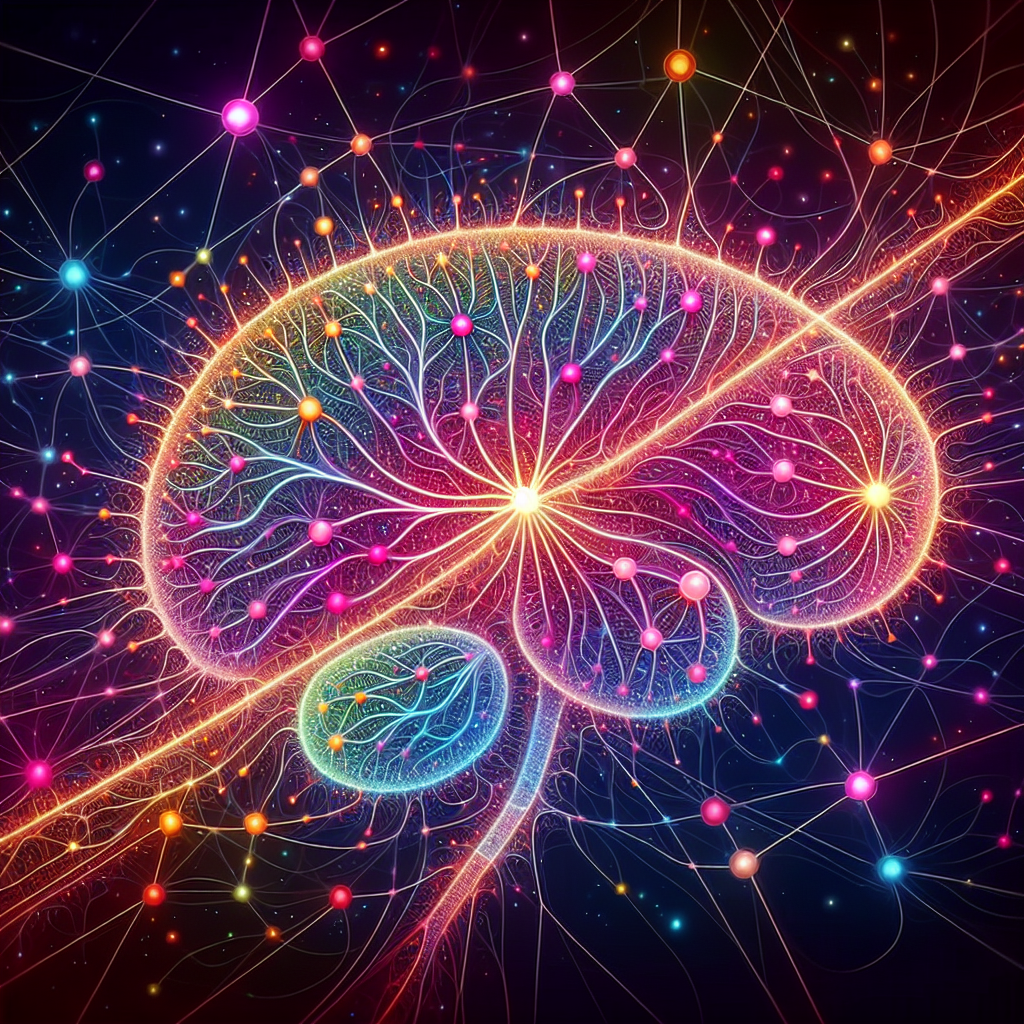
Scientists have made an exciting discovery by studying a fly's brain. The fly's brain has over 130,000 cells and 50 million connections. Researchers from Cambridge have mapped out every cell in the fly's brain. This helps them learn how brains, including human brains, work.
The study showed how different parts of the fly's brain are connected. These parts help with things like moving and seeing. Understanding these connections can help scientists learn about healthy brains and brain problems. This research could help us understand bigger brains, like those of mice and humans, in the future.
To make the brain map, scientists cut the fly's brain into 7,000 tiny pieces. They took pictures of each piece and put them back together on a computer. They used computers to help, but still had to fix many mistakes by hand. Now, other scientists can use this map to make new discoveries about the brain.
Original news source: Fly brain breakthrough 'huge leap' to unlock human mind (BBC)
🎧 Listen:
📖 Vocabulary:
Group or Classroom Activities
Warm-up Activities:
– Charades
Instructions: Divide the class into two teams. Write down vocabulary words related to the article on small pieces of paper. One student from each team will come to the front of the class and choose a piece of paper with a word. They must then act out the word without speaking while their team tries to guess what it is.
– News Summary
Instructions: In pairs, have students summarize the article in their own words. Encourage them to include the main points and key information. After a few minutes, ask some pairs to share their summaries with the class.
– Opinion Poll
Instructions: Write a discussion question related to the article on the board, such as "Do you think studying the fly's brain can help us understand human brains better?" Have students move to different corners of the room to indicate their opinion: strongly agree, agree, disagree, strongly disagree. Allow a few students from each group to explain their reasoning.
– Vocabulary Pictionary
Instructions: Write down key vocabulary words from the article on separate pieces of paper. Have one student come to the front of the class, pick a word, and draw it on the board without using any letters or numbers. Their classmates must guess the word. Rotate turns so that each student has a chance to draw.
– Think-Pair-Share
Instructions: Ask students to think about and write down one question they have about the article. Then, have them pair up with a classmate and discuss their questions. After a few minutes, open the discussion to the whole class and allow students to share their questions and thoughts.
🤔 Comprehension Questions:
Scientists discovered how different parts of the fly's brain are connected.
A fly's brain has over 130,000 cells.
They cut the fly's brain into tiny pieces, took pictures of each piece, and put them back together on a computer.
Understanding the connections in a fly's brain can help scientists learn about healthy brains and brain problems.
Scientists made the brain map by cutting the fly's brain into tiny pieces, taking pictures of each piece, and putting them back together on a computer.
Scientists had to fix many mistakes by hand because even though they used computers to help, there were still errors that needed to be corrected.
Other scientists can use the brain map to study and learn more about how brains work and make new discoveries in brain research.
🎧✍️ Listen and Fill in the Gaps:
Scientists have made an exciting discovery by studying a fly's brain. The fly's brain has over 130,000 cells and 50 million connections. from have out every cell in the fly's brain. This helps them learn how brains, including brains, work. The study showed how different parts of the fly's brain are connected. These parts help with things like moving and . Understanding these can help scientists learn about brains and brain . This research could help us understand bigger brains, like those of mice and , in the future. To make the brain map, scientists cut the fly's brain into 7,000 tiny pieces. They took pictures of each piece and put them back together on a computer. They computers to help, but still had to fix many mistakes by hand. Now, other can use this map to make new about the brain.
💬 Discussion Questions:
1. What do you think it would be like to have over 130,000 cells in your brain?
2. How would you feel if scientists studied your brain like they studied the fly's brain?
3. Do you like learning about how brains work? Why or why not?
4. What is something you think scientists could learn from studying the connections in the fly's brain?
5. How do you think cutting the fly's brain into tiny pieces helped the scientists make a map?
6. Do you think it's important for scientists to understand how our brains work? Why or why not?
7. What do you think would be the hardest part of mapping out a brain like the scientists did with the fly's brain?
8. How do you think computers helped the scientists in making the brain map?
9. Why do you think it's helpful for other scientists to be able to use the brain map for new discoveries?
10. Do you think studying a fly's brain can really help us understand bigger brains like those of mice and humans? Why or why not?
11. How important do you think it is to learn about brain problems and how to solve them?
12. What is something you would like to learn about brains in the future?
Individual Activities
📖💭 Vocabulary Meanings:
Click a dot next to a word, then click the dot next to its meaning to draw a line connecting them.
Words
Meanings
🔡 Multiple Choice Questions:
🕵️ True or False Questions:
📝 Write a Summary:
Write a summary of this news article in two sentences.
Check your writing now with the best free AI for English writing!