
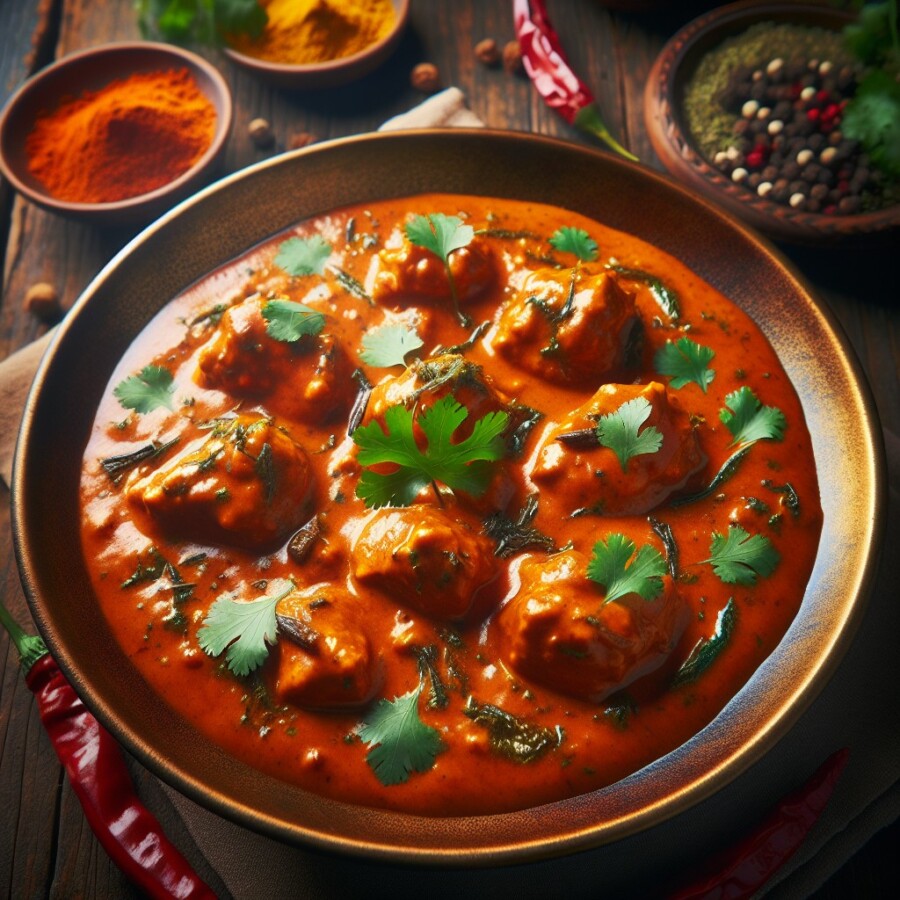
Two Indian restaurants in Delhi are fighting in court about who really made butter chicken first. The fight is between two families who both say they started the famous Moti Mahal restaurant in 1947. One family says the other is wrongly saying they made up butter chicken and another dish called dal makhani. They are very upset and have taken the matter to court.
The story of how butter chicken was made is quite interesting. A man and his three workers left their home during a tough time in India and opened a new restaurant in Delhi. They made butter chicken by mixing leftover chicken with tomato sauce and butter. This new dish became very popular. But now, there's a disagreement about who really made it first.
Even though the two restaurants are arguing about who made butter chicken, some food experts think it's not important who made it first. They believe the most important thing is how good the butter chicken tastes, not who gets the credit for making it. The court case is still going on, and it shows how hard it can be to figure out who first made a famous food dish that many people around the world enjoy eating.
Original news source: Moti Mahal: India curry houses battle over butter chicken (BBC)
🎧 Listen:
📖 Vocabulary:
Group or Classroom Activities
Warm-up Activities:
– Charades
Instructions: Divide the class into two teams. Write different food dishes, including butter chicken, on small pieces of paper and put them in a bowl. One student from each team takes turns picking a piece of paper and acting out the dish without speaking. The team members have to guess the dish within a certain time limit. The team that guesses the most dishes correctly wins.
– News Summary
Instructions: In pairs, students take turns summarizing the article in their own words. They have to include the main points and any important details. After each summary, the other student gives feedback on accuracy and clarity. Then, they switch roles and repeat the activity.
– Vocabulary Pictionary
Instructions: Write key vocabulary words from the article on the board. Divide the class into small groups. One student from each group picks a word and has to draw it on the board while the other group members try to guess the word. The student cannot use any letters or numbers in their drawing. The group that guesses the most words correctly wins.
– Speed Summarizing
Instructions: Divide the class into pairs. Give each pair a copy of the article. Set a timer for 3 minutes. One student has to summarize as much of the article as they can within the time limit, while the other student listens and takes notes. After the time is up, they switch roles and repeat the activity. Then, the pairs compare their summaries and discuss any differences or missing information.
– Think-Pair-Share
Instructions: In pairs, students take turns discussing their opinions on the court case between the two Indian restaurants. They can discuss whether they think it's important who made butter chicken first, or if they agree with the food experts that taste is the most important thing. After discussing, they share their opinions with the whole class and have a group discussion.
🤔 Comprehension Questions:
The two restaurants are fighting about who really made butter chicken first.
They made butter chicken by mixing leftover chicken with tomato sauce and butter.
The new dish became popular because it tasted very good.
Some food experts think that how good the butter chicken tastes is more important than who made it first.
The court case is about the two families arguing about who really made butter chicken and another dish called dal makhani first.
It is difficult to figure out who first made a famous food dish because there may not be clear evidence or records to prove who made it first.
The families are arguing about the dish called dal makhani.
🎧✍️ Listen and Fill in the Gaps:
Two Indian restaurants in Delhi are fighting in court about who really made butter chicken first. The fight is between two who both say they started the famous Moti Mahal restaurant in 1947. One family the is wrongly saying they made up butter chicken and another dish called dal makhani. They are very upset and have taken the matter to court. The story of how butter chicken was is quite . A man and his three workers left their home during a tough time in and opened a new restaurant in Delhi. They made butter chicken by mixing leftover with sauce and butter. This new dish became very popular. But now, there's a about who really made it first. Even though the two restaurants are arguing about who made butter chicken, some food experts think it's not important who made it first. They believe the most important thing is how good the butter chicken , not who gets the credit for it. The court case is still going on, and it shows how hard it can be to figure out who first made a famous food dish that people around the world enjoy eating.
💬 Discussion Questions:
1. What is butter chicken and dal makhani?
2. How would you feel if someone said they made a dish that you actually made?
3. Do you think it's important to know who made a dish first? Why or why not?
4. Have you ever tried butter chicken? Did you like it? Why or why not?
5. What do you think is more important: who made a dish or how it tastes? Why?
6. How do you think the court will decide who made butter chicken first?
7. Do you think it's fair for the two families to fight in court over who made butter chicken first? Why or why not?
8. Have you ever had a disagreement with someone about something? How did you solve it?
9. What is your favorite dish? Why do you like it?
10. Do you think it's easy or hard to figure out who first made a famous food dish? Why?
11. How do you think the court case will end? Why do you think that?
12. If you had to choose between eating butter chicken or dal makhani, which one would you choose? Why?
Individual Activities
📖💭 Vocabulary Meanings:
Click a dot next to a word, then click the dot next to its meaning to draw a line connecting them.
Words
Meanings
🔡 Multiple Choice Questions:
🕵️ True or False Questions:
📝 Write a Summary:
Write a summary of this news article in two sentences.
Check your writing now with the best free AI for English writing!