

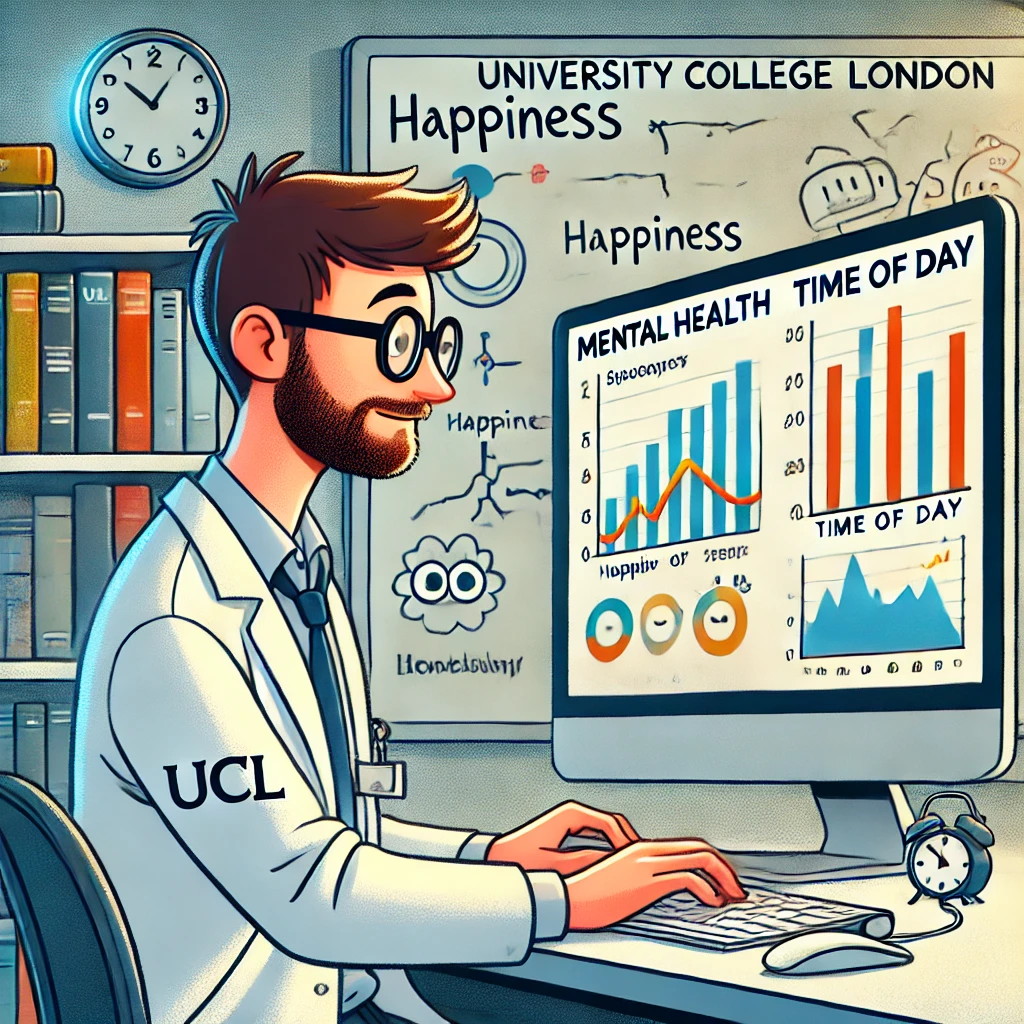
A recent study from University College London (UCL) has uncovered some interesting facts about mental health and the time of day. The research shows that people usually feel better in the morning, but their mood tends to drop as the day goes on, hitting its lowest point around midnight. This study is important because it looks closely at how mental health changes throughout the day, taking into account things like what day it is and the different seasons.
The researchers wanted to find out how different times of day affect people's mental health, including their happiness, life satisfaction, and feelings of loneliness. They used data from the UCL Covid-19 social study, which collected nearly one million responses from about 50,000 adults over two years. Participants answered questions about how they felt, which helped the researchers understand trends in mental health based on the time of day.
The study found that people generally felt happier and more satisfied with life on Mondays and Fridays compared to Sundays, with Tuesdays also showing higher happiness levels. However, there were no big differences in feelings of loneliness throughout the week. The researchers also noticed that people felt less depressed and happier during spring, summer, and autumn than in winter.
Although the study provided a lot of information, the researchers pointed out that it was observational and couldn't prove cause and effect. They noted that when participants took the surveys might have affected the results. For example, people who felt good in the morning might have been more likely to fill out the survey at that time. Dr. Feifei Bu, one of the researchers, mentioned that if these patterns are confirmed, mental health services could improve by considering the time of day when people need help, especially during late-night hours when they might be feeling their worst.
Original news source: Scientists find that things really do seem better in the morning (The Guardian)
🎧 Listen:
📖 Vocabulary:
Group or Classroom Activities
Warm-up Activities:
– CHARADES
Instructions: Divide the class into two teams. Each team takes turns acting out different emotions related to mental health (e.g., happiness, loneliness, sadness) without speaking, while the other team guesses the emotion. This will encourage students to think about the emotional aspects discussed in the article.
– OPINION POLL
Instructions: Create a set of statements based on the article’s findings (e.g., "People are happier in the morning than at night"). Have students move to different sides of the room based on whether they agree or disagree. After the movement, facilitate a discussion where students explain their opinions.
– MIND MAP
Instructions: On a large piece of paper or a whiteboard, write "Mental Health Throughout the Day" in the center. Have students work in small groups to brainstorm and add related concepts, findings, and ideas from the article, creating a visual representation of the information.
– HEADLINE CREATION
Instructions: Ask students to create catchy headlines for the article based on its main findings. They can work individually or in pairs, and then share their headlines with the class. This will help them practice summarizing and capturing the essence of the article.
– TWO TRUTHS AND A LIE
Instructions: Each student must come up with three statements about the article's content, two of which are true and one that is false. Students will share their statements with a partner who will guess which is the lie. This activity encourages critical thinking and reinforces comprehension of the article.
🤔 Comprehension Questions:
The study aimed to discover how different times of day affect people's mental health, including their happiness, life satisfaction, and feelings of loneliness.
People usually felt better in the morning, but their mood tended to drop as the day went on, hitting its lowest point around midnight.
People reported feeling happier and more satisfied with life on Mondays and Fridays, with Tuesdays also showing higher happiness levels compared to Sundays.
The study found that people felt less depressed and happier during spring, summer, and autumn than in winter.
The researchers mentioned that the study was observational because it couldn't prove cause and effect, meaning it couldn't definitively show that one thing caused another.
The timing might affect the results because people who felt good in the morning might have been more likely to fill out the survey at that time, leading to potentially biased results.
Dr. Feifei Bu suggested that mental health services could improve by considering the time of day when people need help, especially during late-night hours when they might be feeling their worst.
It's important to consider these changes because understanding when people feel their best or worst could help improve mental health services and support for those in need.
🎧✍️ Listen and Fill in the Gaps:
A recent from University College (UCL) has uncovered some interesting facts about mental health and the time of day. The research that people usually feel better in the , but their mood tends to drop as the day goes on, hitting its lowest point around midnight. This study is important because it looks closely at how mental health changes throughout the day, taking into account things like what day it is and the different seasons. The researchers wanted to find out how different times of day affect people's mental , including their happiness, life satisfaction, and feelings of . They used data from the UCL social study, which collected nearly one million responses from about 50,000 adults over two years. answered questions about how they felt, which helped the researchers understand trends in mental health based on the time of day. The study found that people generally felt and more satisfied with life on Mondays and Fridays compared to Sundays, with Tuesdays also showing higher happiness . However, there were no big differences in feelings of loneliness throughout the week. The researchers also noticed that people felt less depressed and happier during spring, summer, and than in winter. Although the study provided a lot of information, the researchers pointed out that it was and couldn't prove cause and effect. They noted that when participants took the surveys might have affected the results. For , people who felt good in the morning might have been more likely to fill out the survey at that time. Dr. Feifei Bu, one of the researchers, mentioned that if these patterns are confirmed, health could by considering the time of day when people need help, especially during late-night hours when they might be feeling their worst.
💬 Discussion Questions:
1. What is your favorite time of day, and why do you think you like it more than others?
2. How would you feel if you had to wake up very early every day?
3. Do you think your mood changes throughout the day? Why or why not?
4. What is a typical way you try to boost your mood when you’re feeling down?
5. How do you feel about Mondays? Do you agree that they can be happier than Sundays?
6. Why do you think people might feel happier in spring and summer compared to winter?
7. Do you like to spend time outdoors during different seasons? How does it affect your mood?
8. How would you feel if you had to take a survey about your feelings every day?
9. Do you think it’s important for mental health services to consider the time of day? Why or why not?
10. What is a time when you felt really happy? What do you think caused that feeling?
11. How do you usually handle feelings of loneliness?
12. Do you think social media affects how we feel about ourselves? Why or why not?
13. How would you feel if you had to stay up late every night?
14. Do you think people are more honest when they fill out surveys about their feelings in the morning? Why?
15. What is one thing you do to improve your mental health during tough times?
Individual Activities
📖💭 Vocabulary Meanings:
Click a dot next to a word, then click the dot next to its meaning to draw a line connecting them.
Words
Meanings
🔡 Multiple Choice Questions:
🕵️ True or False Questions:
📝 Write a Summary:
Write a summary of this news article in two sentences.
Check your writing now with the best free AI for English writing!