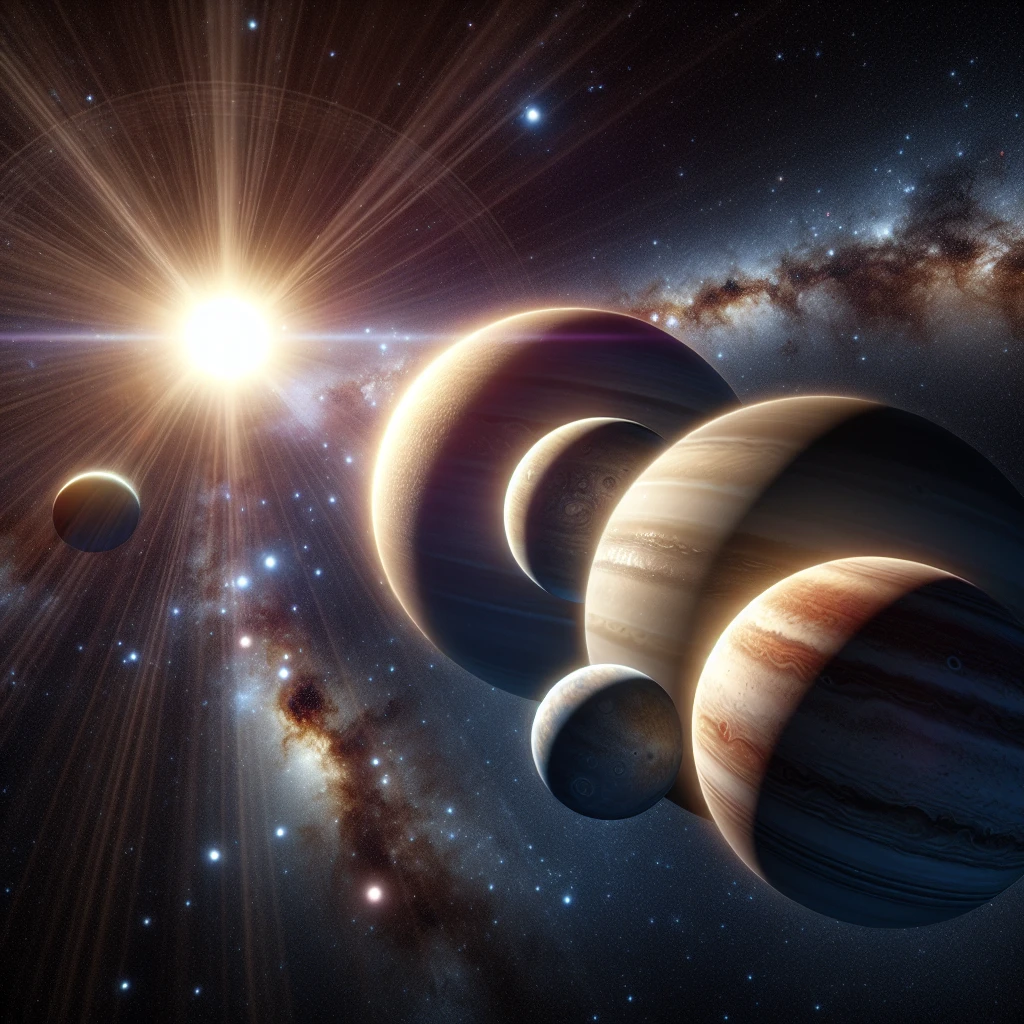
Dr Rafael Luque, who led the research, said that HD110067 is "the perfect solar system" because it didn't start out in a crazy way like ours did. Dr Marina Lafarga-Magro said that the system is "beautiful and unique" and it's cool to see something that no one has seen before. Astronomers are really interested in this system because it hasn't been messed up and the planets are all the same size. This makes it easier to study how planets are made and change. Also, the system has a bright star, which makes it easier to look for signs of life on the planets.
All of the planets in this system are called "sub-Neptunes." They are bigger than Earth but smaller than Neptune. These kinds of planets are thought to be the most common in the galaxy, but scientists don't know much about them. Finding HD110067 gives scientists a chance to learn more about these planets and if they can have life. If the next observations show that sub-Neptunes can have life, it means there's a better chance of finding life on other planets.
Scientists are now trying to find signs of life on one of the six new sub-Neptunes or on other similar planets found by different groups. With better telescopes and new technology, many scientists think that finding life on other planets might not take too long. The planets in HD110067 were found using NASA's Transiting Exoplanet Survey Satellite (TESS) and ESA's CHaracterising ExOPlanet Satellite (Cheops).
Original news source: Perfect solar system' found in search for alien life (BBC)
📖 Vocabulary:
Group or Classroom Activities
Warm-up Activities:
– News Summary
Instructions:
1. In pairs, read the article silently.
2. Take turns summarizing the main points of the article to your partner.
3. Try to include important details and key information in your summary.
4. Switch roles and repeat the process.
– Opinion Poll
Instructions:
1. In small groups, discuss your opinions about the article.
2. Each person should share their thoughts and reasons for their opinions.
3. Take turns asking each other questions about the article and respond with your opinions.
4. Try to engage in a respectful and meaningful discussion.
– Vocabulary Pictionary
Instructions:
1. Choose 10-15 vocabulary words from the article.
2. Divide the class into pairs or small groups.
3. One person from each group will choose a word and draw a picture to represent it.
4. The other members of the group will try to guess the word based on the drawing.
5. Rotate roles until all the words have been guessed.
– Speed Summarizing
Instructions:
1. Divide the class into pairs.
2. Give each pair a set amount of time (e.g. 2 minutes) to summarize the article together.
3. Encourage them to include the main points and key details in their summary.
4. After the time is up, have pairs switch partners and summarize the article again.
5. Repeat the process several times, gradually reducing the time limit.
– Think-Pair-Share
Instructions:
1. Read the article individually.
2. Think about the main idea and any questions or thoughts that come to mind.
3. Pair up with a partner and take turns sharing your thoughts and questions.
4. Listen actively to your partner and ask follow-up questions or provide feedback.
5. After both partners have shared, open up the discussion to the whole class and share some of the interesting points that came up during the activity.
🤔 Comprehension Questions:
🎧✍️ Listen and Fill in the Gaps:
Scientists have a "perfect solar system" that is great for studying how planets are formed and if they can life. This system is called HD110067 and it is located 100 light away. It has six planets that are all about the same size and have been the same for a really long time, like 12 billion years. Our own solar system is because our planets were made through big crashes, so they are different sizes. The planets in HD110067 all move together and have a special pattern of how fast they go around. even made a song based on how the planets move! Dr Rafael Luque, who led the research, said that is "the perfect solar " because it didn't start out in a way like ours did. Dr Marina Lafarga-Magro said that the system is "beautiful and unique" and it's cool to see something that no one has seen before. Astronomers are really interested in this system because it hasn't been messed up and the planets are all the same size. This makes it easier to study how planets are made and change. Also, the system has a bright star, which makes it easier to look for signs of life on the planets. All of the planets in this system are called "sub-s." They are bigger than but smaller than Neptune. These kinds of planets are thought to be the most in the galaxy, but scientists don't know much about them. Finding HD110067 gives scientists a chance to learn more about these planets and if they can have life. If the next show that sub-Neptunes can have life, it means there's a better of finding life on other planets. Scientists are now to find signs of life on one of the six new sub-Neptunes or on other planets found by different groups. With better telescopes and new technology, many scientists that finding life on other planets might not take too long. The planets in HD110067 were found using NASA's Transiting Exoplanet Survey Satellite (TESS) and ESA's CHaracterising ExOPlanet Satellite (Cheops).
💬 Discussion Questions:
1. What is a solar system?
2. How would you feel if you discovered a new solar system?
3. Do you think it's important for scientists to study how planets are formed? Why or why not?
4. What do you think makes HD110067 a "perfect solar system"?
5. How do you think the planets in HD110067 moving together is different from our own solar system?
6. Do you like the idea of scientists making a song based on how the planets move? Why or why not?
7. What do you think it means for a solar system to start out in a "crazy way"?
8. How do you think having a bright star in the system makes it easier to look for signs of life on the planets?
9. What do you think it would be like to live on a sub-Neptune planet?
10. Do you think it's important for scientists to learn more about sub-Neptunes? Why or why not?
11. How do you think finding signs of life on one of the sub-Neptunes would change our understanding of life in the universe?
12. Do you think it's possible to find life on other planets? Why or why not?
13. How do you think better telescopes and new technology can help in the search for life on other planets?
14. What do you think are some challenges scientists might face in their search for life on other planets?
15. How do you think the discovery of HD110067 and other similar planets will impact future space exploration?
Individual Activities
📖💭 Vocabulary Meanings:
Click a dot next to a word, then click the dot next to its meaning to draw a line connecting them.
Words
Meanings
🔡 Multiple Choice Questions:
🕵️ True or False Questions:
📝 Write a Summary:
Write a summary of this news article in two sentences.
Check your writing now with the best free AI for English writing!