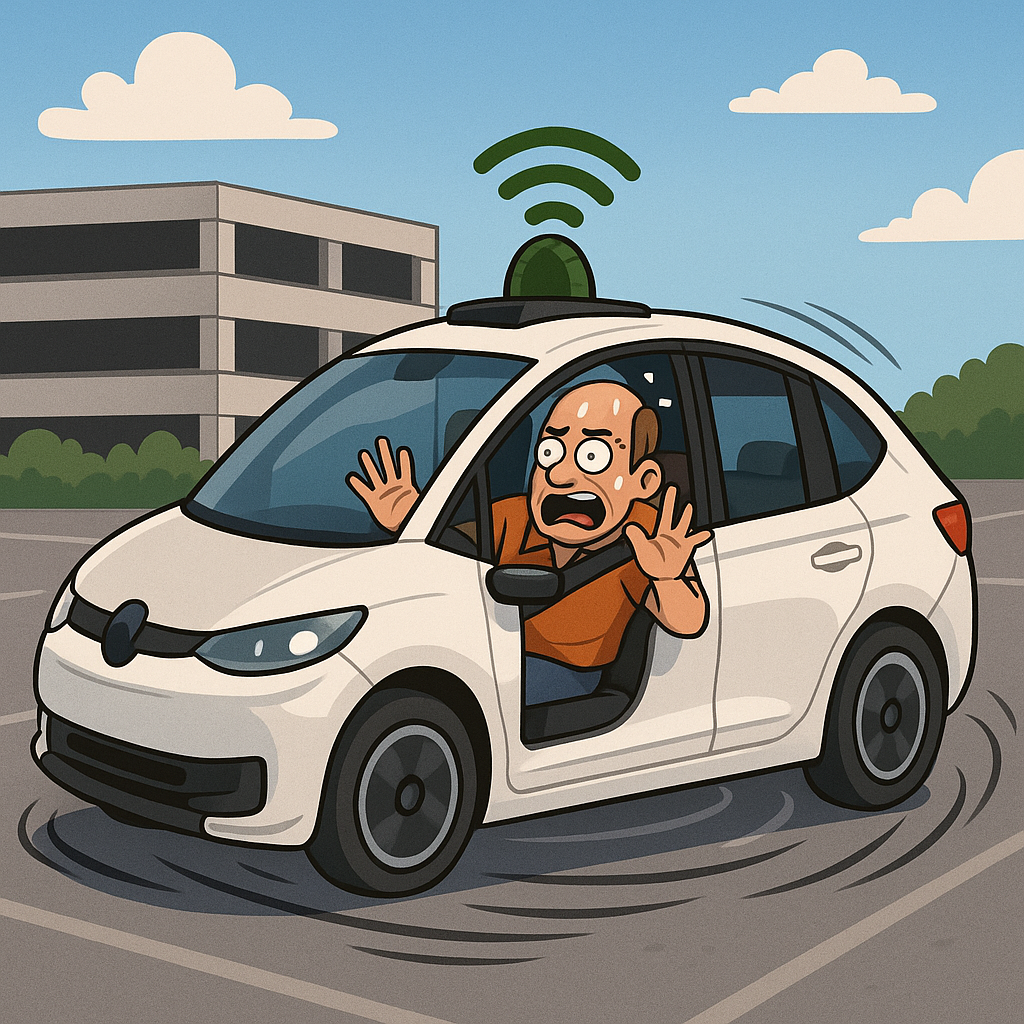
The development of driverless vehicles has been a gradual process, marked by both advancements and setbacks. A recent incident involving Mike Johns, who experienced a malfunction during a ride in a Waymo driverless taxi, has reignited public skepticism about the readiness of self-driving cars. While waiting for his flight from Los Angeles to Scottsdale, Arizona, Mr. Johns found himself trapped in a car that spun in circles within a parking lot. His video of the incident quickly gained attention, raising questions about the reliability of autonomous vehicles and their ability to safely transport passengers.
Waymo, the self-driving car company owned by Alphabet, responded to the incident by issuing a software update to resolve the issue. The company asserts that its technology is superior to human drivers in avoiding accidents that result in injuries. However, this is not the first time Waymo has faced challenges; the company previously recalled over 600 vehicles after one collided with a street pole. Additionally, the National Highway Traffic Safety Administration (NHTSA) has investigated multiple incidents involving Waymo cars, highlighting ongoing concerns about the safety of autonomous driving technology.
Other companies in the autonomous vehicle sector have also encountered difficulties. General Motors recently shut down its self-driving subsidiary, Cruise, citing the extensive resources required to develop the business. Similarly, Apple has reportedly abandoned its self-driving car project, and Uber ceased its own efforts in this area back in 2020. Despite these setbacks, Waymo remains a leader in the U.S. market, operating self-driving taxis in several major cities and planning to expand further.
Experts suggest that Waymo's success can be attributed to its strategic approach, which includes hiring top talent in autonomous vehicle engineering and leveraging the financial backing of Alphabet. Sven Beiker, a lecturer at Stanford, emphasizes the importance of regulatory compliance and thorough processes in ensuring the safety of their technology. As the industry continues to evolve, regions with favorable weather conditions are likely to see the first widespread deployment of driverless services, as these vehicles perform better in such environments.
Looking ahead, the rollout of autonomous vehicles is expected to be a slow and labor-intensive process, requiring extensive testing and data analysis. Safety remains a paramount concern, especially for self-driving trucks, which must be even more reliable than human drivers. In contrast, companies like Baidu in China are making significant strides, with hundreds of driverless cars already operating in cities across the country. As the technology develops, public perception will play a crucial role in shaping the future of autonomous vehicles, as individuals like Mr. Johns reflect on their experiences and the ongoing experimentation in this field.
Original news source: The slow but steady advance of driverless vehicles (BBC)
🎧 Listen:
📖 Vocabulary:
Group or Classroom Activities
Warm-up Activities:
– OPINION POLL
Instructions: Present the class with the topic of driverless vehicles. Students will express their opinions on whether they believe self-driving cars are safe or if they should be further developed. Each student must provide a reason for their opinion, leading to a class discussion.
– CHARADES
Instructions: Divide the class into small groups. Each group will take turns acting out terms related to the article (e.g., "driverless car," "software update," "accident," "safety," "autonomous vehicle"). The rest of the class will guess the term, promoting vocabulary retention and engagement.
– NEWS REPORTER ROLE-PLAY
Instructions: In pairs, one student will act as a news reporter and the other as an expert on autonomous vehicles. The reporter will ask questions about the recent incident involving Mike Johns and the current state of driverless technology. Afterward, they will switch roles, allowing both to practice speaking and critical thinking.
– ARTICLE TIMELINE
Instructions: On the board, draw a timeline. Students will work in small groups to place major events from the article (like the Waymo incident, recalls, and other companies shutting down projects) in chronological order. This activity will help them understand the progression of events in the autonomous vehicle sector.
– FUTURE PREDICTIONS
Instructions: Have students individually write down their predictions for the future of driverless vehicles over the next ten years. After writing, they will share their predictions in small groups and discuss the factors that could influence these outcomes, such as technology advancements or public perception.
🤔 Comprehension Questions:
Mr. Johns experienced a malfunction during a ride in a Waymo driverless taxi, where the car spun in circles within a parking lot, leading to public skepticism about the reliability of autonomous vehicles.
Waymo issued a software update to resolve the issue that caused the malfunction during Mr. Johns' ride.
Waymo previously recalled over 600 vehicles after one collided with a street pole and has been investigated by the National Highway Traffic Safety Administration (NHTSA) for multiple incidents involving its cars.
General Motors shut down its self-driving subsidiary, Cruise, due to the extensive resources required, Apple reportedly abandoned its self-driving car project, and Uber ceased its efforts in this area in 2020.
Waymo's success is attributed to its strategic approach, including hiring top talent in autonomous vehicle engineering and leveraging the financial backing of Alphabet.
Regulatory compliance is important for ensuring the safety of autonomous vehicle technology through thorough processes.
Regions with favorable weather conditions are likely to see the first widespread deployment of driverless services, as these vehicles perform better in such environments.
Public perception will play a crucial role in shaping the future of autonomous vehicles, as individuals like Mr. Johns reflect on their experiences and the ongoing experimentation in this field.
🎧✍️ Listen and Fill in the Gaps:
The development of driverless vehicles has been a gradual process, marked by both advancements and setbacks. A recent incident involving Mike Johns, who experienced a during a ride in a Waymo driverless taxi, has reignited public skepticism about the readiness of self-driving cars. While waiting for his flight from Los Angeles to Scottsdale, Arizona, Mr. Johns found himself trapped in a car that spun in circles within a parking lot. His of the incident quickly gained attention, raising questions about the reliability of autonomous vehicles and their ability to safely transport passengers. Waymo, the self-driving car owned by Alphabet, responded to the incident by issuing a update to resolve the issue. The company asserts that its technology is superior to human drivers in avoiding accidents that result in . However, this is not the time Waymo has faced challenges; the company previously recalled over 600 vehicles after one collided with a street pole. Additionally, the National Highway Traffic Safety Administration (NHTSA) has investigated multiple incidents involving Waymo cars, highlighting ongoing concerns about the safety of autonomous driving technology. Other companies in the autonomous vehicle sector have also encountered difficulties. General Motors recently shut down its self-driving subsidiary, Cruise, citing the extensive resources to develop the . Similarly, Apple has reportedly abandoned its self-driving car project, and Uber ceased its own efforts in this area back in 2020. Despite these setbacks, Waymo remains a leader in the U.S. market, operating self-driving taxis in several major cities and planning to expand further. Experts suggest that Waymo's success can be attributed to its approach, which includes hiring top talent in autonomous vehicle engineering and leveraging the financial backing of Alphabet. Sven Beiker, a lecturer at Stanford, the importance of compliance and thorough processes in ensuring the safety of their technology. As the industry to evolve, regions with favorable weather conditions are likely to see the first widespread deployment of driverless services, as these vehicles perform better in such . Looking ahead, the rollout of autonomous vehicles is expected to be a slow and labor-intensive process, requiring testing and data analysis. Safety remains a paramount concern, especially for self-driving trucks, which must be even more reliable than human drivers. In contrast, companies like Baidu in China are significant strides, with hundreds of driverless cars already operating in cities across the country. As the technology develops, perception will play a crucial role in shaping the future of autonomous vehicles, as individuals like Mr. Johns reflect on their experiences and the ongoing experimentation in this field.
💬 Discussion Questions:
1. What is your opinion on the concept of driverless vehicles? Do you think they are a positive development for society? Why or why not?
2. How would you feel if you were a passenger in a driverless car that experienced a malfunction, like the incident described in the article?
3. Do you think the technology behind autonomous vehicles is ready for widespread use? Why or why not?
4. What is a significant advantage you see in using driverless cars compared to traditional vehicles?
5. How do you think public perception of driverless vehicles will change as more incidents like the one involving Mike Johns occur?
6. Do you believe that companies like Waymo should prioritize safety over rapid deployment of their technology? Why or why not?
7. What is your personal experience with technology that has faced setbacks or malfunctions? How did it affect your trust in that technology?
8. How would you feel if you had to rely solely on a driverless vehicle for your daily commute?
9. Do you think that regulations should be stricter for autonomous vehicles compared to human-driven cars? Why or why not?
10. What is a potential concern you have about the future of driverless vehicles in urban areas?
11. How would you feel if you had to choose between a human driver and a driverless car for a long road trip?
12. Do you think the benefits of driverless vehicles, such as reduced accidents, outweigh the risks associated with their use? Why or why not?
13. What is a major challenge you think the autonomous vehicle industry will face in gaining public trust?
14. How would you feel if your city implemented a driverless taxi service? Would you be willing to use it? Why or why not?
15. Do you believe that the advancements in driverless technology will ultimately lead to job losses in the transportation sector? Why or why not?
Individual Activities
📖💭 Vocabulary Meanings:
Click a dot next to a word, then click the dot next to its meaning to draw a line connecting them.
Words
Meanings
🔡 Multiple Choice Questions:
🕵️ True or False Questions:
📝 Write a Summary:
Write a summary of this news article in two sentences.
Check your writing now with the best free AI for English writing!