
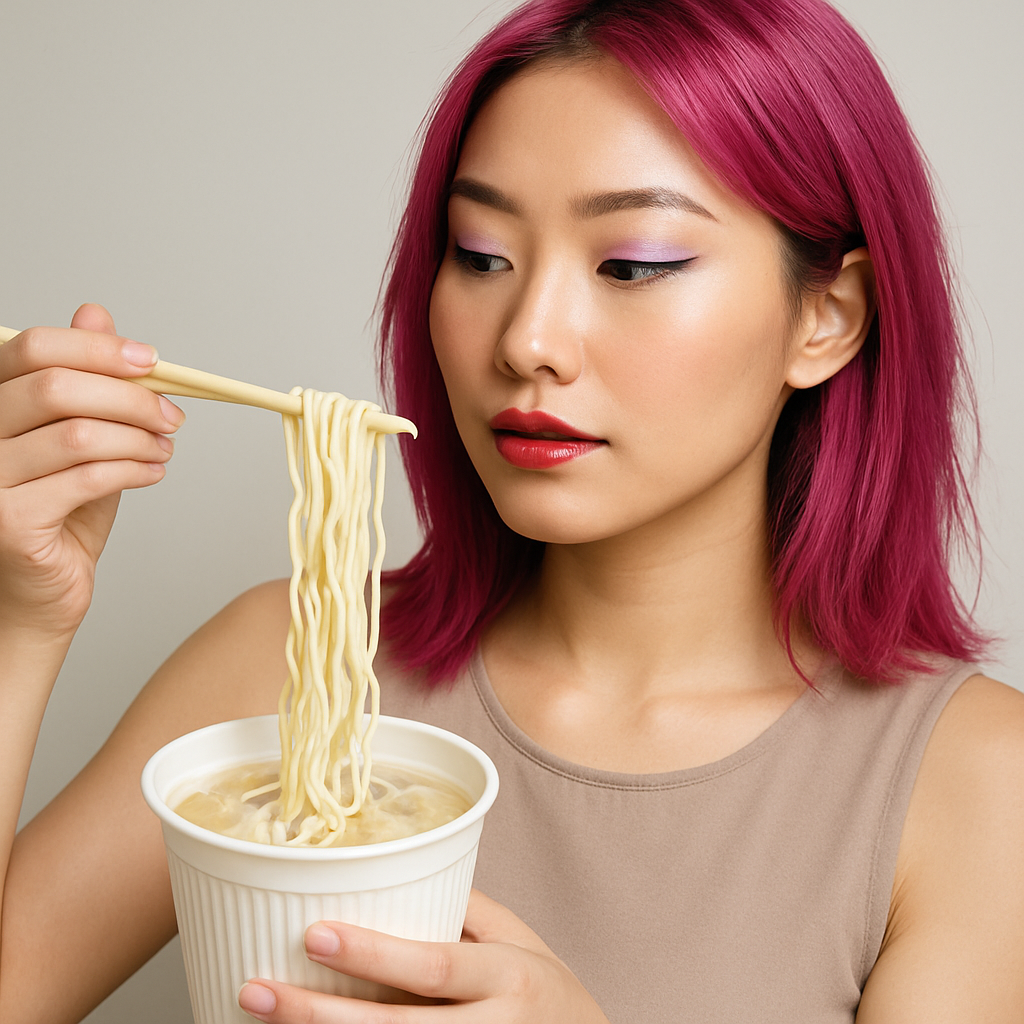
In a land known for its culinary delights and innovation, Japan has witnessed an unexpected sensation: cup noodles prepared with cold water. Diverging from the ubiquitous method of using hot water, this unconventional preparation caters to the sweltering summer season, offering a refreshing alternative to traditional noodle dishes. This novel product captivates with its intriguing blend of the familiar and the surprising.
Kurumi Mori, a Tokyo correspondent for the BBC, delved into this culinary curiosity by testing the cold water cup noodles firsthand. Her taste test addressed both the allure and practicality of the product, highlighting Japan’s relentless pursuit for novel food experiences. Many were taken aback by how seamlessly the noodles transitioned into a cold dish while still maintaining texture and flavor.
The cold water cup noodles quickly amassed a viral following online, leading to widespread excitement and dwindling stock on store shelves. The momentum of this trend was fueled by social media shares and enthusiastic endorsements, showcasing how modern technology can propel a local curiosity into a nationwide craze. This rapid spread reflects a broader appetite for innovative food creations in Japan's dynamic culinary landscape.
This phenomenon speaks volumes about the role of cultural trends in shaping consumer behavior, especially when it comes to gastronomy in Japan. The market's keen interest in this latest trend illustrates the populace’s readiness to embrace novelty, even if built upon long-standing traditions. As Japan continues to balance tradition with modernity, such culinary experiments invite people to experience comfort foods in exhilarating new ways.
Ultimately, the success of the cold water cup noodles underscores a key facet of Japan's culinary philosophy: that the essence of food is not only in taste but also in the creativity and innovation that continually redefine it. As the trend maintains its momentum, questions naturally arise about what other transformations may await traditional foods around the world.
Original news source: Cup noodles made with cold water? BBC tries Japan's viral snack – BBC News (BBC)
🎧 Listen:
📖 Vocabulary:
Group or Classroom Activities
Warm-up Activities:
1. Discuss a surprising food trend you've heard about in the past year.
2. Share your favorite method of preparing noodles.
3. Have you ever adapted a dish due to seasonal changes? Share your experience.
4. In your opinion, what role does social media play in spreading food trends?
5. Talk about a culinary innovation you think could become popular.
🤔 Comprehension Questions:
– Cup noodles prepared with cold water.
– It offers a refreshing alternative to traditional hot preparations.
– Kurumi Mori from the BBC.
– It helped spread the trend, leading to viral popularity.
– It highlights the balance between innovation and tradition.
– Social media shares and enthusiastic endorsements.
– It shows their readiness to embrace novel culinary experiences.
🎧✍️ Listen and Fill in the Gaps:
In a land known for its culinary delights and innovation, Japan has witnessed an unexpected sensation: cup noodles with cold water. from the ubiquitous method of using hot water, this unconventional preparation caters to the sweltering summer season, offering a refreshing alternative to traditional noodle . This novel product with its intriguing blend of the familiar and the surprising. Kurumi Mori, a Tokyo correspondent for the BBC, delved into this culinary curiosity by testing the cold water cup noodles firsthand. Her taste test addressed both the allure and practicality of the product, highlighting Japan’s relentless pursuit for novel food experiences. Many were taken aback by how seamlessly the noodles transitioned into a cold dish still texture and flavor. The cold water cup noodles quickly amassed a following online, leading to widespread excitement and dwindling stock on store shelves. The momentum of this trend was fueled by media and enthusiastic endorsements, showcasing how technology can propel a curiosity into a nationwide craze. This rapid spread reflects a broader appetite for innovative food creations in Japan's dynamic culinary landscape. This phenomenon speaks volumes about the role of cultural trends in shaping consumer behavior, especially when it comes to gastronomy in Japan. The market's keen interest in this latest trend illustrates the populace’s readiness to embrace novelty, even if upon long-standing traditions. As Japan continues to balance tradition with modernity, such culinary experiments invite people to experience comfort foods in exhilarating new ways. Ultimately, the of the cold water cup noodles underscores a key of Japan's culinary philosophy: that the essence of food is not only in taste but also in the creativity and innovation that continually redefine it. As the trend maintains its , questions naturally arise about what other transformations may await foods around the world.
💬 Discussion Questions:
1. What are your thoughts on eating noodles prepared with cold water?
2. How do season and climate influence your eating habits?
3. Can you think of any traditional dish that has been modernized in your culture?
4. How important is innovation in food culture?
5. Do you rely on social media to discover new food trends?
6. What would your reaction be if a famous food critic endorsed a unique restaurant?
7. How do food trends affect local culinary traditions?
8. Would you try a dish if it was viral on social media? Why or why not?
9. How do you balance tradition and modernity in your own cooking?
10. Have you ever tried creating something unique from an existing dish?
11. What qualities make a food trend endure over time?
12. How do you foresee global cuisines evolving with the current pace of innovation?
Individual Activities
📖💭 Vocabulary Meanings:
Click a dot next to a word, then click the dot next to its meaning to draw a line connecting them.